Relationship endings · Support while living abroad
Separation therapy for expats
Ending a relationship abroad can also mean questioning where you live, who you turn to and what happens to the plans you made together. You can seek therapy while deciding, during a separation or after it. Your partner does not have to attend for you to have support.
Book a free consultation
When more than the relationship feels uncertain
You may be sharing a home while trying to separate emotionally. You may be in different countries, having the same conversation by message. Or the decision may be made, while everyday life keeps confronting you with what has changed.
Living abroad can add practical questions: whether you can remain, how to support yourself, where the children will live, or whether returning home would feel like relief or another loss. Therapy can help you think clearly about the emotional weight of those questions. It does not replace legal, immigration or financial advice.
We start with the issue taking up most of your attention. There is no required stage of separation and no deadline by which you should have stopped grieving.
Support at different points in a separation
I am not sure I want to end it.
We can examine what keeps you in the relationship, what is making you consider leaving and what would need to change. You do not have to arrive with a settled decision.
My partner wants to leave and I do not.
We can make room for grief, anger and unanswered questions while looking at the choices that remain within your control. Therapy cannot persuade someone else to stay.
I chose to leave and still feel devastated.
A decision can be necessary or wanted and still bring loss. We can explore guilt, doubt and what you need as your daily life changes.
We need to talk without another argument.
Where joint work is appropriate and both people agree, we can focus on having a clearer conversation about the ending. This is therapeutic support, not legal mediation.
Individual work does not require your partner’s participation or permission. We agree confidentiality and its limits before beginning.
Separate the decisions that have become tangled
Whether to continue the relationship and whether to remain in a country are connected, but they are not the same question. You may want to stay abroad and separate. You may want to return home and still explore the relationship. Some options may not yet be practically available.
We can make three lists together: what needs a decision soon, what information you are missing, and what you are not ready to decide. This can give a difficult week some structure without pretending that a list removes the pain.
Housing arrangements, access to money and immigration status need accurate information. If children are involved, decisions about travel or moving countries need qualified legal advice before action. I can support the emotional conversations around these matters, but cannot advise on your legal rights.
When other people are involved
You may be deciding what to tell children, relatives, friends or colleagues. We can think through the purpose of a conversation, what belongs between adults, and how to avoid asking children to carry messages or choose sides.
If your local friends are mainly shared friends, finding private support may take deliberate effort. Is there one person who can listen without carrying information back? Would practical help be more useful than advice this week?
A professional space can be useful when you are tired of explaining or defending your decision. It should also help you consider support beyond therapy, rather than leave you reliant on one weekly conversation.
When meeting together is appropriate
Some separating couples want help with a specific conversation or with understanding how the relationship ended. Joint work requires a purpose both people accept and an ability to participate safely.
If you are frightened of your partner, being monitored or facing threats, tell me privately when enquiring. Joint sessions may be unsuitable. The NHS domestic abuse support guide includes specialist services. When abroad, local services are important for immediate safety needs.
I am Kita Tabachka, a Bulgarian-born, UK-based BACP-registered relational therapist. My work includes individuals and couples living abroad. You can read about my approach and check my BACP directory profile.
We start with a free 15–20 minute consultation. You can tell me what brings you, ask questions and decide whether you would like to continue. We discuss your needs, the country you will attend from, privacy and available appointments before agreeing to work together.
For couples work, both partners attend the consultation. If we begin, I usually meet each of you individually to understand your background before joint sessions. We agree the purpose, fees and confidentiality arrangements for those meetings first.
Individual therapy: £70 for 50 minutes.
Couples therapy: £100 for 70 minutes, per couple.
Sessions are online through Carepatron. Read the fees and process.
Practical arrangements
I work online from the UK. I do not have a clinic in your city. Before accepting an appointment, I check your location, professional arrangements and whether this service fits your needs. Tell me before travelling or moving country so we can review whether the work can continue. Read how therapy across borders is assessed.
You need a private place to speak, a suitable device and a reliable connection. We agree confidentiality and its limits before starting. Appointment availability is confirmed in your local time.
If speaking at a set time is difficult, written counselling may be an option where suitable. It costs £50 per week for one personal reply through Carepatron on an agreed day. It is not live chat or urgent support.
Questions you may have
Is separation therapy only for people who have decided to leave?
No. You can seek support while uncertain, during the process or after the relationship has ended. We start with what you need help understanding or managing now.
Can I come without my partner?
Yes. Individual therapy focuses on your experience and choices. Your partner does not need to attend or agree.
Can you help us separate amicably?
We can explore whether joint work could support clearer conversations. I cannot promise agreement or an amicable ending. Safety, suitability and each person’s willingness matter.
Do you provide divorce or child custody advice?
No. Legal, immigration, financial and cross-border parenting questions require appropriately qualified advice. Therapy can support you with their emotional impact and difficult conversations.
How much does it cost?
Individual online therapy costs £70 for 50 minutes. Couples sessions cost £100 for 70 minutes per couple. We begin with a free 15–20 minute consultation and agree suitability, location requirements and any preliminary meetings.
Where to go next
Stay, Pause or Leave
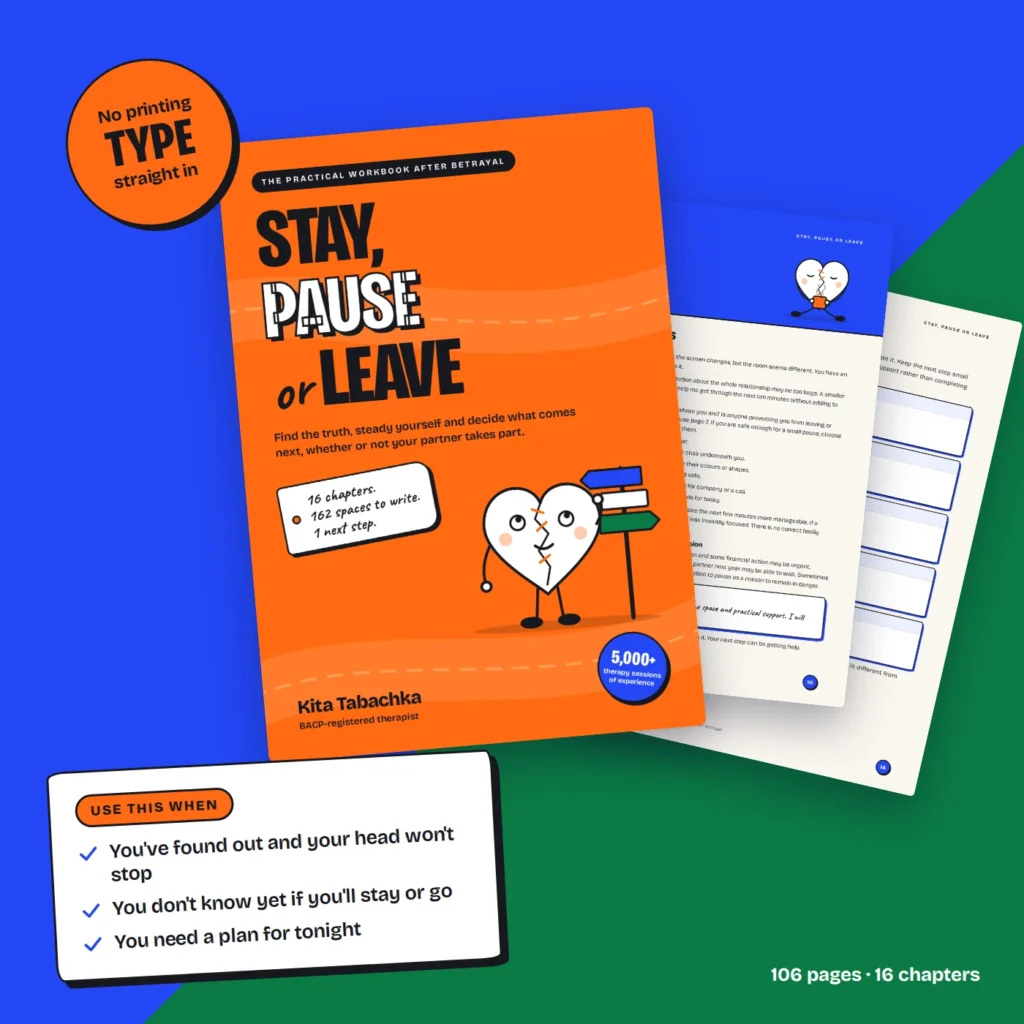
You found out. Now everyone has an opinion and you have a decision. This workbook takes you through the weeks after betrayal in order: steady yourself first, get the facts straight, then decide. Written from my practice.
£29, instant PDF download
Get the workbookA companion to therapy, not a substitute for it.