Online therapy in English
Online therapy for expats and people living abroad
You changed countries. Some parts of you are still catching up. Having moved from Bulgaria to the UK and begun again myself, I bring a personal understanding of reinvention to our work. I offer online therapy in English for loneliness, anxiety, identity and relationship difficulties after a move.
Book a free consultation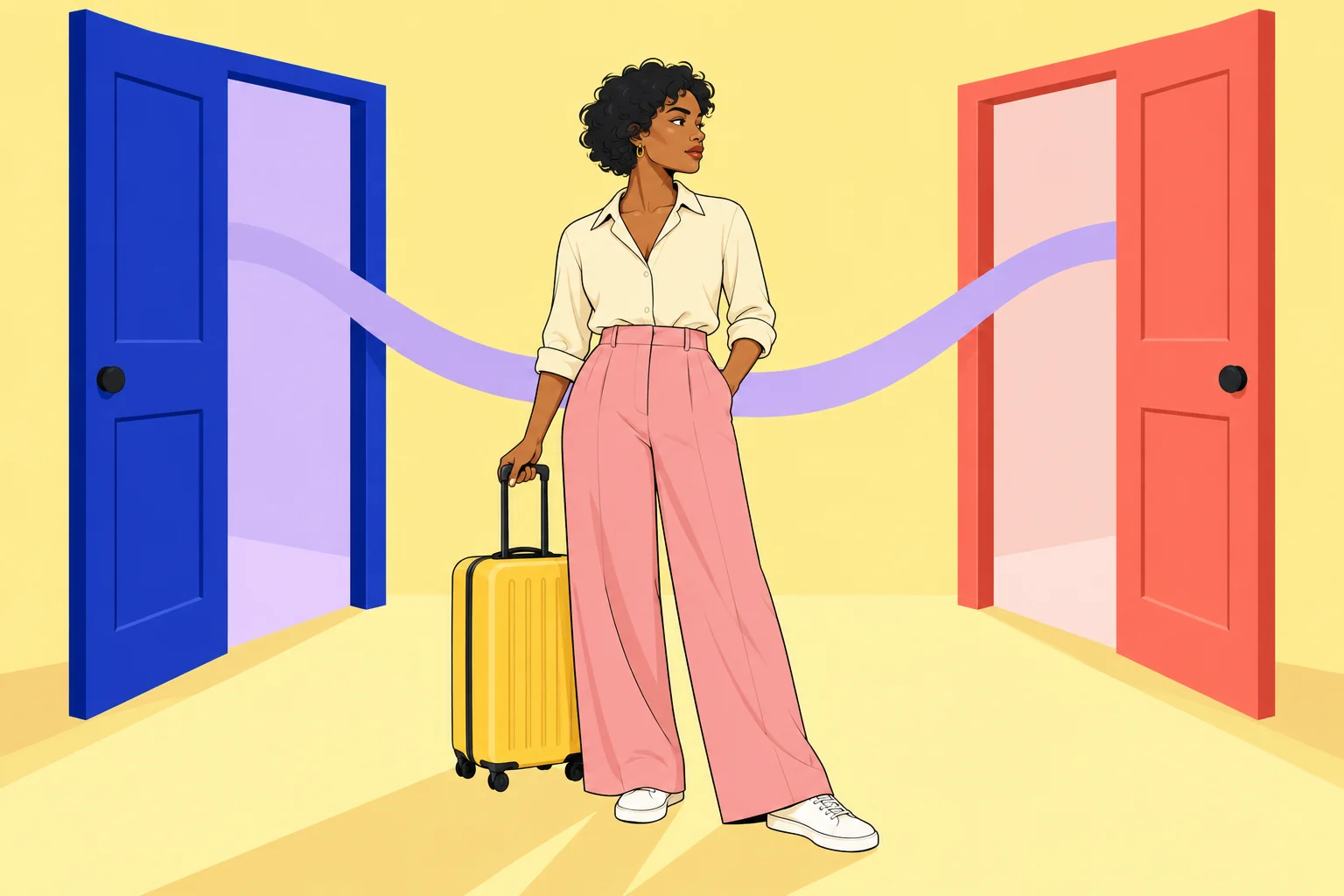
What would you like help with?
Perhaps work is going well, but evenings feel empty. You may have followed a partner and lost the career, friendships or independence that gave your week shape. Or you have lived abroad for years and are tired of explaining why you still miss home.
You do not need to prove that the move caused everything. We can consider your relationships, health, work and history alongside the practical realities of living in another country.
I have people around me, but I feel alone
We can explore the kind of connection you miss, the relationships you already have and what makes reaching out difficult. Read about loneliness abroad.
I moved for my partner and lost my direction
Changes in work, income and daily independence deserve attention. Trailing partner therapy offers space to think about your own needs and the decisions ahead.
We argue more since the move
We can look at how responsibilities, support and choices are shared. Both the relationship and the conditions around it matter. Explore expat relationship problems.
I am unsure whether to stay or go home
We can separate what you hope a move would change from what may need attention wherever you live. Therapy gives you space to make your own decision.
What we would do in sessions
We start with a recent example: a weekend you dreaded, a conversation that went badly, or a decision you keep putting off. I will ask what happened, what it meant to you and what you would like to be different.
From there, we may explore a repeated relationship pattern, the loss of a role you valued, or a practical imbalance that needs changing. We can agree a small step to try between appointments and return to what actually happened. You can tell me when an approach does not fit.
I work relationally and integratively. In everyday terms, that means paying attention to your experience and relationships, and adapting the work to you. Therapy cannot change visa rules or make a partner cooperate. It can give you somewhere to think clearly about your options and the support you need.
A therapist with experience of life between countries
I am Kita Tabachka, a Bulgarian-born, UK-based BACP-registered therapist. My own experience of living across cultures informs my interest in this work. I will still ask what your move has been like, rather than assume our experiences are the same.
You can read about my background and approach and check my BACP directory profile. Registration gives you a professional reference point. Our consultation is also a chance to notice whether you feel able to speak with me.
Individual, couples or written support
Before we begin
A free 15–20 minute consultation lets us discuss your concern, location and availability. Online work depends on the country you will physically be in, privacy, professional requirements and whether this format fits your needs. We review that if you move. Read how I assess online therapy abroad.
If you are looking for support while living in Bulgaria, see English-speaking online therapy for Sofia. I work from the UK and do not have a clinic in Sofia.
You can also read the fees and starting process before making contact. There is no obligation to continue after the consultation.
Questions you may have
What is expat therapy?
Expat therapy considers emotional and relationship difficulties in the context of living away from your country of origin. Sessions may address loneliness, anxiety, identity, family expectations or decisions about where to live. The work starts with your experience rather than a label.
Can I come if I chose the move and feel guilty complaining?
Yes. Choosing a move does not mean every part of it has to suit you. We can explore what you value about your life abroad and what is difficult without requiring a decision to stay or leave.
Can we attend from different countries?
Potentially. I need to check both partners’ physical locations and suitability before agreeing to work together. Please mention both countries when you enquire.
Do you work with people who have lived abroad for many years?
Yes, subject to suitability. Belonging, relationships and plans can change long after the first move. You do not need to be newly arrived to bring these questions to therapy.
Online therapy by location
These pages explain local appointment times and common questions about working online from different places. I am UK-based; availability depends on your location and suitability.
Where to go next
Recently moved together? Explore your first 90 days abroad as a couple. If work or travel keeps you apart, read about maintaining intimacy across time zones.