
Ravi’s wife booked the consultation. He joined the call from his car in a supermarket car park and told me he was not depressed, he was tired. Tired of his job, tired of the noise at home, tired of weekends. He had stopped playing football eight months earlier and had no idea why. By the end of twenty minutes he said: “I don’t feel anything about anything any more.”
Depression in men often shows up as irritability, anger, numbness, exhaustion, overworking, drinking more, risk-taking and withdrawal, rather than obvious sadness. Many men keep functioning at work while everything else goes flat. Your GP and a therapist are both good first steps. If you have thoughts of ending your life, get help today.
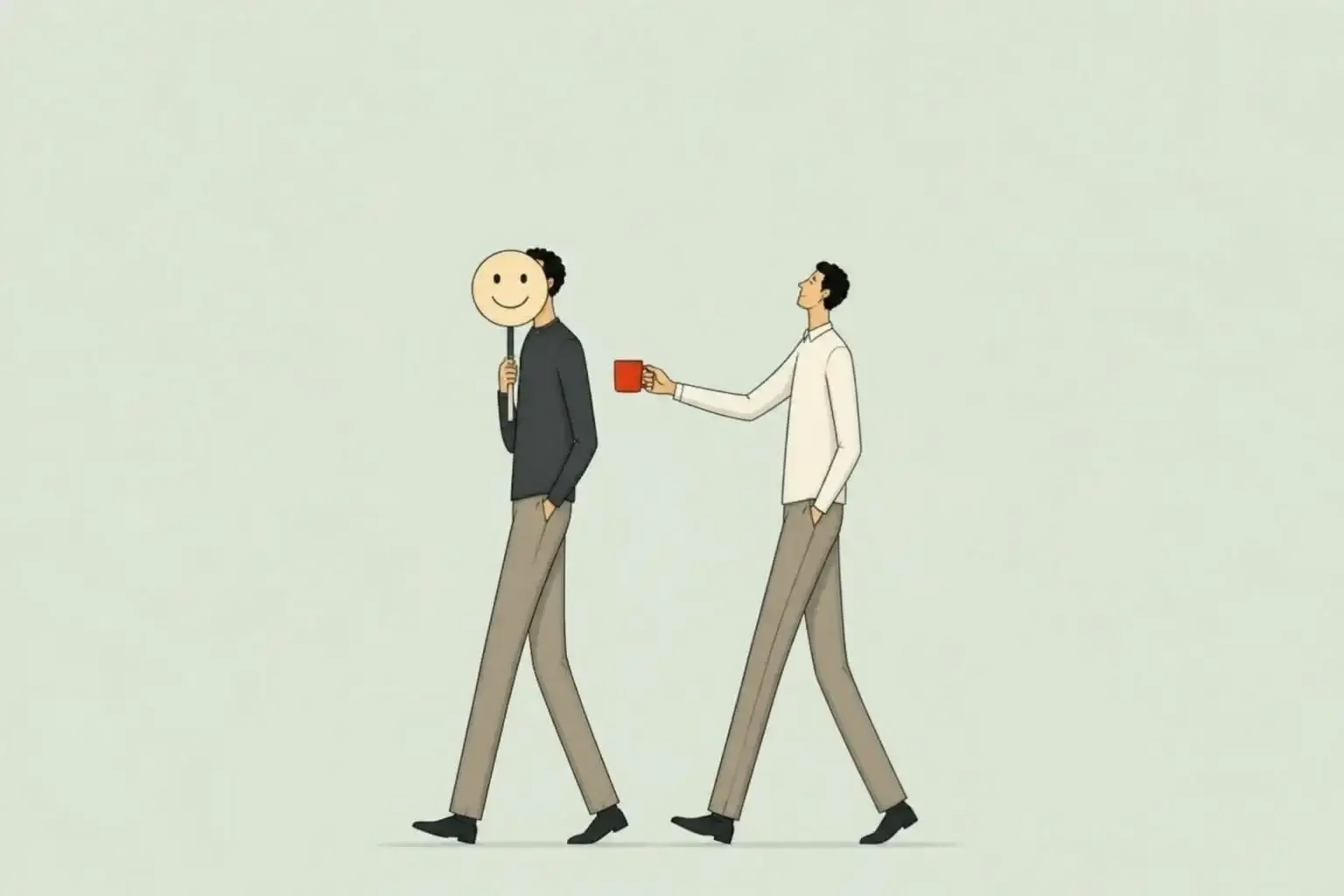
01The male mask
Men tend to describe depression through the body and through action. Sleep goes wrong. Libido drops. Headaches and back pain appear. Joy leaves quietly, through the hobbies first.
02High-functioning depression
Plenty of depressed men hold down senior jobs. They hit targets, pay the mortgage, coach the under-tens. Inside, they run on effort alone. Doctors sometimes call long-lasting low mood persistent depressive disorder. The men I see call it “how I’ve always been”.
High-functioning does not mean mild. It means hidden. When the crash comes, it surprises everyone except him.
He did not stop feeling sad. He stopped feeling.
Kita Tabachka, relational therapist
03Why men miss it
Most men learned depression looks like a woman crying in bed. When it looks like a man shouting at a printer, nobody joins the dots, including him.
Men are also slower to see a GP, and quicker to self-medicate with alcohol, work or the gym. In the UK, around three in four suicides are men.
04What helps
If you are reading because you are worried about your partner, see supporting your husband with depression, including looking after your own needs.
Start with the body. Book a GP appointment and say the plain words: “I think I might be depressed.” Your GP checks for physical causes, such as thyroid problems or low testosterone, and talks through options including talking therapy and medication.
Then talk. Therapy for men works best when it starts with what is happening this month, not your childhood. We look at the flatness, the anger, the drinking, and what each of them protects you from feeling.
Ravi’s first goal was football. He went back in week six and told me he did not enjoy it. In week nine, he did. If anger is the loudest symptom in your house, how to control anger in a relationship is a useful next read.
Please do not wait. In the UK, call 999 if you are in immediate danger, or call Samaritans free on 116 123, day or night. CALM (Campaign Against Living Miserably) runs a helpline on 0800 58 58 58, 5pm to midnight every day. Abroad, contact local emergency services.
Online sessions for men and couples, wherever you live
I work in English with men on their own and with couples, including partners living in two countries. See how sessions run in your city, or read about online couples therapy and therapy for men.
More from the journal
Weekly written counselling with Kita
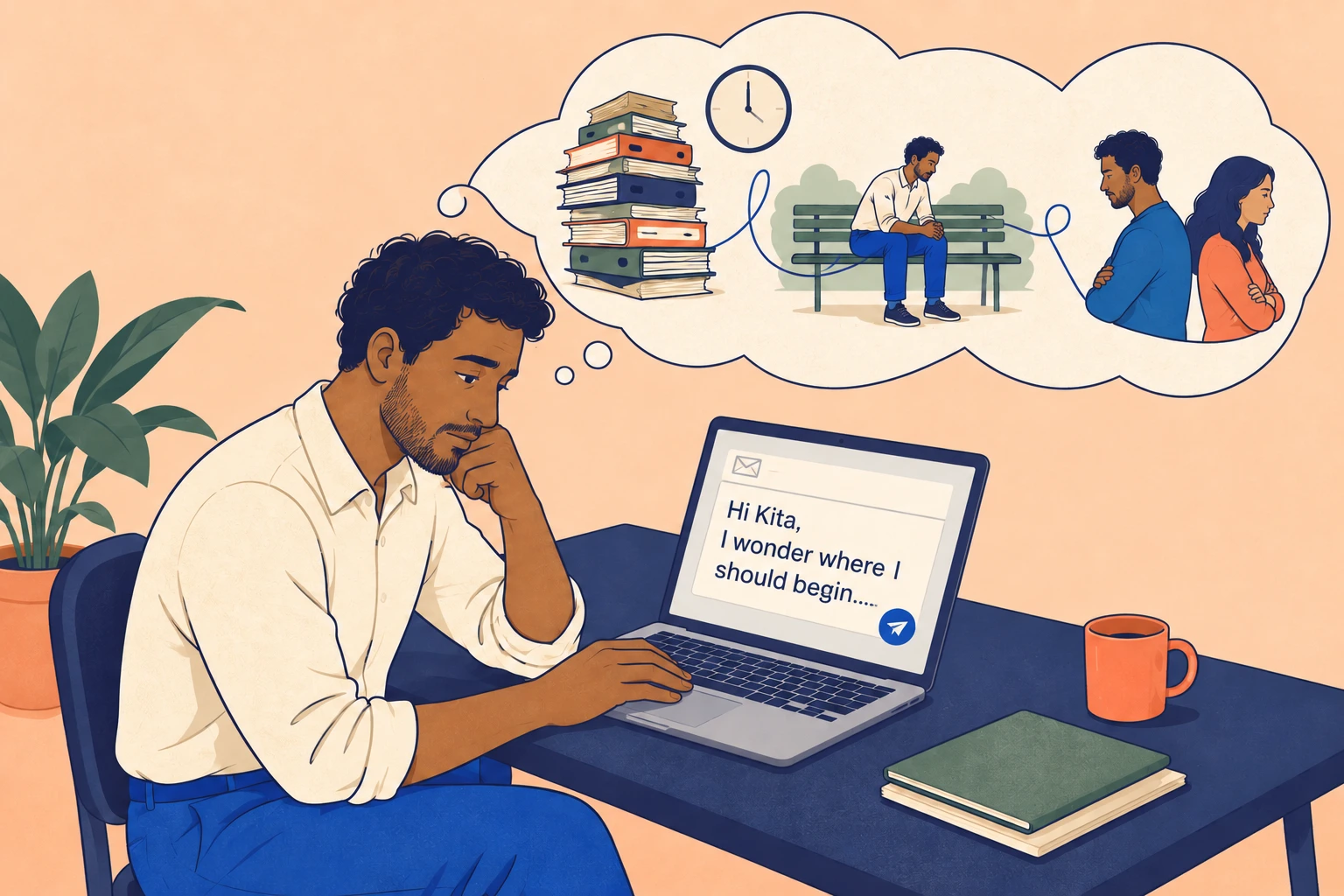
When writing feels easier than speaking.
You can enquire about weekly written counselling for your own experience of relationships and life abroad. We agree whether this format is a useful fit before you pay.
Explore written counselling£50 per week. One personal written reply through Carepatron. Suitability, your weekly reply day and terms agreed before payment.

Kita Tabachka
I am a BACP-registered relational therapist. I work with individuals and couples, many of them living far from where they began, on relationship anxiety, attachment, intimacy and the strange business of building a self in a new country. The stories here are composites. The patterns are real. My writing is a door into the work, never a substitute for it.
More about my practiceQuestions people ask
This article is written by Kita Tabachka, MBACP, and is for general education and reflection. It describes patterns seen in clinical work, but it is not therapy, and it is not a substitute for individual advice from a qualified therapist, doctor or other professional who knows your situation.
Reading it cannot diagnose anything or replace your own judgement about what you need. If something here resonates and you would like support, you are welcome to learn more about my practice or book a free consultation. If you are in crisis or immediate danger, please contact local emergency services or an urgent mental health line in your country.
Join the conversation
If you have lived this, say so. Your words may be the thing a stranger at midnight needed to read.