01When life abroad puts pressure on the relationship
Relocation removes the scaffolding a relationship quietly relied on: friends, family, routines, two incomes, two separate worlds to come home from. Abroad, the couple becomes everything to each other, and everything is a heavy job description. Pressure that was easy to manage at home starts to show: recurring conflict, emotional distance, resentment that arrives on schedule every evening.
02When betrayal changes everything
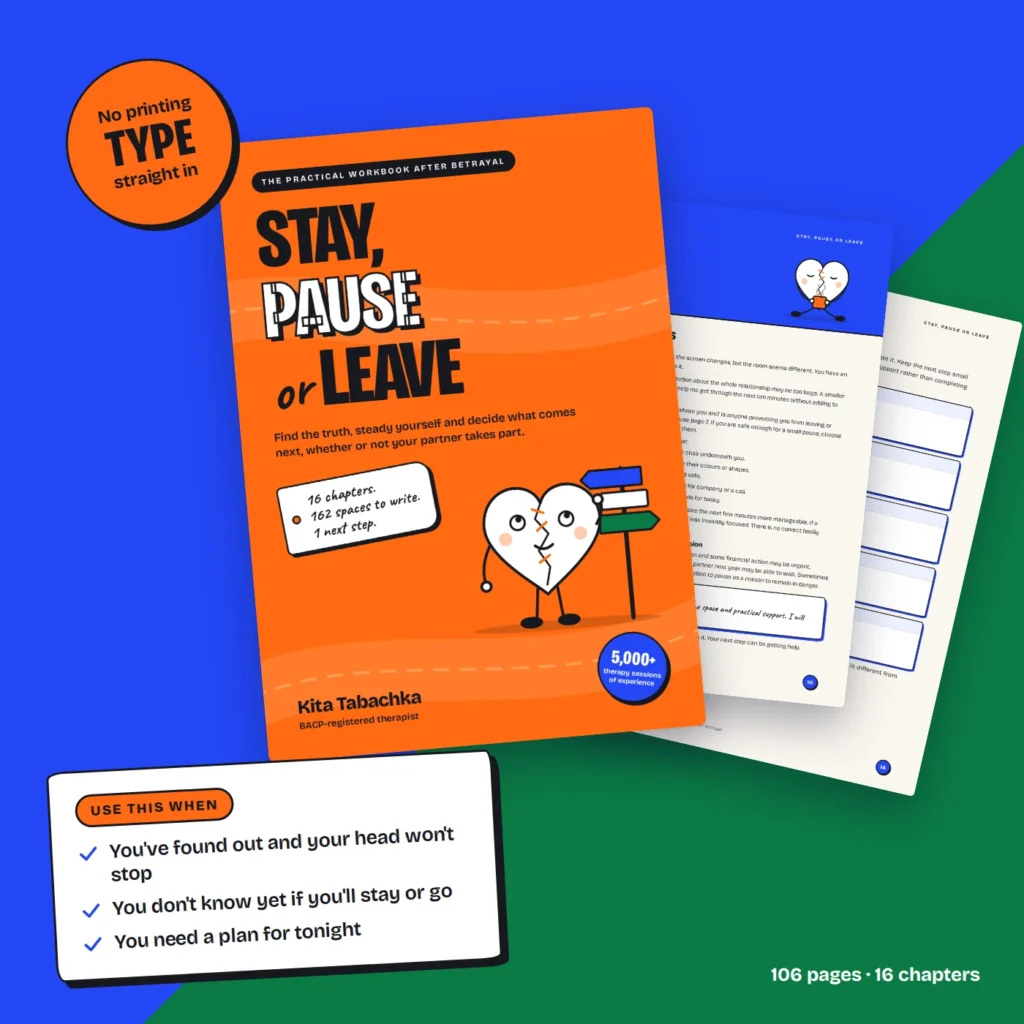
Sometimes the crisis has a sharp edge: an affair discovered, a secret found, trust broken in a way that cannot be unknown. If that is where you are, I work specifically with infidelity for expats and international couples and with betrayal trauma abroad. You do not need to have decided anything to begin.
03When you do not know whether to stay or leave
Not knowing whether to stay can be exhausting. Advice from friends may point in different directions, while practical worries make every option feel complicated. Therapy gives you space to understand your own concerns and choices. If separation is already in view, explore support with separation abroad.
04When one partner wants repair and the other is unsure
You may want different things from therapy, or one of you may be unsure about attending. The introductory couples meeting is a place to explain those differences. If you want support on your own, individual therapy can focus on your experience and decisions. It does not depend on changing your partner.
05When moving abroad has changed the power balance
One career led the move, one visa depends on the marriage, one person earns and one rebuilds from zero. Nobody planned for love to acquire an exchange rate, but it did, and pretending otherwise makes the resentment grow in the dark. Naming the new power balance honestly is often the turning point. There is more on this in trailing partner support and relationship problems after moving.
06When culture, family or money complicates the decision
In international and cross-cultural relationships, a crisis is rarely private. Families have opinions across borders, cultures disagree about what is forgivable, and money or immigration status can make the honest conversation feel dangerous. These layers are not obstacles to the work. They are the work.
07How online therapy can help
We start by understanding what is happening, how it affects you and what you want help with. We may explore repeated conflict, trust, choices about the relationship or the pressures around it. Sessions are online in English, subject to location and suitability checks. This is a scheduled therapy service, not immediate crisis support. If you are in danger or need urgent mental health help, use emergency or crisis services where you are.