Life abroad · Loneliness
Expat loneliness: when you have a life abroad but still feel alone
Loneliness abroad can mean missing close friendships, familiar routines or people you can turn to without arranging a call across time zones. It can also mean having plenty of contact and little sense of being understood. The useful question is what kind of connection is missing for you.
Start with the guide
What does “alone” mean in your week?
Moving may change several kinds of contact at once. You might lose the colleague who noticed when you were quiet, the friend available for an unplanned walk or the family member who helped with childcare.
There is no fixed arrival date for loneliness. Some people feel it immediately. Others notice it when work slows down, a friendship ends or the novelty of a move wears off. Your timing does not establish whether the move was a mistake.
I have nobody to make everyday plans with
You may need repeated local contact. A regular activity with the same people can give a friendship a chance to develop. Choose something you can realistically return to.
I know people, but cannot tell them how I am
Consider whether there is one person with whom you could share a little more. You do not need to disclose everything. Notice how they respond and whether the connection feels reciprocal.
I miss being understood without explaining
Language, shared history and humour can matter. Keeping contact with old friends and building local relationships can both have a place. You do not have to choose one source of belonging.
My partner has become my only support
Ask what kinds of support you want beyond the relationship. It may be practical help, friendship, shared interests or someone to speak with privately.
Why “just get out more” may not be enough
Work hours, money, childcare, language, disability, discrimination or uncertainty about how long you will stay can make connection harder. An overflowing social calendar can also leave you exhausted. Before adding another activity, look at the obstacle you actually face.
If you are autistic or have ADHD, you may want a setting with a shared interest, clearer expectations or less sensory demand. Ask yourself what makes contact manageable for you. There is no single social format that every neurodivergent person should prefer.
A small group you return to may suit you better than a large networking event. For someone else, a busy group makes the first step easier. Treat a choice as an experiment, rather than a judgement about your ability to make friends.
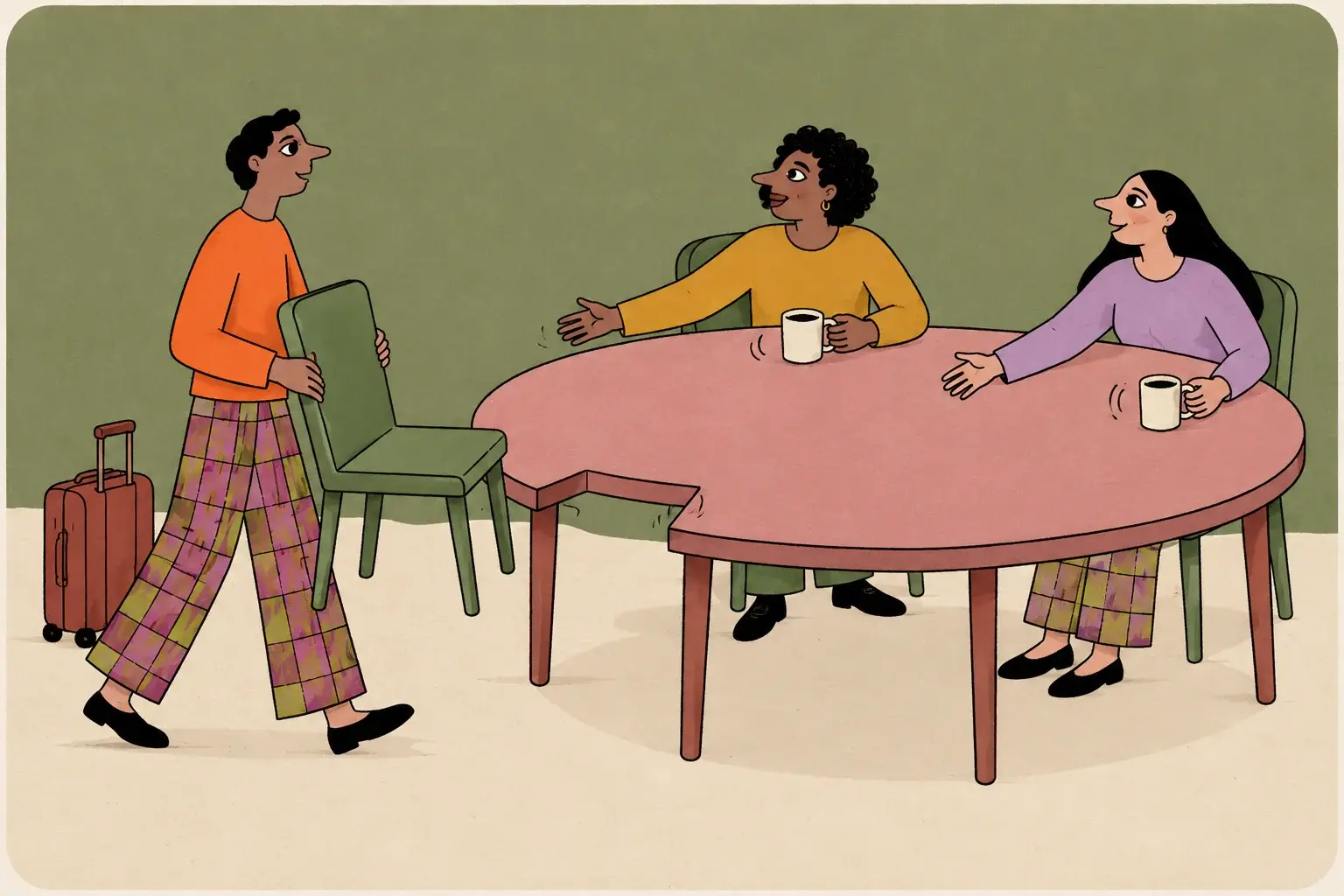
A small plan for the coming week
- Name one missing connection.For example, someone to spend Sunday with, a conversation in your first language or help with an unfamiliar task.
- Choose one realistic action.Invite a colleague for a short walk, arrange a regular call, or return to one group. Make the plan specific enough to do.
- Review the experience kindly.Did you enjoy it? Was the setting manageable? Would you like to try again? One awkward meeting does not answer whether you can belong somewhere.
The NHS guidance on loneliness also suggests manageable steps, contact through shared interests and seeking support when loneliness is difficult to cope with. These are options, not a requirement to become more sociable overnight.
When you need more than a social plan
If low mood, loss of interest, sleep difficulties or feeling unable to manage daily life persist, speak with a healthcare professional. These experiences need assessment in their own right. A move does not explain every symptom, and “relocation depression” should not be used as a self-diagnosis.
If you are in immediate danger or feel unable to stay safe, contact local emergency or crisis support. This website and scheduled therapy appointments are not emergency services.
You can want help before things become severe. In expat therapy, we can explore the specific losses, fears or practical barriers involved and what support would fit your life. We can also consider changes in identity after moving.
Talking about it with me
I am Kita Tabachka, a Bulgarian-born, UK-based BACP-registered therapist. We can start with a recent lonely moment rather than a complete account of your life. What was happening? Who did you wish you could turn to? What stopped you?
Individual online sessions in English cost £70 for 50 minutes. If writing is more comfortable, written counselling offers one personal reply through Carepatron on an agreed day for £50 per week, subject to suitability.
A free 15–20 minute consultation lets us discuss the options and your physical location before agreeing work. Read fees and process and international suitability.
Questions you may have
Why do I feel lonely abroad when I have a partner?
A partner may provide important closeness without meeting every need for friendship, shared history or practical support. Consider what kind of connection is missing and whether it is something you want to build inside or outside the relationship.
Does loneliness mean I should move home?
It may be part of that decision, but it cannot decide it alone. Consider your wellbeing, relationships, practical options and what you expect a return to change. You can explore this without committing to stay or leave.
Can loneliness start long after a move?
Yes. Your circumstances and relationships can change at any stage. You do not need to be newly arrived to seek support.
Is loneliness the same as depression?
No. They can occur together, but loneliness does not establish a diagnosis. Persistent low mood, loss of interest or difficulty managing daily life are reasons to seek a professional assessment.