Online couples counselling · In English
Cross-cultural couples therapy
You are arguing about a family visit, money or where to live. Underneath, you may have different expectations about loyalty, privacy and what a partner should do. I work with couples to understand those differences and make agreements that each person has a real say in.
£100 for 70 minutes, per couple
Book a free consultation15–20 minutes · Online · In English
When two sets of expectations meet
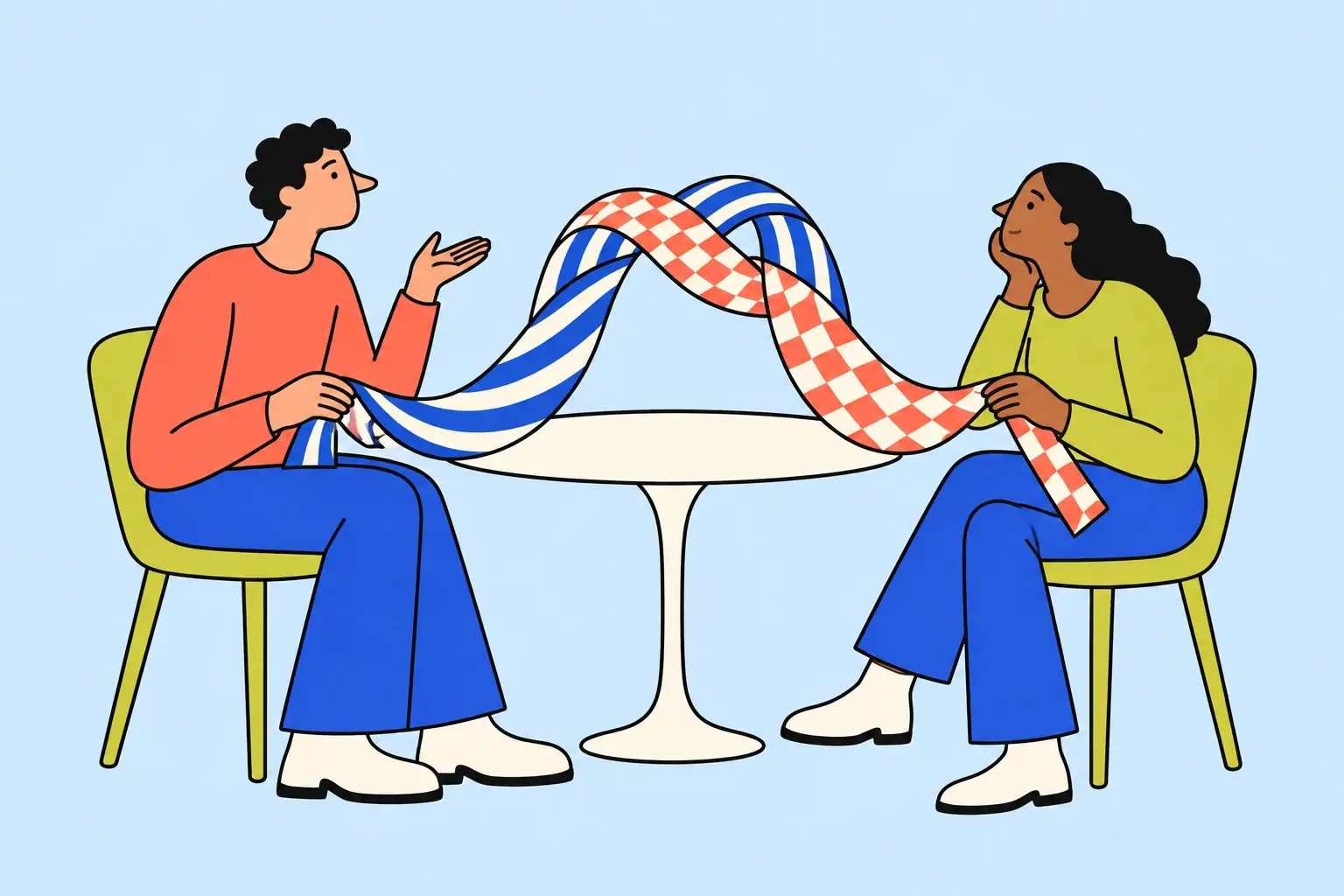
You may come from different countries, religions, languages or family traditions. You may also share a background and have very different ideas about what it means. Therapy begins with your experience, rather than treating either person as a representative of a culture.
These are some of the questions you can bring. Select a topic to see what we might explore.
Family involvement and privacy
Who gets told about a disagreement? How are visits arranged? What happens when a relative’s request conflicts with your plans as a couple? We can look at the specific boundary and how each of you understands loyalty.
Faith, customs and important occasions
Whose traditions take priority? Which practices matter personally, and which are mainly expectations from others? We can make room for genuine differences without assuming that compromise means giving up a belief.
Money and support for relatives
Financial help for family may feel like a responsibility to one person and an unshared decision to the other. We can discuss consent, transparency and what decisions belong to you as a couple.
Parenting, language and roles at home
What do you want your children to learn? Who carries the everyday work? We can examine the expectations you each brought into the relationship and the arrangements you want to make now.
Relocation and belonging
One person may feel at home while the other depends on them for language, social contact or practical help. We can look at how that imbalance affects the relationship and which changes are possible.
Different ways of handling conflict
One person may want to speak immediately while the other needs time. Directness, silence and disagreement can mean different things to each of you. We can clarify those meanings and agree how to return to a difficult conversation.
What happens in the work?
I will ask you to bring a recent example. We look at what was said, what each of you understood and where the conversation became harder. I may pause you to make a request more specific, check that it has been heard, or give someone time to finish.
We also consider the practical circumstances. A disagreement about relatives may involve childcare, money or housing as well as culture. Being able to explain an expectation does not mean the other person has to accept it.
The work can include practising a conversation, agreeing a boundary and returning to what happened when you tried it. We can discuss where you have room to negotiate and where your preferences or values remain different.
“In my family, you would never say no.”
Fictional example of a therapy focus
One partner invites relatives to stay without checking. They see hosting as an ordinary family commitment. Their partner feels decisions about the home have been made without them.
We might explore what declining a visit means to the first person, and what agreeing without being asked costs the second. Then we can work on a concrete arrangement: how invitations are discussed, the length of a stay, and who handles the extra work.
The agreement still needs to be kept. Understanding each other’s background is useful, but it does not replace shared decision-making.
Working with me

Kita Tabachka
I am a BACP-registered therapist working with individuals and couples, including expats and internationally mobile partners. My training includes the Gottman Method. Sessions are in English.
Check my BACP registration, 409623, or read more about my background.
If one person is afraid to speak freely because of threats, coercion or possible retaliation, tell me privately before arranging joint work. Couples therapy may not be appropriate in those circumstances.
Fees and first steps
- A free 15–20 minute joint consultation. We discuss what brings you, what you would like help with and whether working together is suitable. Tell me where each of you will attend from.
- Individual background meetings. Before joint work, I meet each of you separately to understand your experiences. I explain the arrangements, confidentiality and fees for these meetings first.
- Joint online sessions. Couples appointments cost £100 for 70 minutes, per couple. We agree the focus and review how the work is going.
You can join from different locations if both are suitable for the work. Each person needs privacy and a reliable connection. Availability is confirmed before payment.
If distance is the main difficulty, see long-distance relationship therapy. If you want your own space to talk about the move, explore individual expat therapy. Written counselling is also available as an individual service where suitable; it is not a substitute for a joint couples appointment.
Questions you may have
Do we have to be from different countries?
No. Differences in religion, family expectations, language, social background or traditions can matter within the same country too. We focus on what those differences mean to each of you.
Will you decide which culture is right?
No. I will help you understand the disagreement and consider agreements each person can participate in. A cultural explanation does not excuse intimidation, coercion or ignoring consent.
Can we attend from different countries?
Potentially. Please tell me where each of you will attend from so I can check suitability and professional arrangements before starting. Sessions are in English.
How much does cross-cultural couples therapy cost?
Joint couples sessions cost £100 for 70 minutes, per couple. The initial joint consultation is free and lasts 15–20 minutes. Individual background meetings take place before joint work; their arrangements and fees are explained first.
Can I come on my own?
Yes. Individual therapy can help you explore your experience and choices. It cannot replace your partner’s participation in joint work or establish their motives. Individual sessions cost £70 for 50 minutes.
Sources and further reading
You can verify my registration through my BACP directory listing. The BACP guide to getting therapy offers independent information about choosing support.