
Chris has a note on his phone called Reasons. It has two lists. He has been adding to both for two years. He looks at it in the car most evenings before going in, and then he goes in, and plays with his son, and says goodnight to his wife from the landing.
Staying only for the kids helps them less than most parents think. Research on children and divorce points to ongoing conflict as the main source of harm, more than separation itself. Before deciding, answer five questions honestly, try properly with help if both of you are willing, and if you leave, leave in a way which keeps the fighting away from the children.
01The doorway
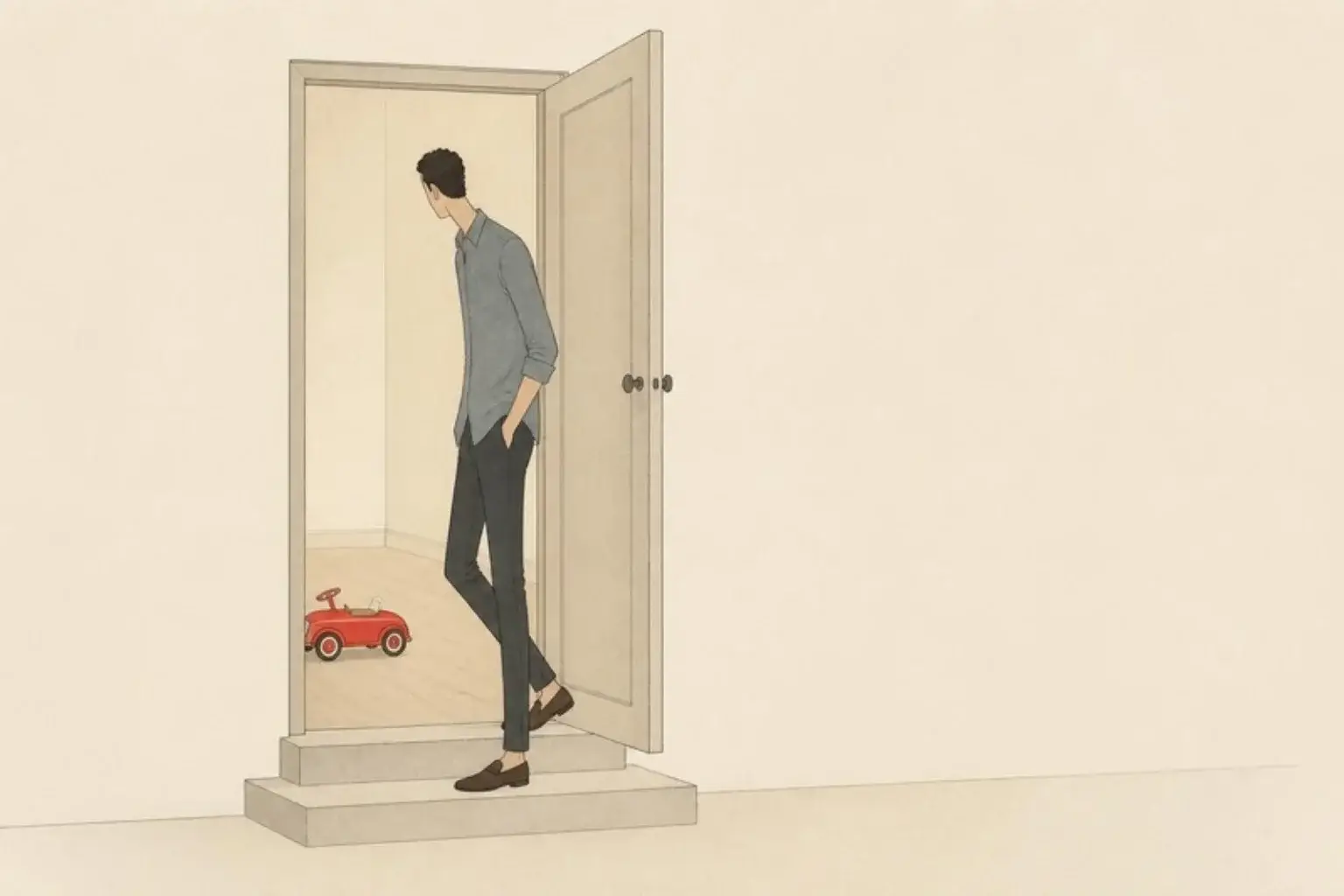
Most men who ask this question have been asking it for a long time. Standing in the doorway feels safer than walking through or closing the door. It costs a lot. Two years of half-presence is two years your children feel, even if nobody says anything.
02Five questions
Children do not need parents who stay. They need parents who stop fighting.
Kita Tabachka, relational therapist
03What children need
Children cope better with two calm homes than one angry one. What hurts them most is being put in the middle: carrying messages, hearing one parent run down the other, feeling responsible. If you stay, stay present and stop the fighting. If you go, go gently and keep your promises about contact.
Chris came to sessions with the list on his phone. By the sixth session he had deleted it, and asked his wife to come with him to couples therapy. They did not know yet how it would end. Both of them said the waiting had been worse than trying. If you are already separating, read coping with separation as a dad.
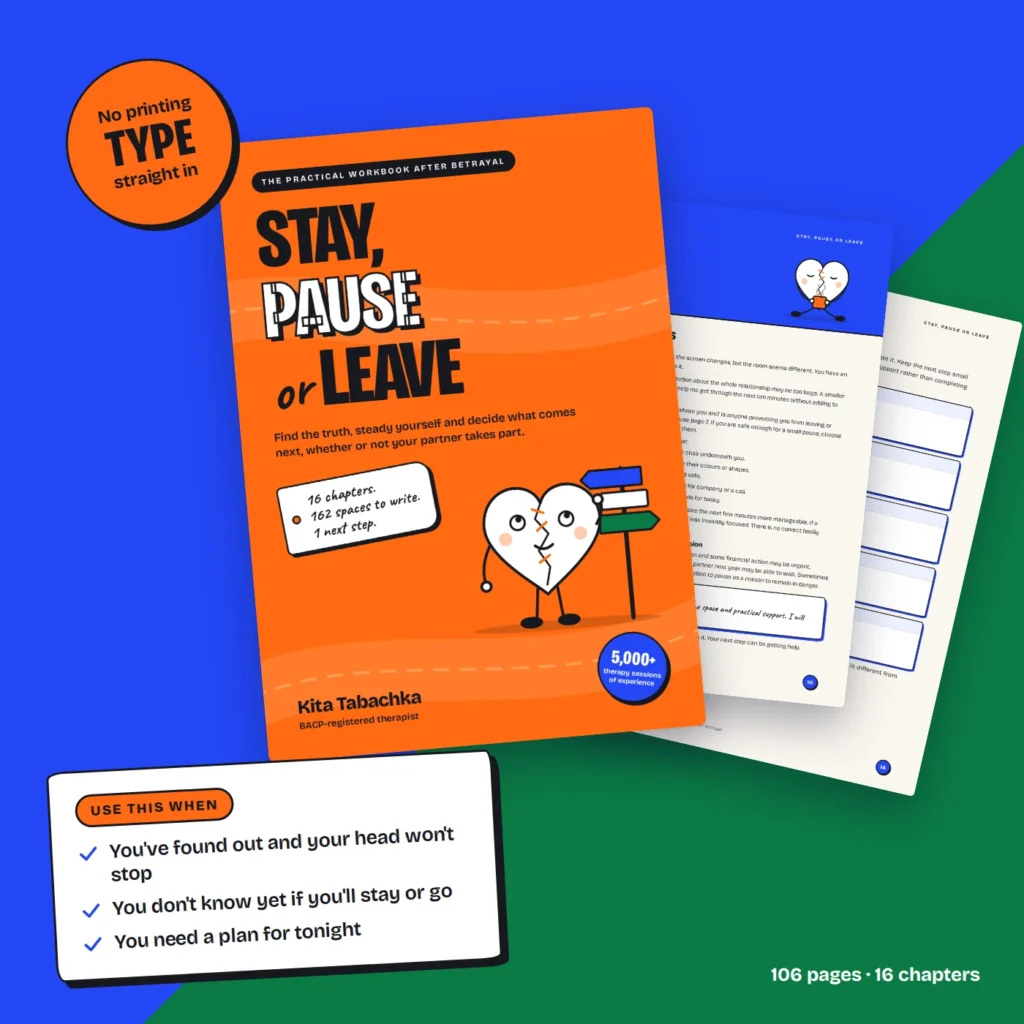
If the question follows an affair, Stay, Pause or Leave walks you through all three options, including a supported pause, so you decide from steadiness instead of shock.
More for men, from the journal

Weekly written counselling with Kita
When writing feels easier than speaking.
You can enquire about weekly written counselling for your own experience of relationships and life abroad. We agree whether this format is a useful fit before you pay.
Explore written counselling£50 per week. One personal written reply through Carepatron. Suitability, your weekly reply day and terms agreed before payment.

Kita Tabachka
I am a BACP-registered relational therapist. I work with individuals and couples, many of them living far from where they began, on relationship anxiety, attachment, intimacy and the strange business of building a self in a new country. The stories here are composites. The patterns are real. My writing is a door into the work, never a substitute for it.
More about my practiceQuestions men ask me
This article is written by Kita Tabachka, MBACP, and is for general education and reflection. It describes patterns seen in clinical work, but it is not therapy, and it is not a substitute for individual advice from a qualified therapist, doctor or other professional who knows your situation.
Reading it cannot diagnose anything or replace your own judgement about what you need. If something here resonates and you would like support, you are welcome to learn more about my practice or book a free consultation. If you are in crisis or immediate danger, please contact local emergency services or an urgent mental health line in your country.
Join the conversation
If you have lived this, say so. Your words may be the thing a stranger at midnight needed to read.