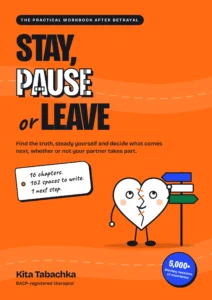
Online therapy in English
Therapy for trust issues, betrayal and the decisions that follow
After an affair, a lie or a broken agreement, you may find yourself replaying conversations and questioning what you can rely on. You can come to therapy before deciding whether to stay. I work online with individuals and couples, making room for the harm, the unanswered questions and the choices ahead.
Book a free consultation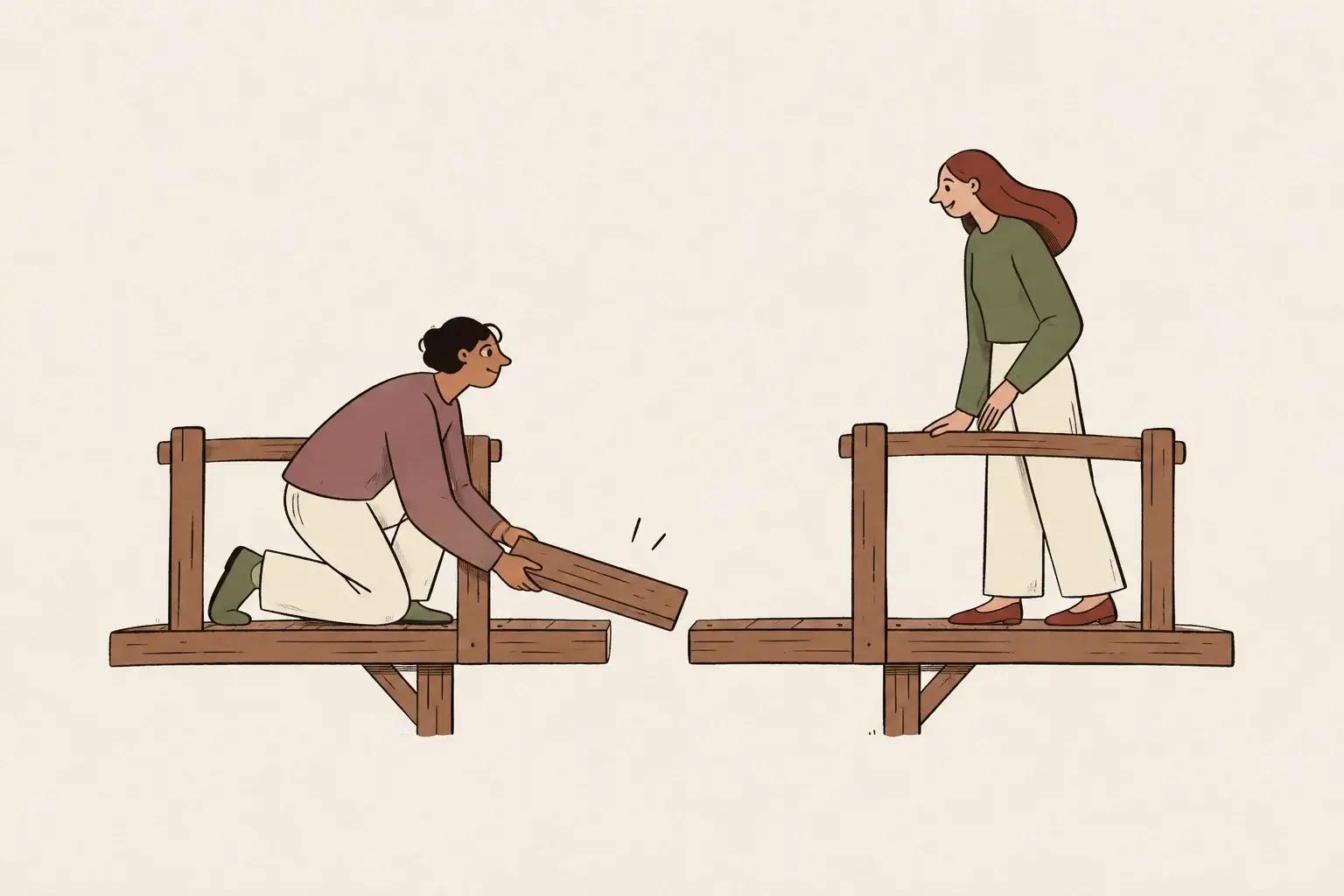
What is hardest right now?
I have discovered something and cannot think clearly
We can begin with the immediate impact, what you know and the support you need this week. You do not have to decide the future of the relationship at the first session.
We keep returning to the same questions
We can distinguish information that remains missing from questions that are being answered without rebuilding reliability. Ongoing dishonesty needs to be addressed directly.
I broke an agreement and want to take responsibility
We can examine your choices and their impact without asking the other person to move on at your pace. An explanation does not remove responsibility.
I am unsure whether I want to rebuild
Therapy can give you space to consider staying, separating or taking time before deciding. Forgiveness and reconciliation are not conditions of working with me.
What trust and betrayal work involves
We first clarify what brings you, whether the harmful behaviour is continuing and whether you can speak safely. We discuss the purpose of the work before asking you to talk through painful details.
In individual sessions, we can explore the effect on sleep, confidence, daily decisions and relationships. We can consider boundaries, practical support and what you need to know before making a choice. If you are the person who broke trust, the focus includes responsibility and changes you can make without demanding a particular response.
In joint work, we can examine what each person understands happened, where accounts remain unclear and whether there is willingness to work towards specific agreements. I do not treat betrayal as something both people must have caused. Relationship difficulties and the decision to deceive are separate matters.
Rebuilding trust involves behaviour over time. Therapy can support that process, but attendance alone is not evidence that someone is now reliable.

What would an agreement need to include?
Make a promise clear enough to review
“I will try harder” leaves both people guessing. A useful discussion asks what action is being agreed, when it will happen and how you will address a missed agreement.
You may need to discuss contact with another person, financial information, sexual health or how difficult questions will be handled. The appropriate agreement depends on the situation. Legal, medical and financial questions may need separate professional advice.
Reassurance should not require coercion or unrestricted surveillance. Both people need to understand and freely agree to boundaries. If fear or control is present, individual and specialist support takes priority over joint exercises.
What if no betrayal has happened in this relationship?
We can explore mistrust without assuming your concern is irrational or that your partner must be hiding something. Earlier experiences, current behaviour and uncertainty may all need attention.
Bring a recent example. What happened? What did you understand it to mean? What did you do next? This helps us decide whether work on relationship anxiety, attachment difficulties or a specific current problem would be useful.
Starting individual or couples work
I am Kita Tabachka, a UK-based BACP-registered therapist. A free 15–20 minute consultation lets us discuss what you need and whether my work fits.
Individual sessions cost £70 for 50 minutes. Joint couples sessions cost £100 per couple for 70 minutes. Both partners attend the couples consultation. Individual background meetings follow before joint work, with fees and confidentiality terms agreed first.
Read how couples therapy begins and the full fees and process. If you live abroad, we check your physical location and suitability before arranging therapy. Read my essay on how an affair changes the way you see the past.
If you are facing this away from home, explore the guide to trust and betrayal abroad, which brings together reading on isolation, practical dependence and rebuilding trust.
Questions you may have
Do we have to want to stay together before starting?
No. We need to agree what the work is for and whether joint sessions are appropriate. Clarifying your options can be part of the conversation. Neither reconciliation nor separation is a promised outcome.
Can I come alone if my partner will not attend?
Yes, subject to suitability. Individual therapy can focus on your experience, boundaries and decisions. It cannot verify another person’s account or make them change.
How long does it take to rebuild trust?
There is no reliable timetable for an individual relationship. What happened, whether it has stopped, the reliability of new agreements and each person’s wishes all matter.
Will you keep secrets from one partner in couples therapy?
We discuss confidentiality and how information from individual background meetings is handled before those meetings take place. Ask about this before sharing information you expect to be kept from a partner. Do not assume an arrangement without checking it.
Where to go next
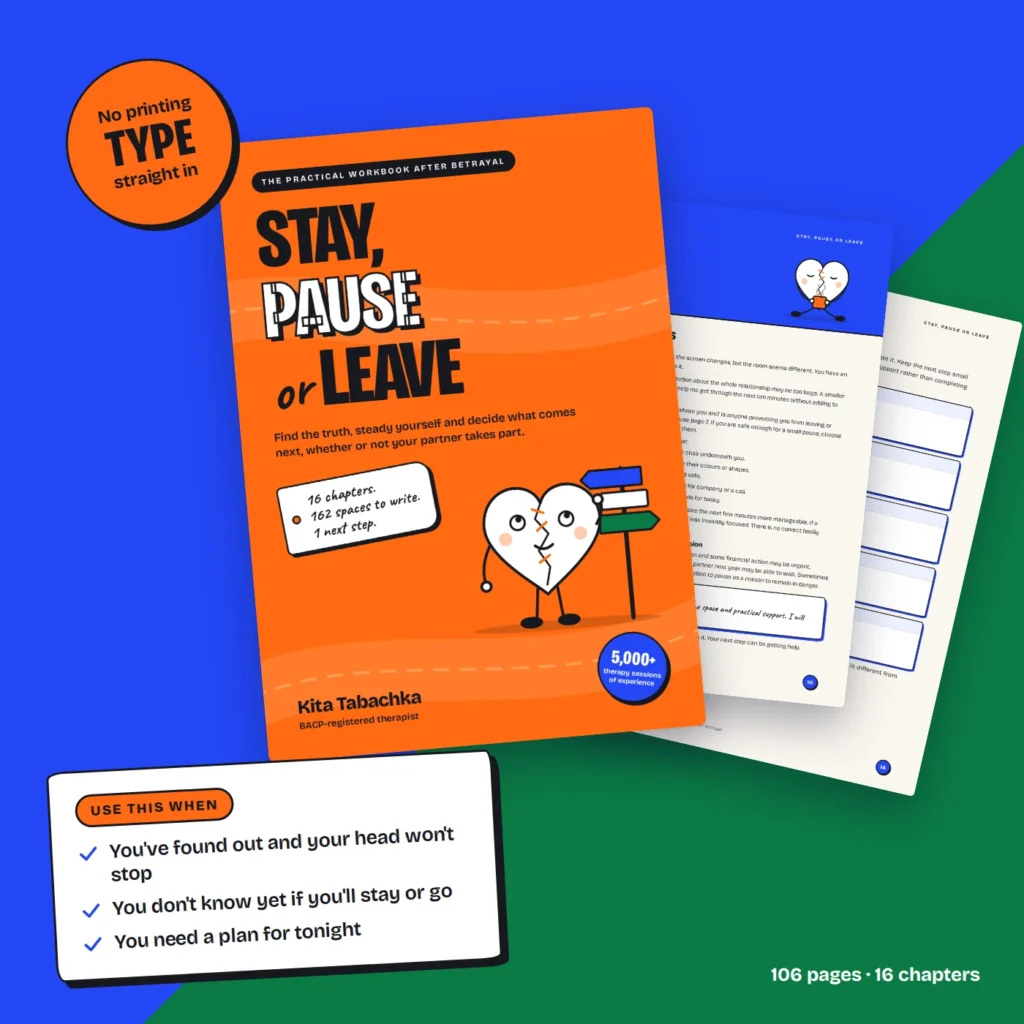
Stay, Pause or Leave
You found out. Now everyone has an opinion and you have a decision. This workbook takes you through the weeks after betrayal in order: steady yourself first, get the facts straight, then decide. Written from my practice.
£29, instant PDF download
Get the workbookA companion to therapy, not a substitute for it.