
Tom earned more than anyone in his family ever had. He ran a team of forty. When his partner said she was proud of him, he changed the subject within a sentence. In our first session he told me, calmly, he was waiting to be found out. He had been waiting since he was eleven.
Low self-esteem in men rarely sounds like self-doubt. It shows up as overwork, perfectionism, anger at criticism, people-pleasing, withdrawal or bravado. It usually starts early, in homes where love felt conditional on performance. You rebuild it through small promises kept to yourself, honest work with your inner critic, and one person who sees the real picture.
01The signs men miss
Tap a card to turn it over.
Other signs: you apologise for taking up space, you deflect every compliment, you compare your salary, body or marriage with every man you meet, you avoid anything new in case you are bad at it, and you feel a flash of rage when someone points out a mistake.
02Where it starts
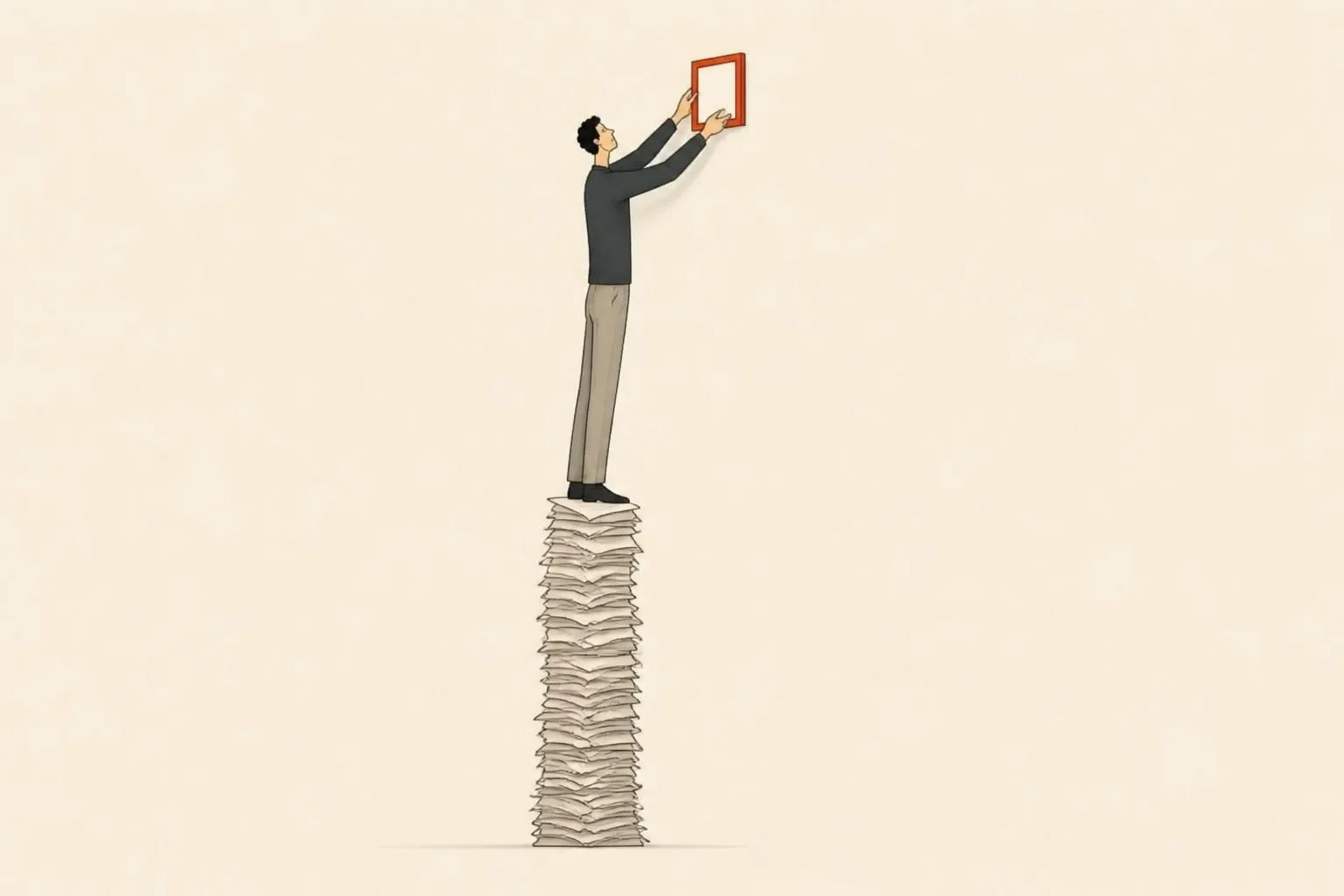
Most men with low self-worth grew up earning love. A father who noticed only the grades. A mother who needed him to be the sensible one. Bullying at school. A parent’s divorce he decided was his job to fix.
Boys learn to turn shame into action, and men keep doing it. From the outside it looks like confidence. On the inside it feels like a permanent audition.
03What it does to your relationships
You do not need to earn a place at your own table.
Kita Tabachka, relational therapist
04How to build self-esteem as a man
Self-esteem grows from evidence, not pep talks. Three practices help most of the men I see.
Keep small promises to yourself. A ten-minute walk, a bedtime, one call to a friend. Each kept promise is proof you follow through for yourself as well as for others.
Name the critic. Write down the exact sentence in your head when you make a mistake. Then ask whose voice it is. Often it belongs to a parent, a coach or a teacher from thirty years ago.
Let one person see the real picture. A friend, a partner, a therapist. Shame shrinks when someone knows the worst of it and stays.
Tom’s first homework was to say “thank you” to a compliment and nothing else. He told me it was the hardest thing he did all year. Individual therapy is where this work happens, and why men do not ask for help explains why the first step feels so big.
If low self-worth turns into thoughts of not wanting to be here, please speak to your GP, call Samaritans free on 116 123 in the UK, day or night, or contact local emergency services abroad.
Online sessions for men and couples, wherever you live
I work in English with men on their own and with couples, including partners living in two countries. See how sessions run in your city, or read about online couples therapy and therapy for men.
More from the journal
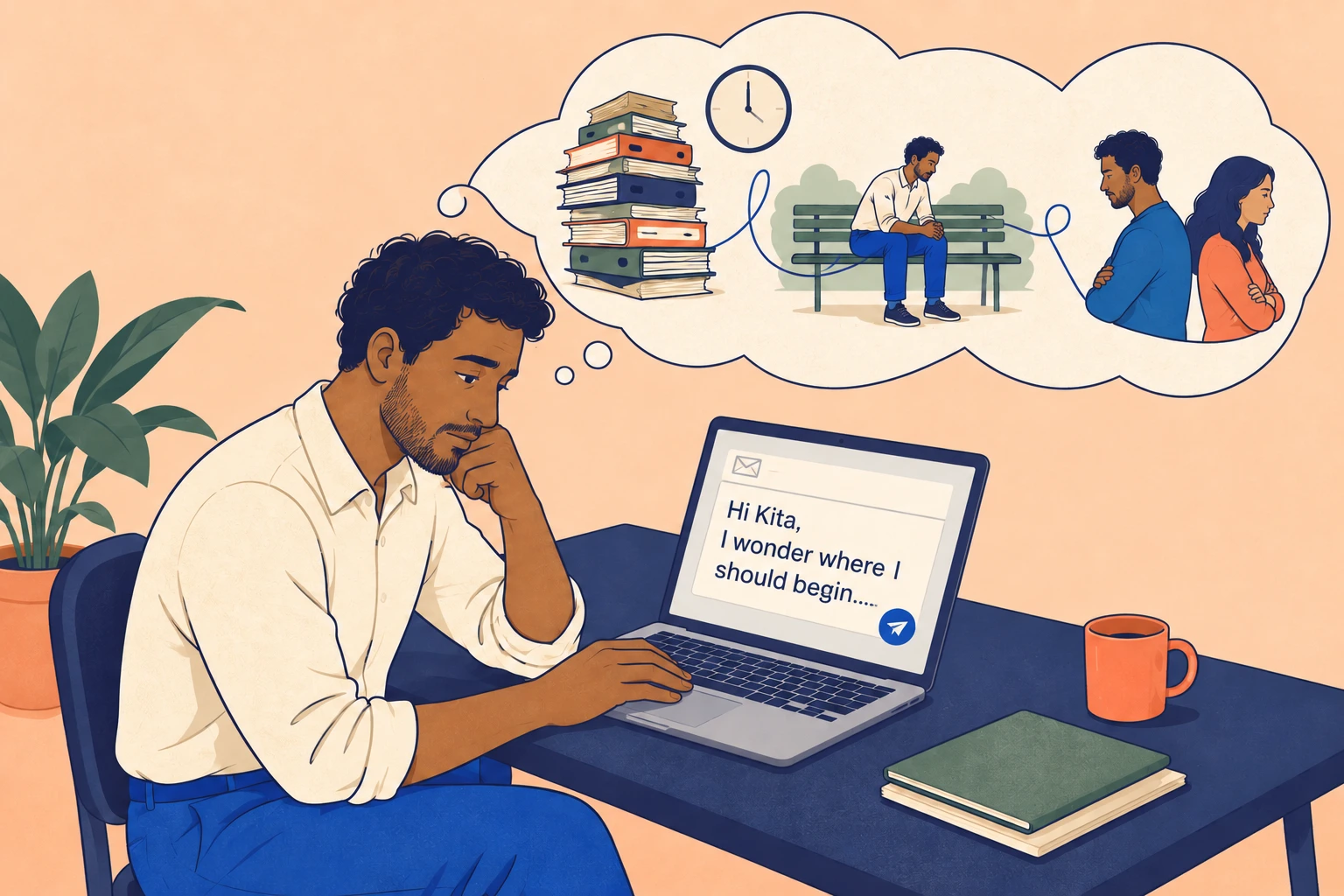
Weekly written counselling with Kita
When writing feels easier than speaking.
You can enquire about weekly written counselling for your own experience of relationships and life abroad. We agree whether this format is a useful fit before you pay.
Explore written counselling£50 per week. One personal written reply through Carepatron. Suitability, your weekly reply day and terms agreed before payment.

Kita Tabachka
I am a BACP-registered relational therapist. I work with individuals and couples, many of them living far from where they began, on relationship anxiety, attachment, intimacy and the strange business of building a self in a new country. The stories here are composites. The patterns are real. My writing is a door into the work, never a substitute for it.
More about my practiceQuestions people ask
This article is written by Kita Tabachka, MBACP, and is for general education and reflection. It describes patterns seen in clinical work, but it is not therapy, and it is not a substitute for individual advice from a qualified therapist, doctor or other professional who knows your situation.
Reading it cannot diagnose anything or replace your own judgement about what you need. If something here resonates and you would like support, you are welcome to learn more about my practice or book a free consultation. If you are in crisis or immediate danger, please contact local emergency services or an urgent mental health line in your country.
Join the conversation
If you have lived this, say so. Your words may be the thing a stranger at midnight needed to read.