
Helen found the hotel booking on the family laptop while ordering school shoes. She closed the lid, finished making dinner, bathed the children and read two stories. At 10pm she sat on the bedroom floor with the laptop open again and read every message twice. She did not cry until Saturday.
When your husband cheats, the first weeks are for steadying yourself, not deciding the marriage. The affair was his choice, whatever was wrong between you. Get the facts which affect your health, money and children, tell one person you trust, and give yourself time. Then decide based on what he does, not what he promises.
01The first weeks

02The question you keep asking
Nearly every woman I see after an affair asks the same thing: what did I do wrong? Perhaps you were tired. Perhaps the marriage had gone quiet. Those things matter for the repair, if there is one. They did not make the choice.
The gap in the marriage explains the risk. It does not explain the choice.
Kita Tabachka, relational therapist
03Deciding
If he wants to stay, three things show you whether repair is possible: he ends contact and you see it end, he tells you the truth once instead of in pieces, and he stays in the room for your anger without making you the problem. If those are missing, promises are not enough. I wrote more about this in can a relationship survive infidelity.
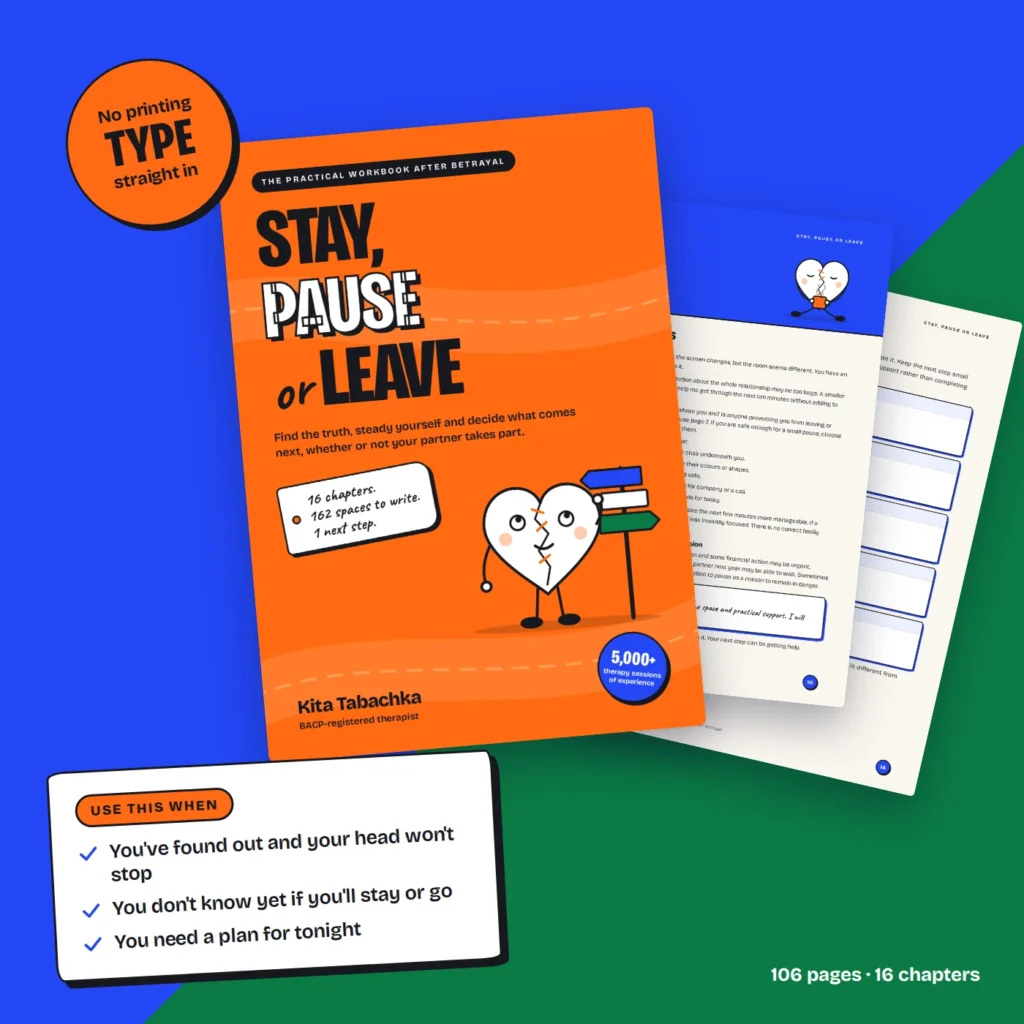
If it was an emotional affair rather than a physical one, it still counts. Read what is an emotional affair. For the weeks between the discovery and the decision, my workbook Stay, Pause or Leave gives you a route for each direction. Five pages are free to read.
More for women, from the journal

Weekly written counselling with Kita
When writing feels easier than speaking.
You can enquire about weekly written counselling for your own experience of relationships and life abroad. We agree whether this format is a useful fit before you pay.
Explore written counselling£50 per week. One personal written reply through Carepatron. Suitability, your weekly reply day and terms agreed before payment.

Kita Tabachka
I am a BACP-registered relational therapist. I work with individuals and couples, many of them living far from where they began, on relationship anxiety, attachment, intimacy and the strange business of building a self in a new country. The stories here are composites. The patterns are real. My writing is a door into the work, never a substitute for it.
More about my practiceQuestions women ask me
This article is written by Kita Tabachka, MBACP, and is for general education and reflection. It describes patterns seen in clinical work, but it is not therapy, and it is not a substitute for individual advice from a qualified therapist, doctor or other professional who knows your situation.
Reading it cannot diagnose anything or replace your own judgement about what you need. If something here resonates and you would like support, you are welcome to learn more about my practice or book a free consultation. If you are in crisis or immediate danger, please contact local emergency services or an urgent mental health line in your country.
Join the conversation
If you have lived this, say so. Your words may be the thing a stranger at midnight needed to read.