
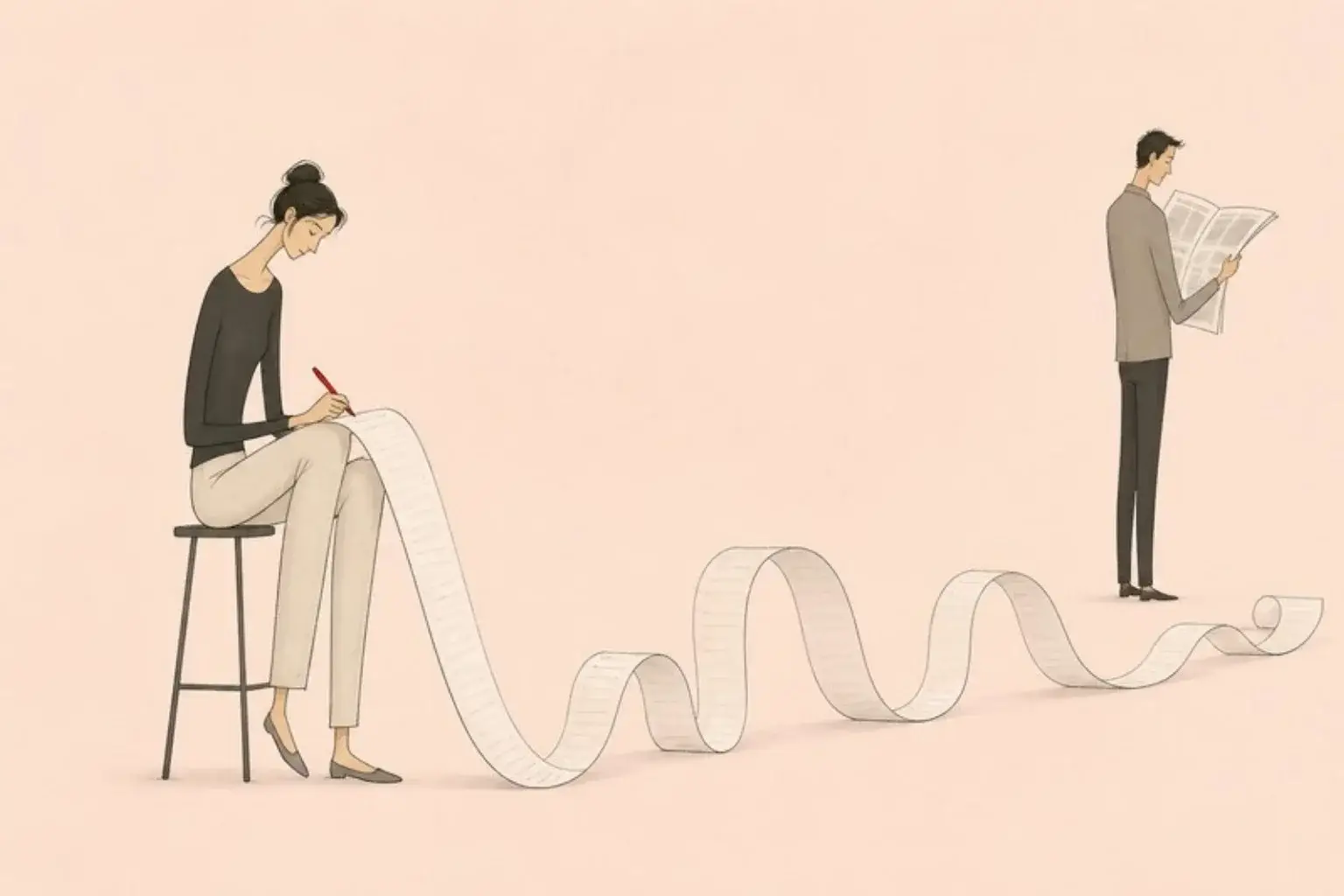
Nadia keeps the receipt in her head. She knows who did the last three school runs. She knows who gave up the job in Frankfurt so the family moved to Doha. She knows who remembers his mother’s birthday. He does not know there is a receipt at all. He thinks they are fine.
You resent your partner when you have given something, or given something up, and it has gone unseen. Resentment is an unspoken request: notice me, share this, thank me, choose me back. Left unspoken, it hardens into contempt. Spoken as a request, it becomes a conversation.
01The ledger
Most people who resent a partner keep a ledger, and most of them are ashamed of keeping it. They do not want to be the person counting. So they keep counting silently, and the silence makes the numbers bigger.
02Where it comes from
The last line is the one I hear most. Resentment grows fastest in people who never said no. The people-pleaser gives and gives, then hates the person who took. The other partner, meanwhile, had no idea anything was being given. I wrote about the same pattern from another angle in why people cheat.
Resentment is a request you never made out loud.
Kita Tabachka, relational therapist
03Turning it into a request
Pick one item from the ledger. Not the biggest. One which fits in a sentence. “I want us to split the school runs, and I want you to organise it, not me.” Say it once, at a calm time, not in the middle of a row about something else.
Then watch. A partner who hears the request and acts on it is a partner worth staying with. A partner who hears it, agrees, and changes nothing tells you something too. Either way, you stop carrying the receipt alone.
Nadia said her sentence on a Sunday morning. Her husband went quiet for a long time and then said, “I thought you liked Doha.” It was the start of the first honest conversation they had had since the move. Couples in this spot often come to couples therapy, or to support for the partner who moved.
More from the journal
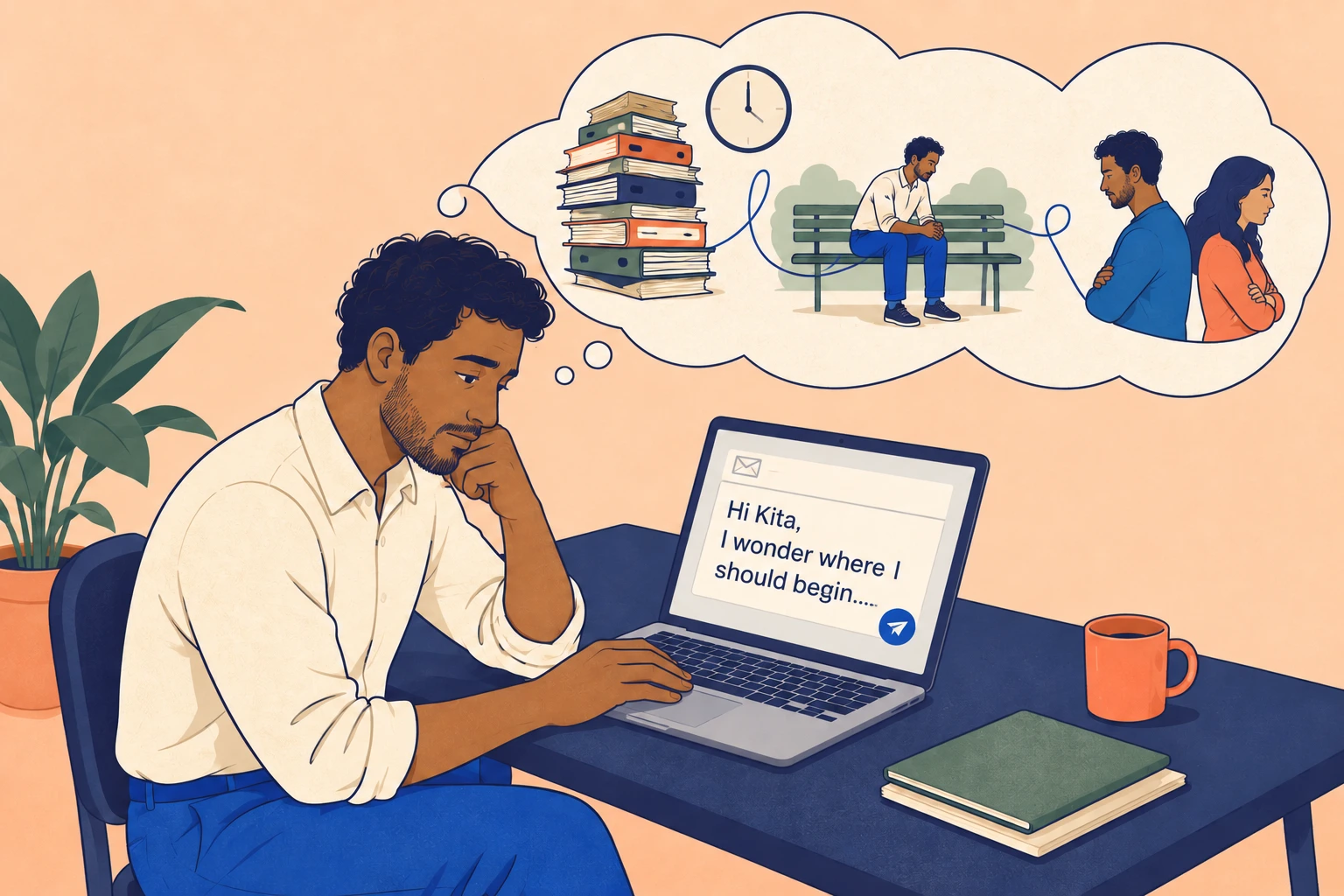
Weekly written counselling with Kita
When writing feels easier than speaking.
You can enquire about weekly written counselling for your own experience of relationships and life abroad. We agree whether this format is a useful fit before you pay.
Explore written counselling£50 per week. One personal written reply through Carepatron. Suitability, your weekly reply day and terms agreed before payment.

Kita Tabachka
I am a BACP-registered relational therapist. I work with individuals and couples, many of them living far from where they began, on relationship anxiety, attachment, intimacy and the strange business of building a self in a new country. The stories here are composites. The patterns are real. My writing is a door into the work, never a substitute for it.
More about my practiceQuestions people ask
This article is written by Kita Tabachka, MBACP, and is for general education and reflection. It describes patterns seen in clinical work, but it is not therapy, and it is not a substitute for individual advice from a qualified therapist, doctor or other professional who knows your situation.
Reading it cannot diagnose anything or replace your own judgement about what you need. If something here resonates and you would like support, you are welcome to learn more about my practice or book a free consultation. If you are in crisis or immediate danger, please contact local emergency services or an urgent mental health line in your country.
Join the conversation
If you have lived this, say so. Your words may be the thing a stranger at midnight needed to read.