
Sophie had a folder on her laptop called “For J”. It held twelve articles on depression, three therapist profiles and a sleep plan. She had sent him every one. He had opened none. When we met, she asked me how to make him read them. By the end of the session she had a different question: how to stop being his project manager and go back to being his wife.
Supporting a husband with depression means listening more than advising, keeping daily life steady, inviting him towards help rather than pushing, and naming changes without blame. It also means protecting your own sleep, friendships and limits. You are his partner, not his therapist. If he talks about ending his life, get urgent help.
01What to say
Tap a card to turn it over.
Depressed men often hear advice as criticism. Short, warm, specific sentences land. Long conversations at midnight rarely do.
02Getting him to help
Nobody forces an adult man into therapy. What you do is make the door easier to walk through.
Offer one practical step with a clear end: a GP appointment, a twenty-minute call. Many men respond to a task more readily than to a feeling. Book it with him, not for him.
If he refuses, keep the invitation open and stop turning every evening into a negotiation. Pressure feeds the shame keeping him stuck.
03What to stop doing
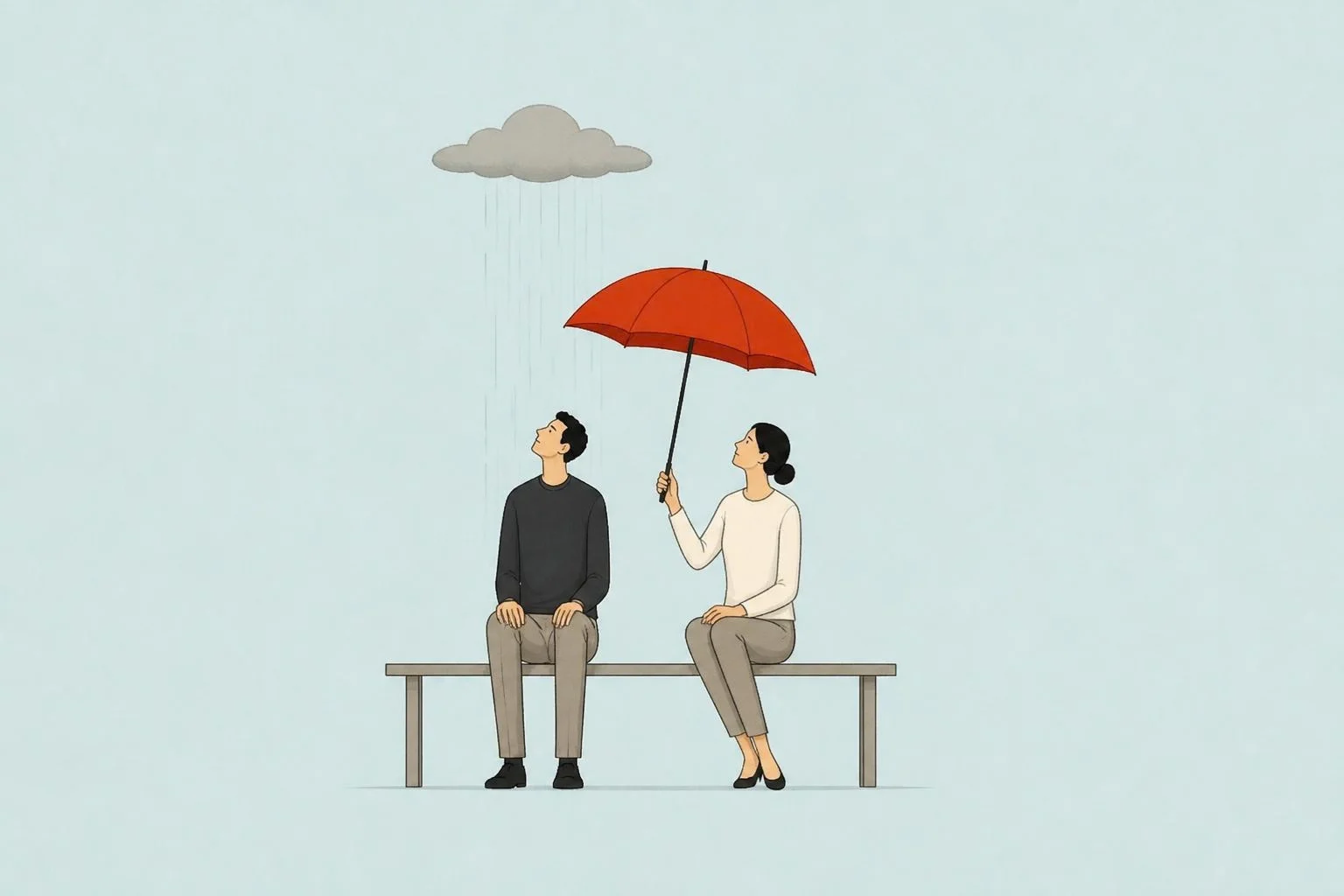
Love him as your husband, not as your patient.
Kita Tabachka, relational therapist
04Looking after yourself
Partners of depressed men burn out quietly. You lose sleep, cancel friends, carry the household and the emotional weather.
Keep one thing which is only yours: a class, a friend, an hour on Saturday. Tell someone outside the marriage how hard this is. If his low mood turns into cruelty, control or threats, his depression explains it. It does not excuse it.
Couples therapy helps when depression has worn grooves into how you talk to each other. We work on the pattern between you, while he gets individual or medical support for the depression itself.
Sophie deleted the folder. She and her husband walk the dog together on Sunday mornings now. He booked his own GP appointment in March. What depression looks like in a man explains the signs in more detail.
Take it seriously and ask him directly whether he is thinking of ending his life. Asking does not put the idea there. If he is in immediate danger, call 999 in the UK or local emergency services abroad. Samaritans are free on 116 123, day or night, for him or for you.
Online sessions for men and couples, wherever you live
I work in English with men on their own and with couples, including partners living in two countries. See how sessions run in your city, or read about online couples therapy and therapy for men.
More from the journal
Weekly written counselling with Kita
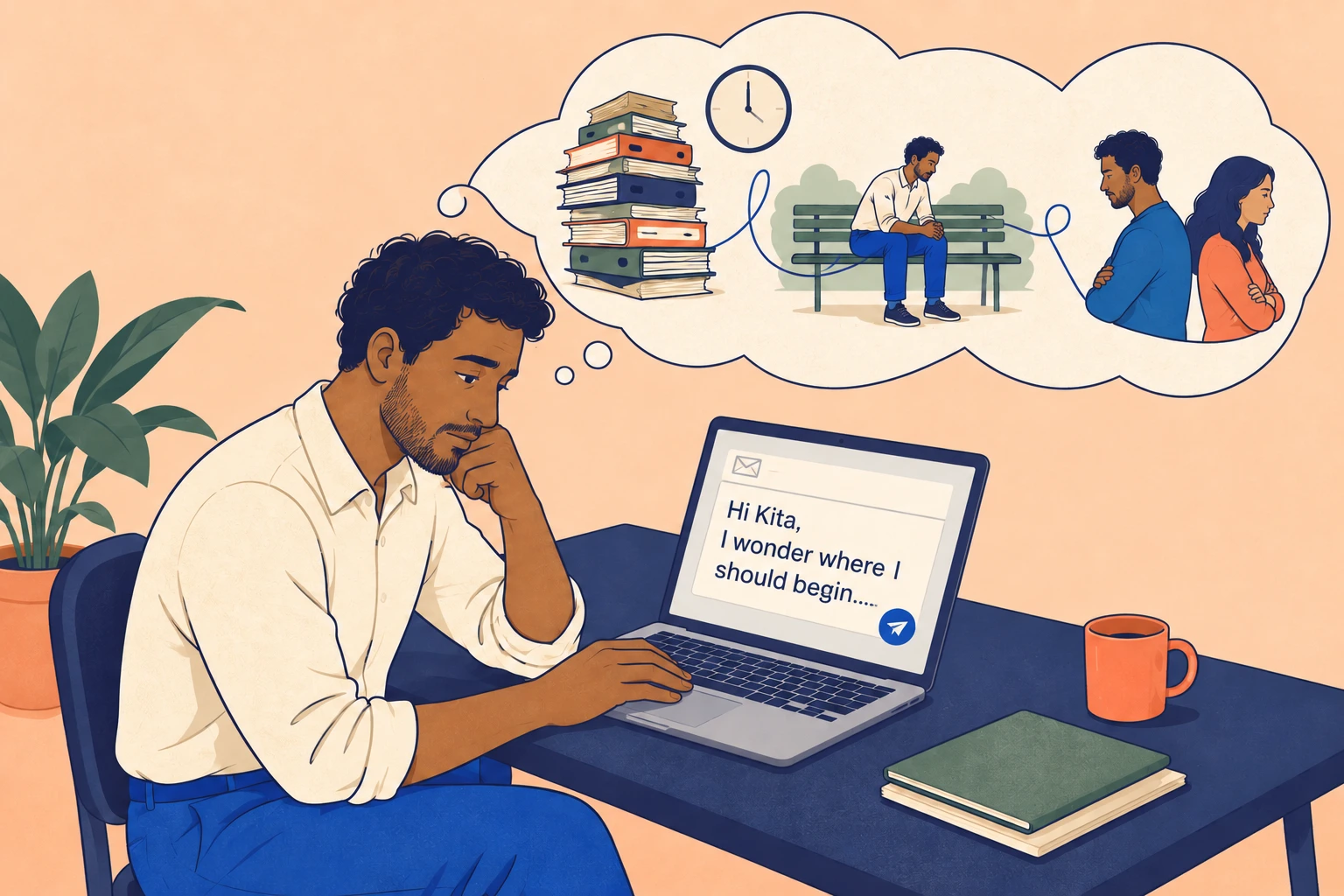
When writing feels easier than speaking.
You can enquire about weekly written counselling for your own experience of relationships and life abroad. We agree whether this format is a useful fit before you pay.
Explore written counselling£50 per week. One personal written reply through Carepatron. Suitability, your weekly reply day and terms agreed before payment.

Kita Tabachka
I am a BACP-registered relational therapist. I work with individuals and couples, many of them living far from where they began, on relationship anxiety, attachment, intimacy and the strange business of building a self in a new country. The stories here are composites. The patterns are real. My writing is a door into the work, never a substitute for it.
More about my practiceQuestions people ask
This article is written by Kita Tabachka, MBACP, and is for general education and reflection. It describes patterns seen in clinical work, but it is not therapy, and it is not a substitute for individual advice from a qualified therapist, doctor or other professional who knows your situation.
Reading it cannot diagnose anything or replace your own judgement about what you need. If something here resonates and you would like support, you are welcome to learn more about my practice or book a free consultation. If you are in crisis or immediate danger, please contact local emergency services or an urgent mental health line in your country.
Join the conversation
If you have lived this, say so. Your words may be the thing a stranger at midnight needed to read.