Long-distance relationship counselling
You wait all day to talk. Then the call ends badly.
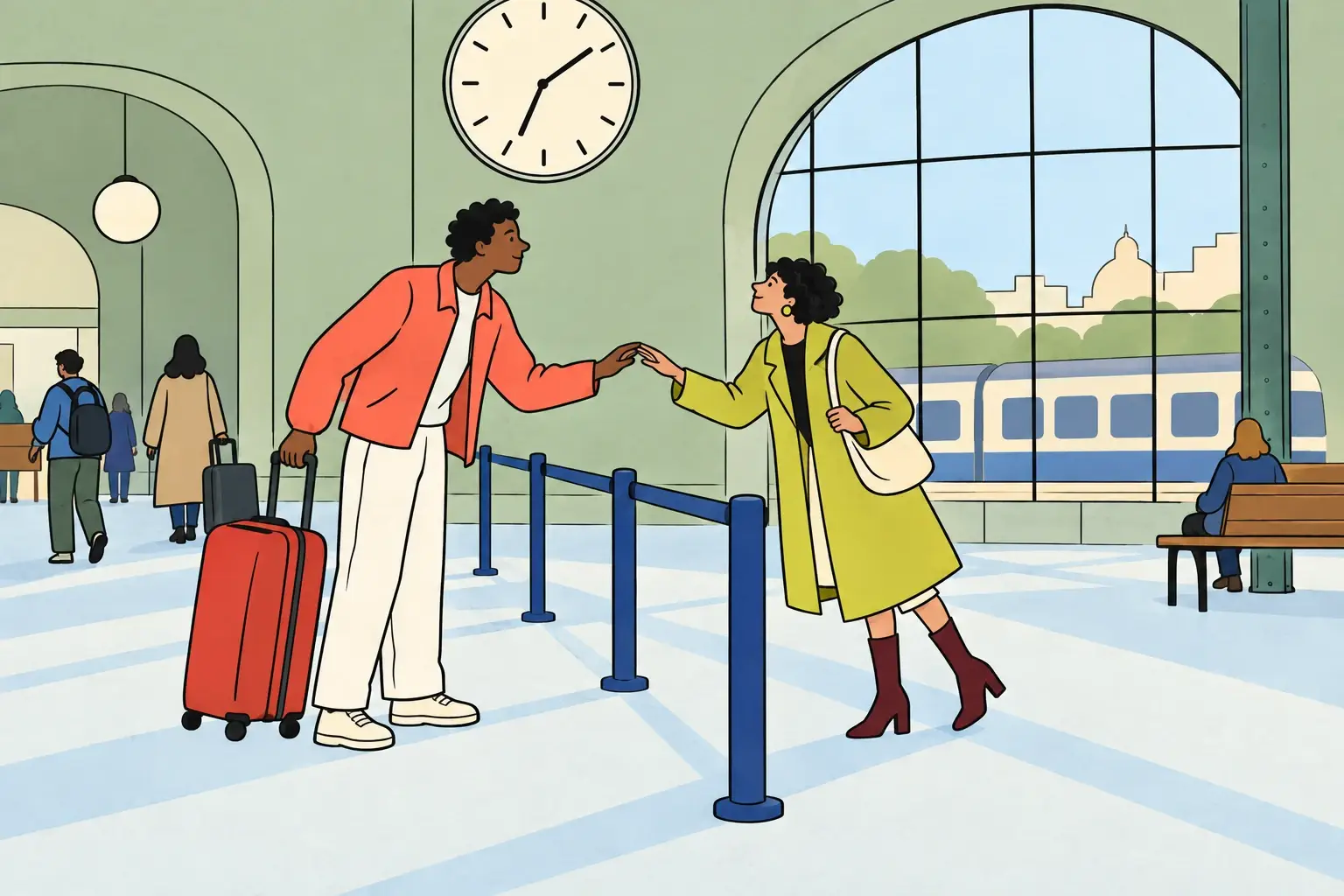
You miss each other, but lately your conversations leave you feeling further apart. Perhaps you argue about replies, avoid difficult subjects to protect a rare weekend together, or cannot agree when the distance will end.
In online long-distance couples therapy, I help you work through those conversations: what each of you needs, what is hurting, and which changes you are both willing to make.
£100 per couple · 70-minute online session
Start with a free 15 to 20 minute consultation with both of you.
Joining from different places? We check both locations and appointment times before arranging therapy.
- BACP Registered Member 409623
- Work directly with Kita
- Sessions in English through Carepatron
When staying in touch starts to hurt
You might be dating across cities, married and working abroad, or waiting on a visa. You can come while you still want the relationship, while you are unsure, or before a planned period apart.
We argue by text, then spend days recovering.
We can take one recent exchange and look at where it changed: the words you used, what each person understood and what happened next. Then we practise how to pause and return to the issue without leaving it unresolved.
More about communication problemsI need reassurance. My partner feels checked up on.
We explore the worry alongside what is happening in the relationship. Together we can discuss reliable contact, privacy and boundaries. Where an agreement has been broken, reassurance alone may be insufficient.
Support with trust and betrayalFinding time to talk has become another argument.
We look at work, sleep, caring responsibilities and time zones. The aim is a contact agreement that both people can realistically keep, including what happens when a call has to change.
Explore contact across time zonesWe love each other, but the intimacy has gone.
You can talk about feeling wanted, loneliness, affection and differences in desire. We make room for what feels welcome to each of you, including the pressure to make a short visit or a video call feel special.
Read about intimacy while living apartEvery visit carries too much expectation.
Travel costs, exhaustion, family commitments and postponed disagreements can crowd into a few days. We can talk through how you share those demands and what each person hopes a visit will offer.
We cannot agree who should move, or when.
A future together can involve leaving work, family, a language or a country. We explore each option and its cost to both of you, including whether you want the same future. The decision remains yours.

I will help you have the conversation you keep getting stuck in.
I work with individuals and couples whose relationships are affected by conflict, trust concerns and life across countries. My couples work draws on Gottman Method training and an understanding of how earlier relationships can affect the present.
In a session, I may pause an exchange, ask each of you what you heard, and help you put a difficult point into words your partner can respond to. Both of you need room to speak. If I misunderstand something, I want you to tell me.
We agree what you want to work towards and review whether the sessions are useful. That might mean fewer arguments after missed calls, clearer boundaries, more satisfying time together, or an honest decision about your future.
Read about my approach · Read client reviews · View my BACP profile
What would we actually do in a session?
Take a missed evening call. One person stayed awake waiting; the other was held up at work. By the next day, the conversation is about being controlling or not caring.
I would help you slow that conversation down. What had you agreed? What did waiting mean to one of you? What made it difficult for the other to send an update? Was this a one-off, or part of something that keeps happening?
From there, we can work on a specific agreement: how you let each other know when plans change, how you respond to disappointment, and when you return to an unfinished conversation. Between sessions, we may use a reflection or worksheet relevant to what you are working on.
This is an illustrative example, not a client story or a promised result.
What happens in your version of that conversation?
You can start the consultation with one recent example. You do not have to agree on what it means.
How online therapy for long-distance couples works
Meet me together for 15 to 20 minutes
The initial consultation is free. Both partners attend. Tell me what has been difficult, ask questions and get a sense of how it feels to speak with me. You can decide afterwards whether you want to continue.
Agree the practical details and assessment
We check both locations, local appointment times and whether online work is appropriate. If we continue, I arrange an individual background appointment with each of you before ongoing couples sessions. I explain the fees, confidentiality and how information shared individually is handled within couples work before those appointments.
Begin joint sessions with a clear focus
Couples sessions cost £100 for 70 minutes, for the two of you together. We agree your priorities and how often to meet. You can join the same Carepatron video appointment from separate places, where this is suitable. Each of you needs privacy and a reliable connection.
I am based in the UK. Working across borders depends on each partner’s location, suitability and available times. Read how international couples appointments work or see the full fees and process.
Need to check countries or time zones first?
Email with the countries you would each join from and your general availability. A brief outline is enough; you do not need to send your relationship history.
Questions about long-distance relationship counselling
Can we have couples therapy if we live in different countries?
You may be able to join the same online appointment from separate locations. I check the country each partner will be in, whether I can appropriately work with you there, and whether an available time works for both of you. Please check with me before arranging cross-border appointments.
How much does long-distance couples therapy cost?
Joint sessions cost £100 for 70 minutes, for both partners together. The initial 15 to 20 minute consultation is free. If we continue, individual background appointments form part of the assessment; I explain their fees and purpose before you book. There is no requirement to commit to a fixed number of ongoing sessions.
What if my partner is unsure about therapy?
You can suggest meeting me together to ask questions about the work. Neither person should feel pressured to attend. If your partner does not want to participate, you can enquire about individual therapy for your own concerns; that is a different arrangement from joint couples work.
Can therapy help us decide whether to stay together or close the distance?
You can bring uncertainty about the relationship, who might relocate, or whether your plans still fit. I help you discuss what each option means to both of you. Therapy cannot guarantee that you will stay together, and I will not decide whether either of you should move.
Do we need to be married or already in crisis?
No. You can enquire as dating, engaged or married partners, including before a period of living apart. You do not need to wait for a crisis or agree on every part of the problem before meeting me.
Can we work on jealousy, infidelity or trust issues while apart?
Yes, these are concerns you can bring. We look at what has happened, the agreements between you and whether both people are willing to be honest. Repeated deception needs to be addressed directly. If there is fear, intimidation or control, I first consider whether joint sessions are appropriate.
How many sessions will we need?
There is no set number that fits every couple. We discuss your priorities, circumstances and what you can commit to, then agree a frequency and review whether the work is helping. The consultation is a first conversation about fit, rather than a full therapy session.
Can you accommodate different communication or processing needs?
Tell me what helps you take part, such as a slower pace, clearer questions, time to think or written reflections. If ADHD, autism or another difference affects your conversations, we can discuss adjustments and whether my approach fits your needs before starting.
If you feel frightened, controlled or unable to speak freely with your partner present, contact me privately before arranging a joint appointment. We need to consider what support is appropriate.
For independent guidance on choosing a therapist and questions to ask, see BACP’s guide to finding therapy.
What men search for at 2am, answered by a therapist.
Short, honest pieces for the week everything changed: a divorce, an affair, a marriage gone quiet, a breakup, the empty weekends after separating.
What women ask at the kitchen table, answered by a therapist.
For the marriage which went quiet, the load nobody sees, the affair, the baby years, and the question of whether to stay.
Tell me what happens between you when you are apart.
You can begin with the last argument, the call you keep putting off, or the question about your future that neither of you knows how to answer. The free consultation is a chance for both of you to meet me and ask whether this work feels right.
Book your free couples consultation15 to 20 minutes · Both partners attend · No commitment to ongoing sessions