
Sara met two men in the same month in Singapore. One texted back within the hour and asked her to dinner on a Thursday. She found him a little boring. The other took two days to reply, cancelled once, and then sent a long, beautiful message at midnight. She thought about him constantly. She married the second one.
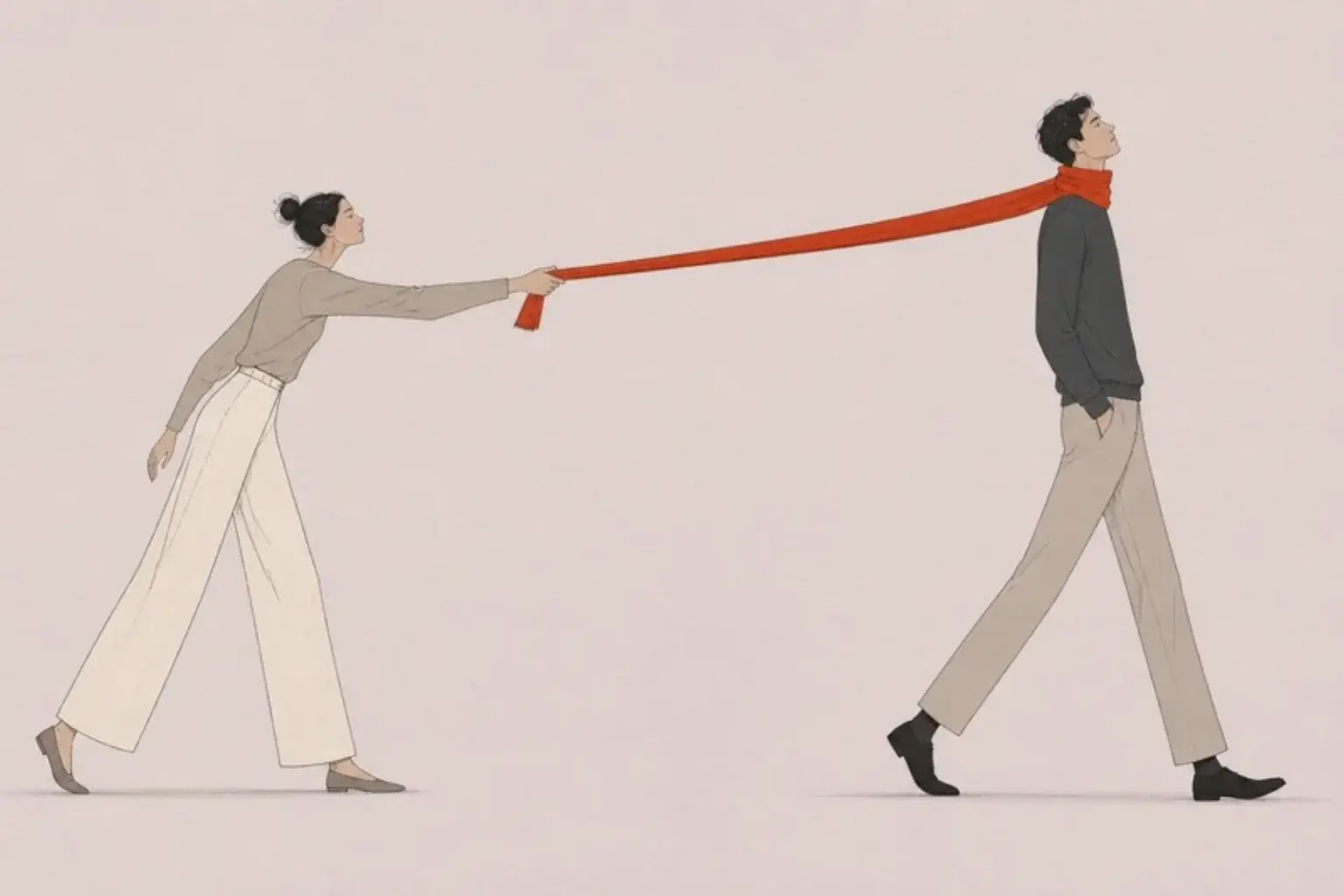
We love people who pull away when their distance feels familiar. People with an anxious attachment style often grew up winning love through effort, so a partner who withdraws switches on an old, intense search which feels like chemistry. The avoidant partner withdraws further when pursued. Each makes the other worse, and it still works when both see the loop.
01The loop
Attachment research, from John Bowlby and later Mary Ainsworth, describes how we learn early what closeness costs. Anxious attachment learns to chase and watch. Avoidant attachment learns to rely on no one and to back away when things get close.
Put the two together and you get a dance. She reaches, he steps back. She reaches harder, he steps back further. Both think they are responding to the other. Both are right.
02Why it feels like love
Four things the anxious partner feels, and what is often underneath. Tap a card to turn it.
The intensity is real. It is not always love. Often it is an attachment alarm, and alarms are loud. The man who replied within the hour set off no alarm, so Sara felt nothing and called it boredom.
The chase feels like love because it feels familiar.
Kita Tabachka, relational therapist
03Can it work
Yes, often, with both people working. The anxious partner learns to soothe the alarm without chasing, and to ask for closeness plainly instead of protesting. The avoidant partner learns to say “I need an hour, and I am coming back” instead of disappearing. Most couples in this loop need both skills, because it swaps round under stress.
It does not work when one person does all the changing, or when the pulling away is cruelty rather than fear. If you are wondering whether your worry is anxiety or a real warning sign, start with what relationship anxiety is and attachment styles in relationships.
Sara and her husband came to couples sessions in their fourth year. The first thing they learned was the name of the dance. The second: each of them had been dancing it alone.
More from the journal
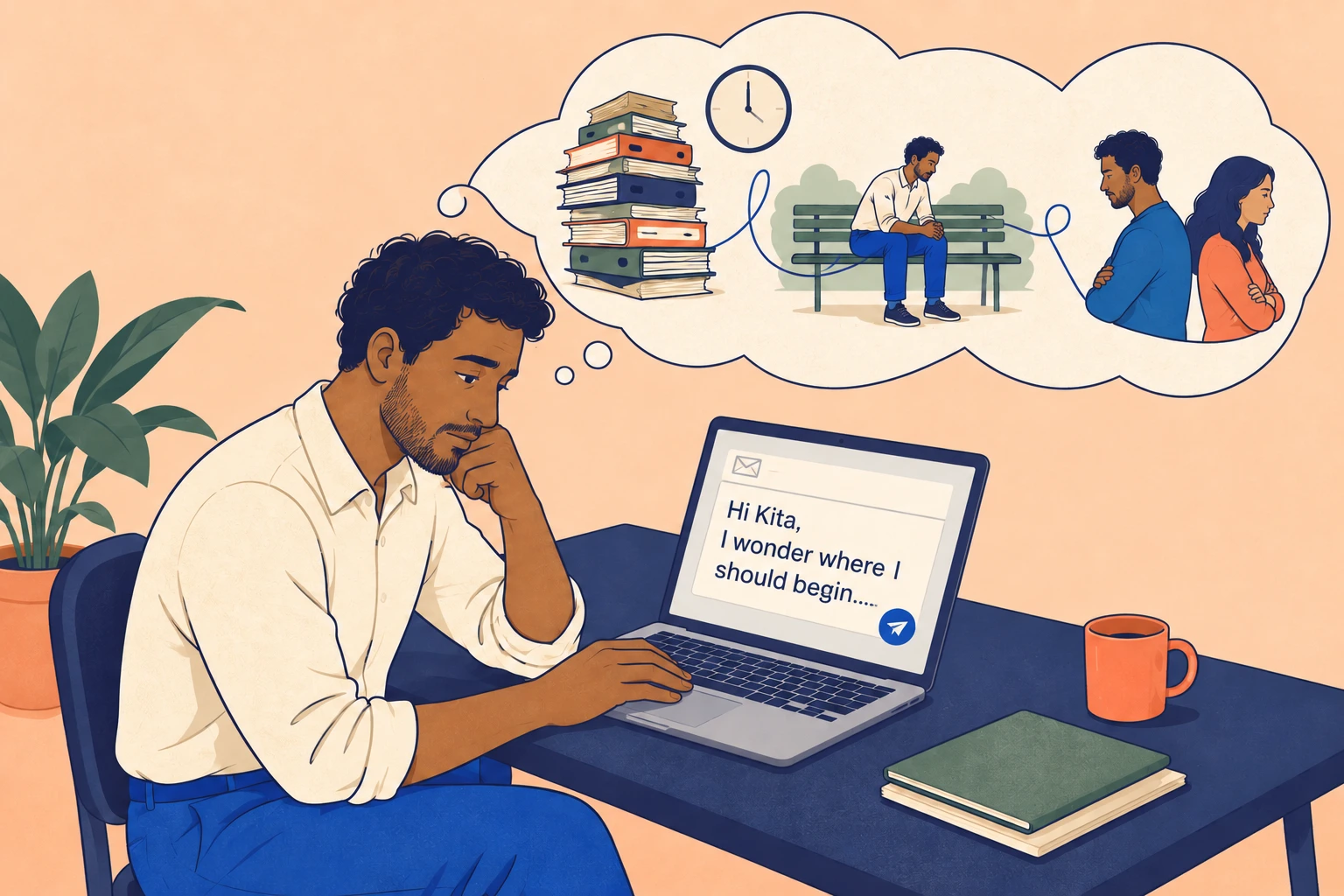
Weekly written counselling with Kita
When writing feels easier than speaking.
You can enquire about weekly written counselling for your own experience of relationships and life abroad. We agree whether this format is a useful fit before you pay.
Explore written counselling£50 per week. One personal written reply through Carepatron. Suitability, your weekly reply day and terms agreed before payment.

Kita Tabachka
I am a BACP-registered relational therapist. I work with individuals and couples, many of them living far from where they began, on relationship anxiety, attachment, intimacy and the strange business of building a self in a new country. The stories here are composites. The patterns are real. My writing is a door into the work, never a substitute for it.
More about my practiceQuestions people ask
This article is written by Kita Tabachka, MBACP, and is for general education and reflection. It describes patterns seen in clinical work, but it is not therapy, and it is not a substitute for individual advice from a qualified therapist, doctor or other professional who knows your situation.
Reading it cannot diagnose anything or replace your own judgement about what you need. If something here resonates and you would like support, you are welcome to learn more about my practice or book a free consultation. If you are in crisis or immediate danger, please contact local emergency services or an urgent mental health line in your country.
Join the conversation
If you have lived this, say so. Your words may be the thing a stranger at midnight needed to read.