
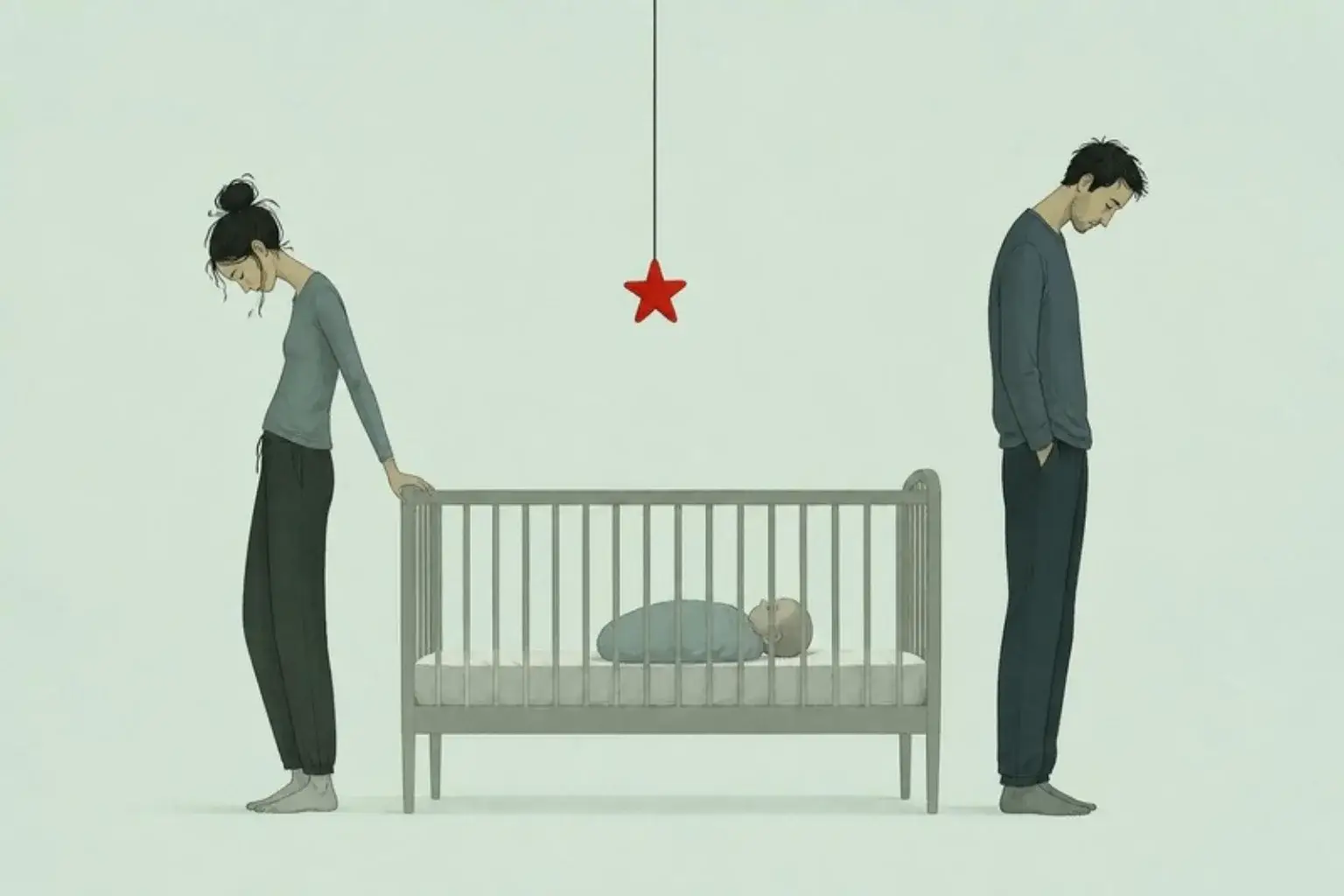
At 3am Olivia and Ben stand on either side of the cot, rocking it in turns. They have not had a conversation which was not about feeds, nappies or whose turn it is since March. Last night he said, “You seem angry all the time,” and she laughed, because she had been awake for nineteen hours and he had slept through two cries.
Marriage problems after a baby are common. John and Julie Gottman’s research found about two thirds of couples report falling relationship satisfaction in the three years after a first child. Sleep loss, an unequal load and changes in sex and identity drive it. Couples recover by talking about fairness, protecting a little time as partners, and getting help early.
01Why it hits so hard
Everything changes at once. Sleep, money, bodies, careers, sex, time. Most couples expect the baby to be hard. Few expect it to be hard on each other.
02The three fights
You became parents overnight. You forgot to stay a couple.
Kita Tabachka, relational therapist
03Staying a couple
Ask one question a day which is not about the baby. Take over whole areas of care rather than helping. Name the resentment early, while it is still small. And protect one hour a week as partners, even if it is a walk with the pram.
Olivia and Ben started with ten minutes at the kitchen table after the 7pm feed. The first week it was only complaints. By the third, they laughed about something. If the load feels unfair, read the mental load. For the arguments, how to stop arguing with your wife helps from his side.
If low mood, anxiety or frightening thoughts last more than two weeks, talk to your GP or health visitor. Postnatal depression affects mothers and fathers, and it is treatable. If you have thoughts of harming yourself or your baby, seek urgent help: call 999 in the UK, or Samaritans on 116 123.
More for women, from the journal

Weekly written counselling with Kita
When writing feels easier than speaking.
You can enquire about weekly written counselling for your own experience of relationships and life abroad. We agree whether this format is a useful fit before you pay.
Explore written counselling£50 per week. One personal written reply through Carepatron. Suitability, your weekly reply day and terms agreed before payment.

Kita Tabachka
I am a BACP-registered relational therapist. I work with individuals and couples, many of them living far from where they began, on relationship anxiety, attachment, intimacy and the strange business of building a self in a new country. The stories here are composites. The patterns are real. My writing is a door into the work, never a substitute for it.
More about my practiceQuestions women ask me
This article is written by Kita Tabachka, MBACP, and is for general education and reflection. It describes patterns seen in clinical work, but it is not therapy, and it is not a substitute for individual advice from a qualified therapist, doctor or other professional who knows your situation.
Reading it cannot diagnose anything or replace your own judgement about what you need. If something here resonates and you would like support, you are welcome to learn more about my practice or book a free consultation. If you are in crisis or immediate danger, please contact local emergency services or an urgent mental health line in your country.
Join the conversation
If you have lived this, say so. Your words may be the thing a stranger at midnight needed to read.