A place to talk, with help to hear each other
Online couples therapy
There is the argument you have, and what you wish your partner understood. I help you slow the conversation down, make room for both accounts and explore what needs to change between you.
£100 for 70 minutes, per couple
Book a free consultation15–20 minutes · Both partners · Online
With Kita Tabachka · BACP registration 409623 · Sessions in English
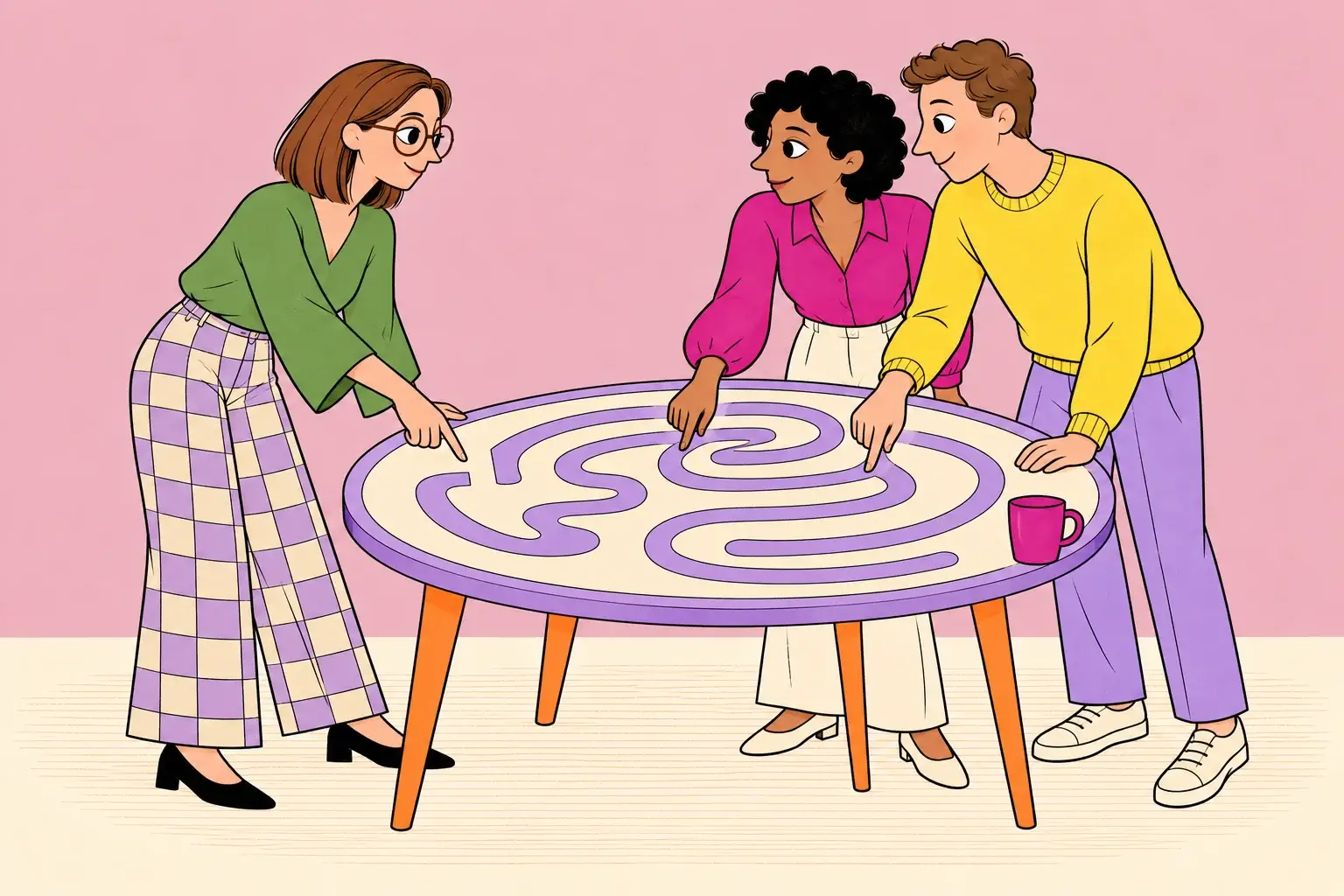
What is becoming difficult between you?
You might still care deeply about each other and dread the next conversation. Or you may be unsure whether you want the same future. You can bring that uncertainty to therapy.
Open a topic to see how we could approach it.
We keep having the same argument
We take a recent example and look at the sequence: what was said, what each person understood, and when the conversation became harder to continue. Then we work on a different response at that point.
One of us goes quiet
Silence can mean several things. We ask what is happening for each of you, rather than assuming. If a pause is needed, we discuss how to take it and return to the conversation without leaving the other person waiting indefinitely.
Trust has been broken
An affair, a lie or repeated secrecy can change how ordinary moments feel. We discuss what is known, what still needs addressing, and whether both of you are willing to do the work involved in rebuilding trust. Forgiveness is not a condition of attending.
Distance or moving abroad has changed us
Time zones, work, money and an uneven cost of relocation can all enter the relationship. We make those practical arrangements part of the conversation, including whose needs have been postponed.
Long-distance relationship therapy · Cross-cultural couples therapy
If you will join from different countries, read how online therapy works for international couples, including location, privacy and appointment arrangements.
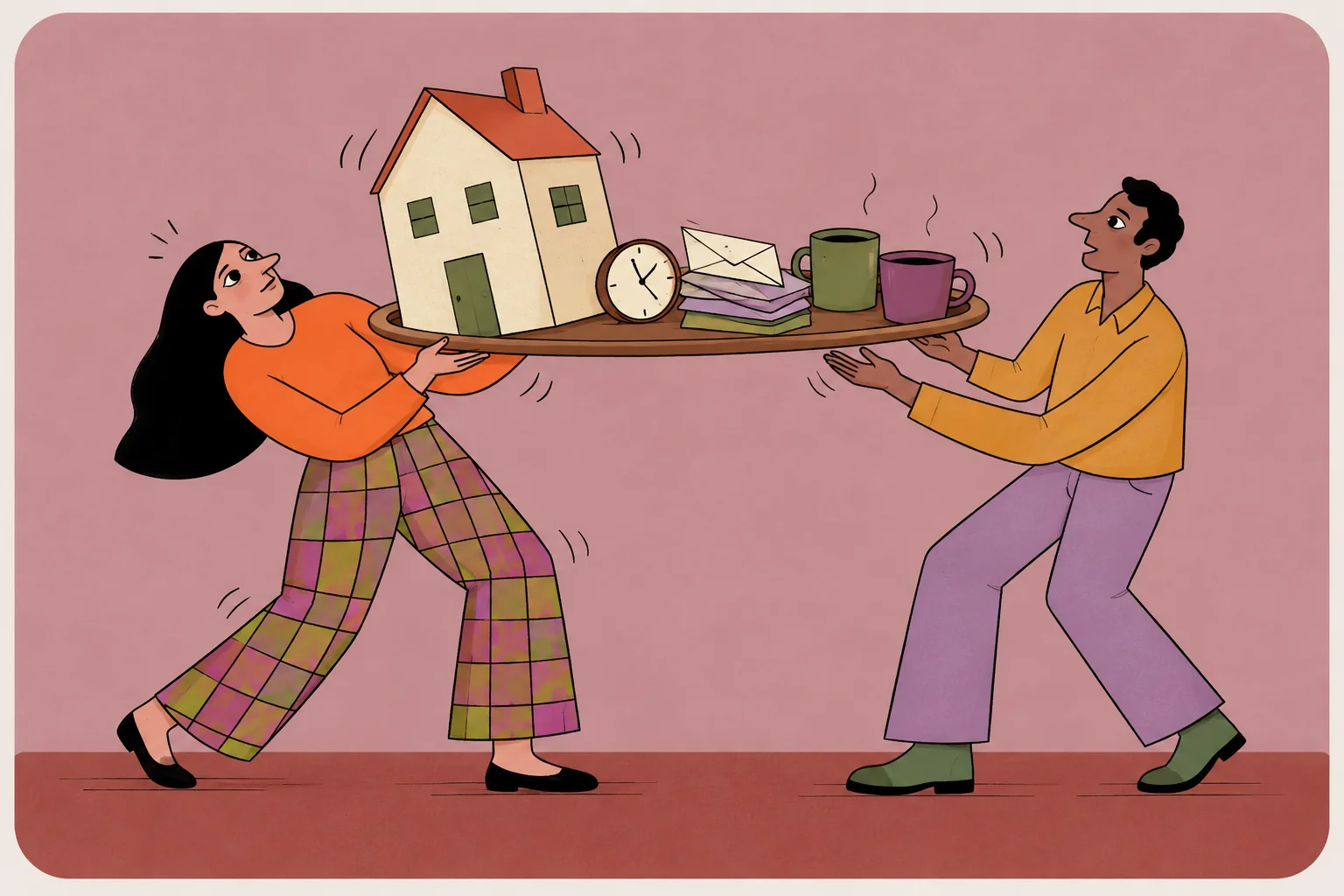
Daily responsibilities have taken over
You may be functioning as organisers and parents while feeling less like partners. We look at the actual division of responsibility, what each of you needs recognised, and where there could be time for your relationship.
We are unsure about staying together
You do not have to promise to stay together before asking for help. We clarify what each of you wants to explore and whether the same form of work is suitable for both of you. Therapy cannot make that decision on your behalf.
What happens in a couples therapy session?
We begin with what you want help with and agree a focus together. I may ask you to describe a recent conversation in detail. I listen to each account, check what I have understood and help you speak about the part that has been difficult to say.
Sometimes I will pause an exchange so that we can examine it. We may practise how to raise a concern, make a specific request or respond when the other person is upset. Where useful, you can try an agreed step between sessions and tell me what happened next time.
An example, not a client account
“You changed the plans again.”
One person means, “I need you to check with me before agreeing to things.” The other hears, “Whatever I do is wrong.” We would explore both meanings, then work towards a request that can be answered: “Can we check the calendar together before either of us says yes?”
The next question is whether that agreement is realistic and whether both people follow it.
The Gottman Institute describes a gentler way to begin a difficult conversation. It is one possible tool. It does not remove the need to address dishonesty, unequal responsibility or behaviour that keeps causing harm.
How we begin, and what it costs
- A free joint consultationYou both attend a 15–20 minute online conversation. You can explain what brings you here, ask questions and discuss whether working together feels appropriate. This is an introduction, not a full therapy session.
- Individual background meetingsBefore joint therapy begins, I meet each partner separately to understand your background and perspective. I explain the arrangements, fees and how information from these meetings is handled before you book them.
- Joint sessionsOnline couples sessions are £100 for 70 minutes, per couple. We agree the focus and review the work together. There is no requirement to know in advance how many sessions you will need.
Sessions take place in English. You need a private place where you can speak freely and a reliable internet connection. If you will join from different locations, we discuss that before booking and confirm that I can work with you in each location.
Work with Kita Tabachka

I am a BACP-registered therapist based in Poole, working online. My practice includes relationship difficulties, expat life and the changes that come with living across countries and cultures.
I draw on integrative therapy and Gottman Method training. In the consultation, you can ask how I would approach your particular concerns.
Is online couples counselling right for us?
It can be worth discussing when both of you are willing to take part, even if you disagree about the problem. You do not need to explain everything neatly. You do need enough privacy and safety to speak honestly.
If one of you is afraid of the other's reaction, is being controlled or cannot safely disagree, tell me privately when enquiring. A joint session may not be an appropriate starting point. Individual or specialist support may be needed first.
If your partner does not want to attend, individual therapy can give you somewhere to explore your own experience and choices. I cannot assess your partner through your account alone.
Prefer time to put your thoughts into words? Written counselling offers one personal reply from me each week through Carepatron, at £50 per week. It is a separate service whose suitability we agree first.
Try a short read before we meet
These brief guides offer examples to reflect on: asking for space in a relationship and apologising after an argument. You can bring a recent conversation to your consultation.
Questions you may have
How much does online couples therapy cost?
Joint sessions cost £100 for 70 minutes, per couple. The initial 15–20 minute joint consultation is free. Individual background meetings come before joint therapy; their fees and arrangements are explained before you book them.
Do we both need to attend the consultation?
Yes. The free couples consultation is a joint introduction, so both partners can ask questions and discuss the work. If your partner is unwilling to attend, you can enquire about individual therapy for yourself.
Can we join from different countries?
Possibly. Tell me where each of you will be located so I can confirm suitability and whether I can provide the service there. Each person needs a private space and a reliable connection. Availability is not automatic in every country.
How many sessions will we need?
There is no fixed number that suits every couple. We discuss your concerns and goals, agree how to begin and review the work as it develops. I cannot promise a particular outcome or timescale.
Can you help if one of us is autistic or has ADHD?
You are welcome to discuss your communication and access needs when enquiring. We can consider processing time, clear questions, pauses and how to organise sessions. We agree whether my approach fits your needs before starting; you do not need to disclose a diagnosis on a public form.
Is couples therapy confidential?
Confidentiality and its limits are explained before we begin. We also agree how information shared in individual background meetings will be handled in the couples work. You can ask about these arrangements during the consultation.
Do we have to be married or committed to staying together?
No. You can enquire whether you are married, dating or in a long-term partnership. Uncertainty about the future can be part of what you bring. We agree the purpose of the work together; staying together is not a promised outcome.
Sources and further reading
BACP: couples counselling explains the role of relationship counselling. The Gottman resource linked above offers one communication exercise. These are background resources, not evidence of a guaranteed outcome from this service.