What is trailing partner identity loss?
Trailing partner identity loss describes feeling disconnected from who you are after relocating for a partner's work, study or opportunity. It may involve changes in career, income, friendships, independence or how other people know you. It is an experience people describe, not a clinical diagnosis.
You may hear “trailing spouse”, “accompanying partner” or “expat partner”. None of those labels describes the whole person. The difficulty can affect people of any gender, including those who continue working after the move.
This guide focuses on the particular experience of moving in connection with someone else's opportunity. The broader guide to identity after relocation covers moves made for other reasons too.
Why might you feel unlike yourself after moving for a partner?
You may still have the same skills and interests, but fewer opportunities to use them or have them recognised. Meanwhile, your partner's role may provide a schedule, colleagues and a reason to be in the new country. Compare your two ordinary weekdays and the difference can become quite clear.
It helps to identify the specific change. These experiences can overlap, but they do not all need the same response.
Career loss: “I used to be good at something.”
You may miss the income, the work itself, colleagues or being trusted with responsibility. Ask which part matters most right now. Replacing an activity will not necessarily replace professional recognition or financial independence.
Dependence: “I have to ask for everything.”
Transport, language, money or residency arrangements may affect what you can do independently. Identify which choices are limited, what information you lack and what practical agreement needs revisiting.
Belonging: “Nobody here knows the rest of me.”
New acquaintances may only know you through your partner or children. Think about where you could meet people through a shared interest or skill, while keeping contact with people who know your history.
Direction: “Everything depends on their next move.”
If each plan is provisional, you may hesitate to start anything of your own. It may help to agree what decisions you can make now and when the longer-term arrangement will be reviewed.
Feeling homesick may be part of this. So may resentment towards your partner. Neither feeling tells you on its own whether the relationship or the relocation should end.
What does research tell us?
A 2025 study of 207 accompanying partners found associations between stress, isolation, social support and wellbeing. The sample largely comprised women with school-age children who moved internationally at regular intervals. It was a one-time survey, so it cannot establish causes, represent every expat partner or show that a particular therapy works.
It gives a reason to take someone's circumstances and support seriously, alongside their personal feelings about the move.
The move may have given you a job nobody calls a job
Arranging a home, learning local systems, finding services, dealing with paperwork and keeping family connections going can fill a day. If you have children, school and childcare arrangements add another set of responsibilities.
You may be busy and still miss work you chose. You may enjoy caring for your family and still want a different balance. Before concluding that you need a hobby, look at whether your time and contribution are recognised.
An illustrative example
One partner's meeting goes into the calendar automatically. The other's language class is cancelled whenever a delivery, appointment or childcare problem appears.
The problem is partly about access to time. A useful conversation would ask which commitments each of you is protecting and how disruptions could be shared.
If you are financially dependent, questions about spending decisions and access to money deserve a clear discussion too. Do not treat those practical questions as a test of how grateful you are for the move.
A starting point: which part of your life do you want more room for?
You can do this privately in a notebook. Choose one part of your life rather than trying to rebuild everything in one week.
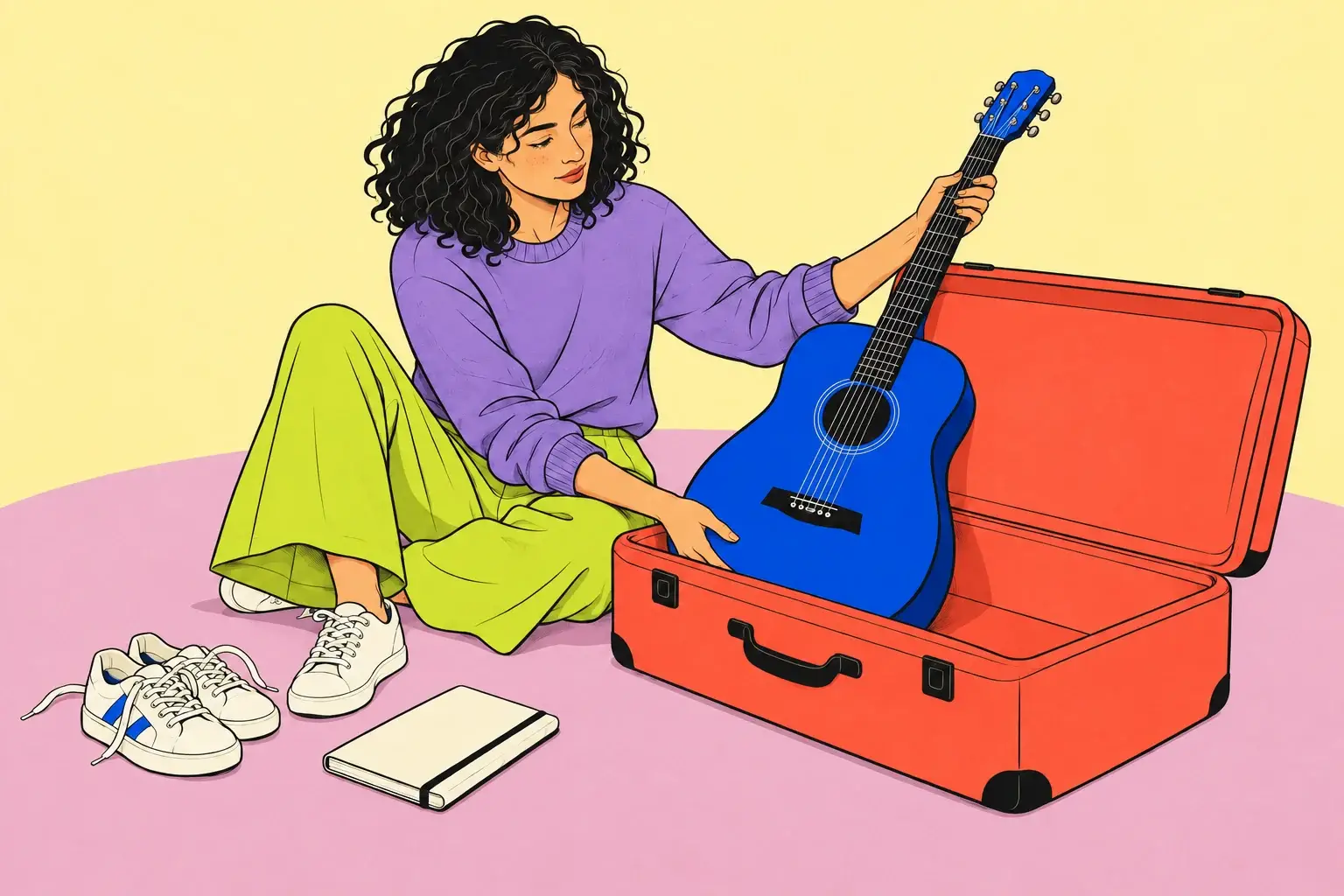
- Name what you miss doing or being known forFor example: solving problems at work, playing music with other people, making your own spending decisions or being the friend who organises things.
- Identify what made it matterWas it the skill, the people, the income, the freedom to choose or having something to look forward to? More than one answer may fit.
- Choose one realistic next step and name the obstacleYou might contact a professional association, arrange a regular call, investigate a class or discuss a protected block of time. If money, childcare or work permission blocks the step, that is the issue to address first.
Keep a way to review what you tried. “Did I do it, and did it meet the need I had identified?” is more useful than asking whether you feel fully settled yet.
Getting a job may matter a great deal. It may also take time, involve recognising qualifications or be restricted by local rules. Practical career or immigration advice has a different role from therapy. You can need both.
If you work remotely, ask whether your current work gives you the local contact or routine you are missing. Employment and belonging are related for some people, but having a job does not guarantee feeling connected.
How to talk to your partner about what the move has cost
Choose one part of the arrangement you want to examine. You do not have to prove that the whole move was a mistake before you can ask for something different.
Wording you can adapt
“I wanted us to make this move. I am finding it harder than I expected to have a life of my own here. Most of my week is organised around your work and the practical things that need doing. I want us to look at how I can have regular time and money for my own plans. Can we talk about the next month together?”
Invite your partner's account too. They may be worried about money, struggling at work or unaware of how your week feels. Those concerns can be discussed alongside the change you are asking for.
Try to finish with an agreement specific enough to revisit. That might concern a shared task, a decision about spending, a visit home or when you will discuss a possible return. If the conversation repeatedly turns into blame or silence, couples therapy may offer a more supported setting.
If you cannot safely disagree, fear your partner's reaction or are being denied access to money or documents, seek private specialist support. A joint conversation or couples appointment may not be a safe first step.
When should you seek support?
You do not have to wait for a particular number of months. If you are struggling with daily life or want help understanding what has changed, you can enquire now.
Low mood, loss of interest, difficulty sleeping or persistent worry should not automatically be put down to relocation. A GP or another qualified health professional can help assess what is happening. The NHS guidance on low mood explains when to seek further help.
Trailing partner therapy focuses on your experience and choices. Individual sessions with me cost £70 for 50 minutes, following a free 15–20 minute consultation. We confirm suitability and availability in your location first.
If both of you want to work on the relationship, joint sessions are £100 for 70 minutes per couple. If writing gives you more time to explain, written counselling offers one personal reply from me each week through Carepatron for £50. The service page explains the arrangements.
Questions you may have
Is trailing spouse syndrome a mental health diagnosis?
The phrase is used informally to describe difficulties some accompanying partners experience. It does not establish a diagnosis or explain all symptoms. Concerns about low mood, anxiety or functioning deserve an individual assessment rather than being assumed to be part of relocation.
Can men experience trailing partner identity loss?
Yes. Moving for a partner can change work, independence, social connections and how someone sees themselves, whatever their gender. The term also applies to unmarried partners and people in same-sex relationships.
Why do I feel guilty when I agreed to move?
You may feel that agreeing to the move means you should be happy with every consequence. It is possible to value the decision and want parts of the current arrangement to change. Looking at what you expected and what is happening now can make the conversation more specific.
Will finding a job solve the problem?
Work may restore income, routine, contact or a sense of contribution. It may not resolve every difficulty, and it is not always immediately possible. Identify what you are missing and which practical barriers or relationship arrangements also need attention.
How long should I wait before getting help?
There is no requirement to wait for a set adjustment period. You can seek support whenever the difficulty is affecting you or daily life. If you are concerned about your mental health, speak to a qualified health professional rather than assuming time abroad will resolve it.
Can I work on this without blaming my partner?
Yes. You can describe what the move changed and what you need now without making your partner responsible for every feeling. That also leaves room to address specific unfair arrangements or behaviour that needs to change. Individual therapy does not require your partner to attend.
Sources and further reading
Aegerter and colleagues (2025), Expatriation stressors and the well-being of accompanying partners. The study and its limits are described above. NHS: low mood, sadness and depression. The exercises and example conversation are reflection prompts, not a diagnostic test.