
Anna keeps a list on her phone called Everything. Dentist for the twins. Birthday present for Saturday. Renew the car insurance. Buy the costume for world book day. Her husband is a good man. He will do any job on the list, if she tells him. Last Sunday she realised she was tired of being the one who tells.
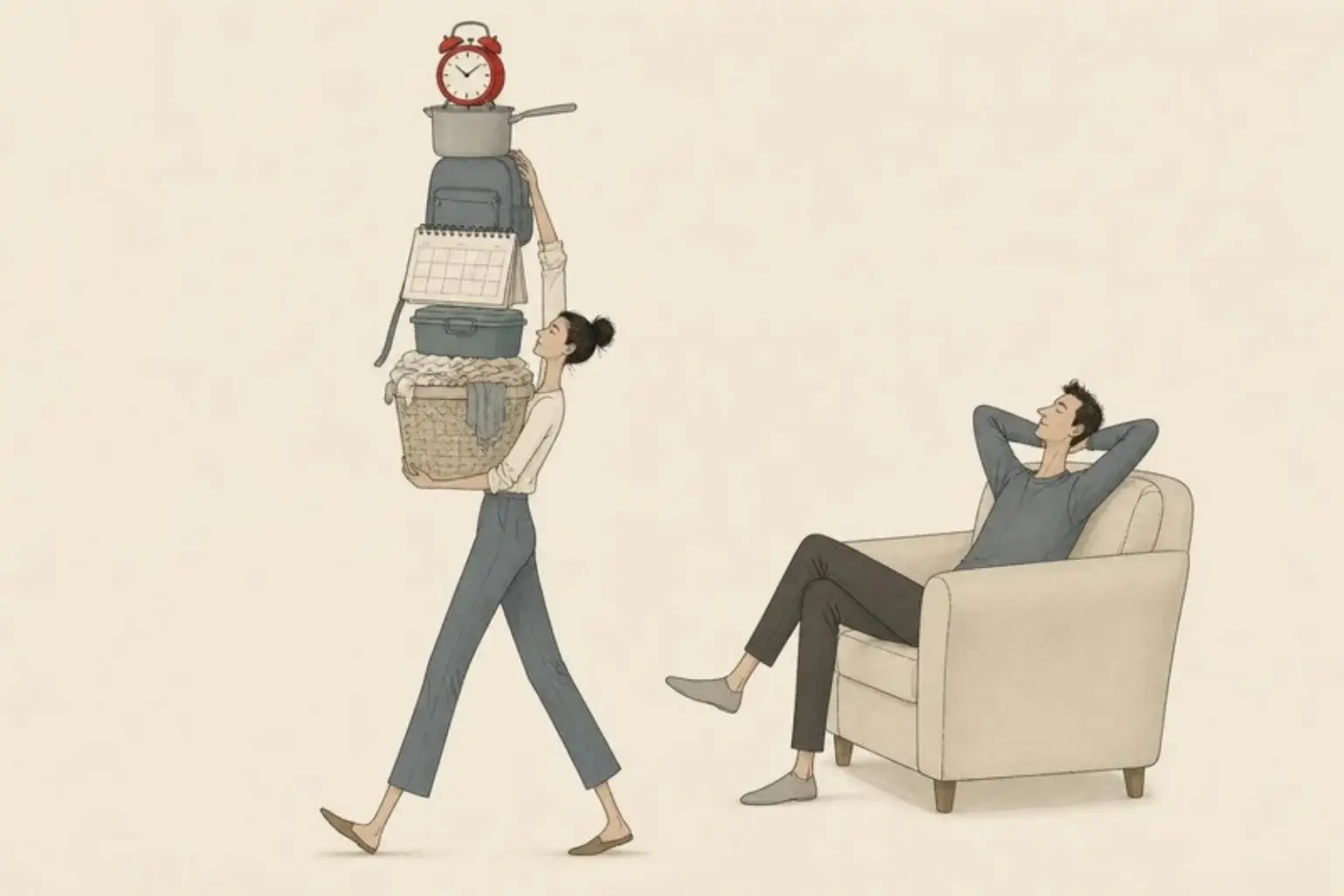
The mental load is the invisible work of running a home: noticing what needs doing, planning it, remembering it and checking it happened. It usually falls on women, even when partners share the tasks. It breeds resentment because it cannot be seen. The fix is handing over whole areas, thinking included, not asking for help with jobs.
01What the mental load is
The term was popularised by the French cartoonist Emma, whose comic “You should have asked” went viral in 2017. Asking for help, she pointed out, still leaves you as the manager. Doing a task and owning a task are different jobs.
02Why it breeds anger
What she says, and what is underneath. Tap a card to turn it.
He does what he is asked. You carry the asking.
Kita Tabachka, relational therapist
03Handing it over
Anna handed over everything to do with the car and the twins’ football. The first month was messy. By the third, she deleted two sections from her list. If the load has turned into constant rows, read why you resent your partner. Your husband might find why is my wife always angry at me useful too.
More for women, from the journal

Weekly written counselling with Kita
When writing feels easier than speaking.
You can enquire about weekly written counselling for your own experience of relationships and life abroad. We agree whether this format is a useful fit before you pay.
Explore written counselling£50 per week. One personal written reply through Carepatron. Suitability, your weekly reply day and terms agreed before payment.

Kita Tabachka
I am a BACP-registered relational therapist. I work with individuals and couples, many of them living far from where they began, on relationship anxiety, attachment, intimacy and the strange business of building a self in a new country. The stories here are composites. The patterns are real. My writing is a door into the work, never a substitute for it.
More about my practiceQuestions women ask me
This article is written by Kita Tabachka, MBACP, and is for general education and reflection. It describes patterns seen in clinical work, but it is not therapy, and it is not a substitute for individual advice from a qualified therapist, doctor or other professional who knows your situation.
Reading it cannot diagnose anything or replace your own judgement about what you need. If something here resonates and you would like support, you are welcome to learn more about my practice or book a free consultation. If you are in crisis or immediate danger, please contact local emergency services or an urgent mental health line in your country.
Join the conversation
If you have lived this, say so. Your words may be the thing a stranger at midnight needed to read.