Beyond the Story with Kita Tabachka
You understand it.You still feel it.
A gentle six-week programme for exploring the memories, body responses and beliefs that still affect how you feel about yourself.
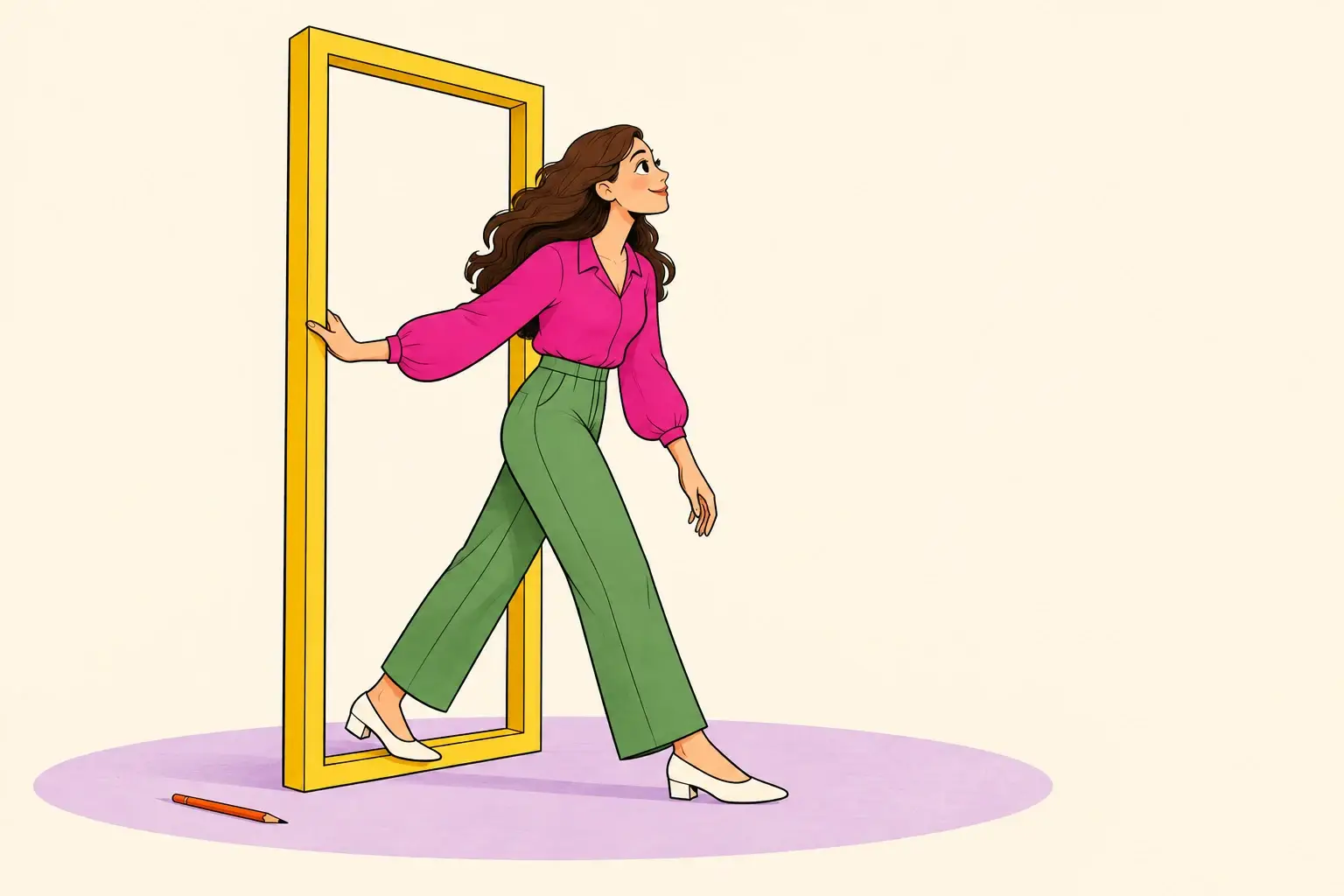
What keeps
coming back?
You may have made sense of the past and still find yourself caught in a familiar feeling. Perhaps one of these sounds like you.
Open what feels familiar. These are starting points for a conversation, not a diagnosis or a test.
A small moment brings a big reaction.
A tone of voice, a memory or a moment of distance can leave you tense, tearful or ready to withdraw. Afterwards, you may wonder why it affected you so much.
We can explore what you notice, what meaning the moment carries for you, and what helps you stay present.
You understand your worth. Feeling it is harder.
You can challenge the thought that you are not enough, yet shame or self-doubt still returns. Reassurance may make sense without feeling convincing.
We make space for the beliefs you carry, using reflection, imagery or painting to explore a more supportive relationship with yourself.
You brace, overthink or pull away.
You notice tension before a difficult conversation. You rehearse what to say, try to get everything right, or lose touch with what you need.
Body awareness can become a way to notice your responses and practise choice: a pause, a boundary, or asking for support.
Words help. Something still feels unresolved.
You can tell the story clearly, but a particular image, feeling or belief remains difficult to approach.
Creative work offers another way to explore alongside conversation. You do not need artistic ability or a complete explanation before we begin.
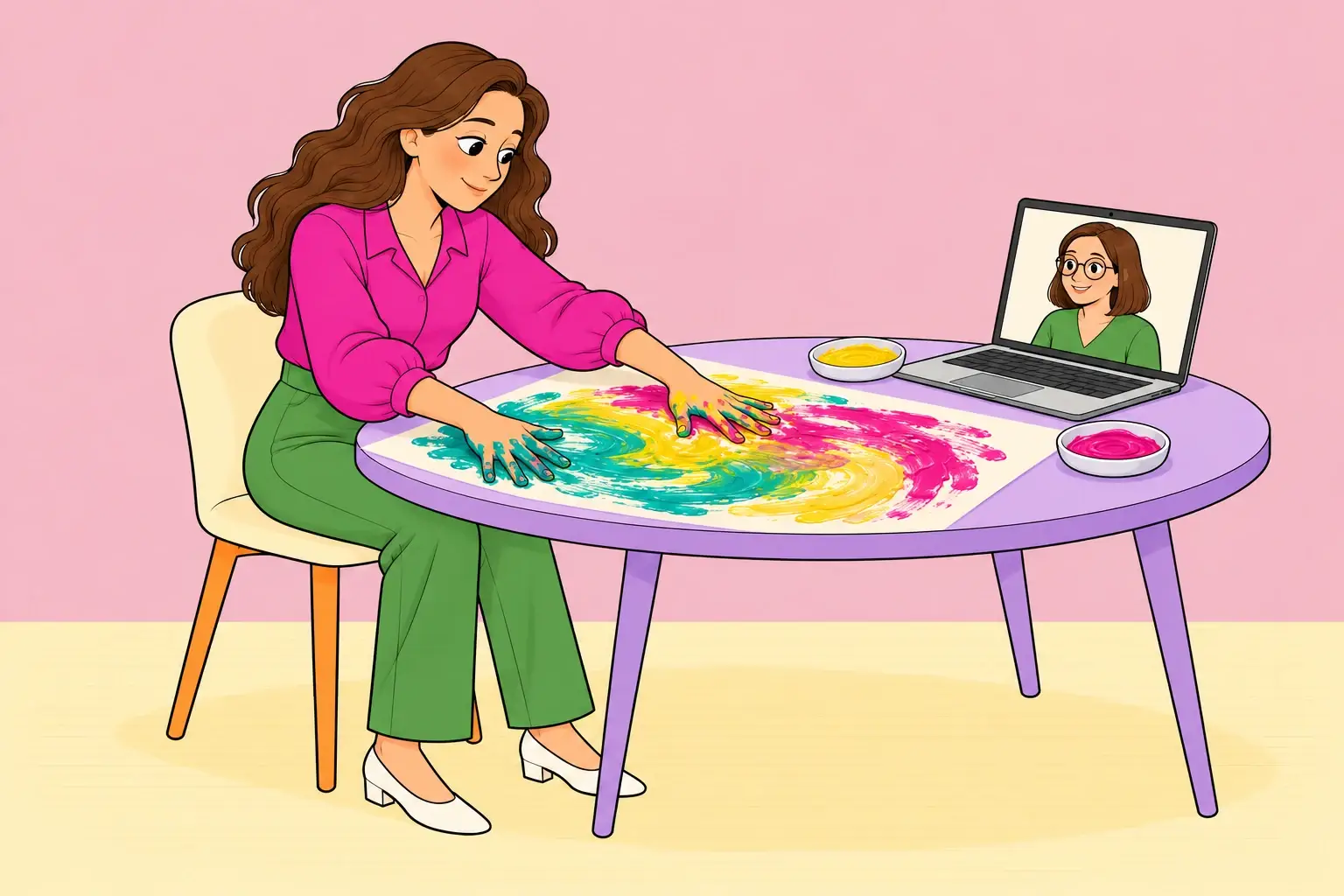
Bring your body
into the conversation.
Trauma can affect physical responses as well as thoughts and emotions. A racing heart, rapid breathing or feeling on guard can be part of the response. [1]
We pay attention to what you notice now. Where do you tense? When do you feel more present? What happens when you give a feeling a shape or colour on paper?
Body awareness, guided imagery and painting with both hands give us different ways to explore. You move your hands directly through wet paint, noticing the movement, sensations and feelings that arise. We can connect this with events, images, emotions, thoughts and beliefs you recognise, at a pace we agree together.
A bodily sensation does not establish what happened in the past. We do not search for hidden memories or require a dramatic emotional release.
Guided imagery and belief work
Make room for
a kinder inner voice.
You may understand where a painful belief began and still feel its pull. Together, we explore the images, feelings and meanings connected with it, and another way of relating to yourself.
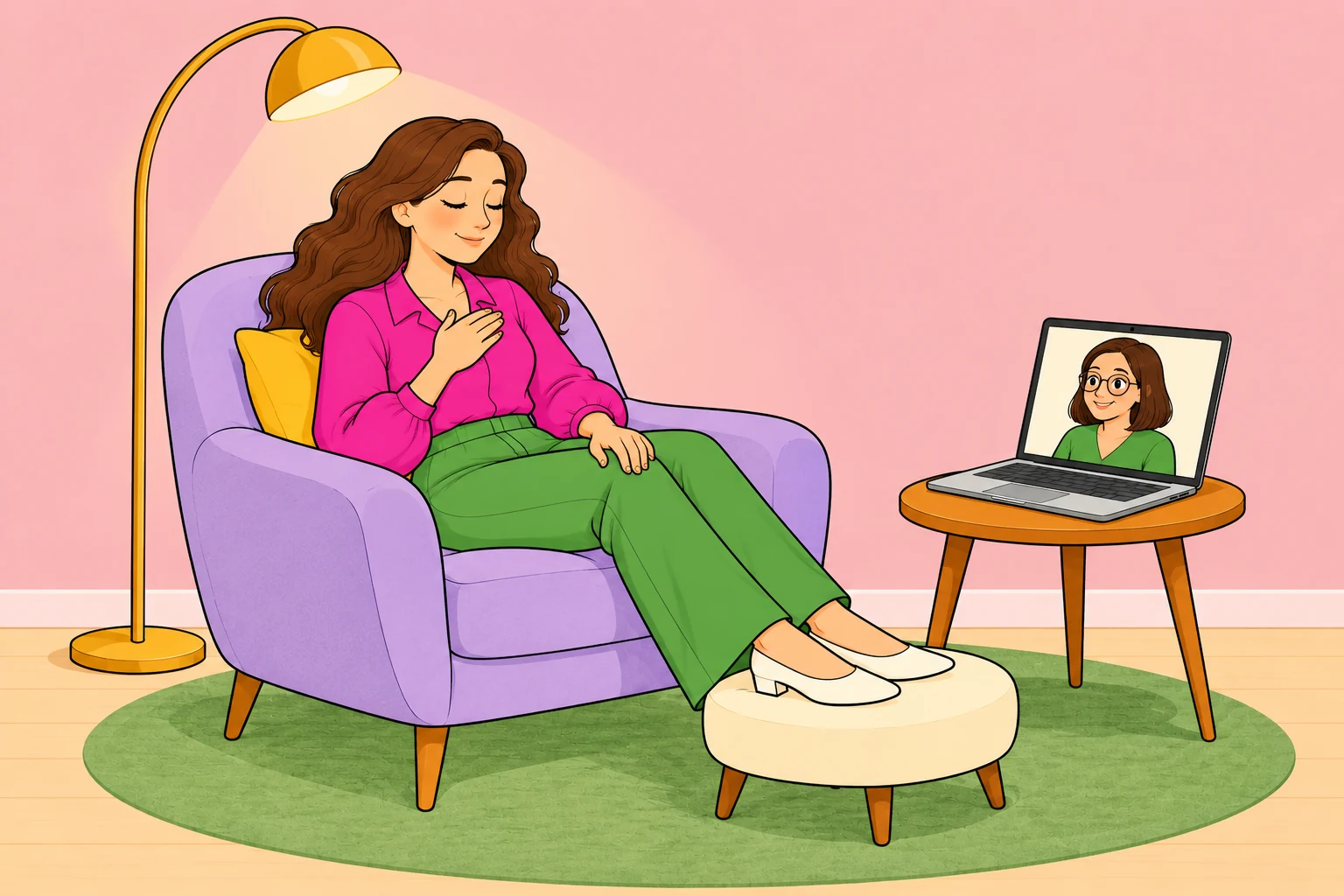
Guided, step by step.
We begin by helping you feel supported in the present. I may invite you to imagine a place, image or moment you associate with steadiness. There is no pressure to picture it clearly. We notice what feels manageable for you.
Explore the belief beneath the feeling.
When it feels appropriate, we work with an experience you already recognise: the image, the emotion, the thought and what it has come to mean about you. We make space to question that meaning and explore a more compassionate belief that feels believable to you.
We notice how that alternative feels in your body, then leave time to settle and reflect. This is collaborative work, with your choices and pace at its centre.
A small example of the direction we might explore
From I must get everything right to be accepted towards I can make mistakes and still deserve care.
Your words and experiences guide us. We do not force positive statements or promise to erase a memory. The aim is to create more room for choice, self-compassion and supportive responses in everyday life.
What could become
different for you?
We choose goals that mean something in your everyday life. These may include:
- Notice before you become overwhelmed.
Recognise your responses earlier and develop ways of pausing, settling and asking for what you need.
- Meet yourself with less criticism.
Explore the shame and beliefs that shape your inner voice, and practise a more compassionate response.
- Find words, or another way to express it.
Use imagery and hand painting to approach feelings that are difficult to explain in conversation alone.
- Carry support into ordinary days.
Bring together the practices, boundaries and sources of support that feel useful beyond our sessions.
These are possibilities we work towards, not guaranteed outcomes. Six sessions offer a focused space. They do not put a deadline on recovery.
A clear plan.
Your pace within it.
We begin with preparation and choice. This is a flexible guide to the six sessions, with time to pause, review and stay with what you need.
Find your starting point
Explore what brings you here, what you hope might change and what helps you feel supported. Agree your focus and how to signal a pause.
Get to know your responses
Notice the links between sensations, emotions and familiar patterns. Use conversation and direct hand painting where they feel helpful.
Approach an image or memory
I guide you step by step. Where appropriate, we explore a known event or image and the feelings, thoughts and beliefs connected with it.
Explore another possibility
Use creative and reflective practices to consider more supportive ways of understanding yourself. Spiritual belief work is optional and agreed with you.
Bring it into your life
Connect the work with your relationships, boundaries and daily responses. Review what feels useful and what needs more care.
Make your aftercare plan
Bring together what helps you feel grounded, when to slow down, who to turn to and any further professional support you may need.
Support runs through the whole programme. Each session includes time to settle and reflect. We review how you have felt between appointments before deciding what comes next. Arrangements for contact outside the six sessions are agreed before booking.
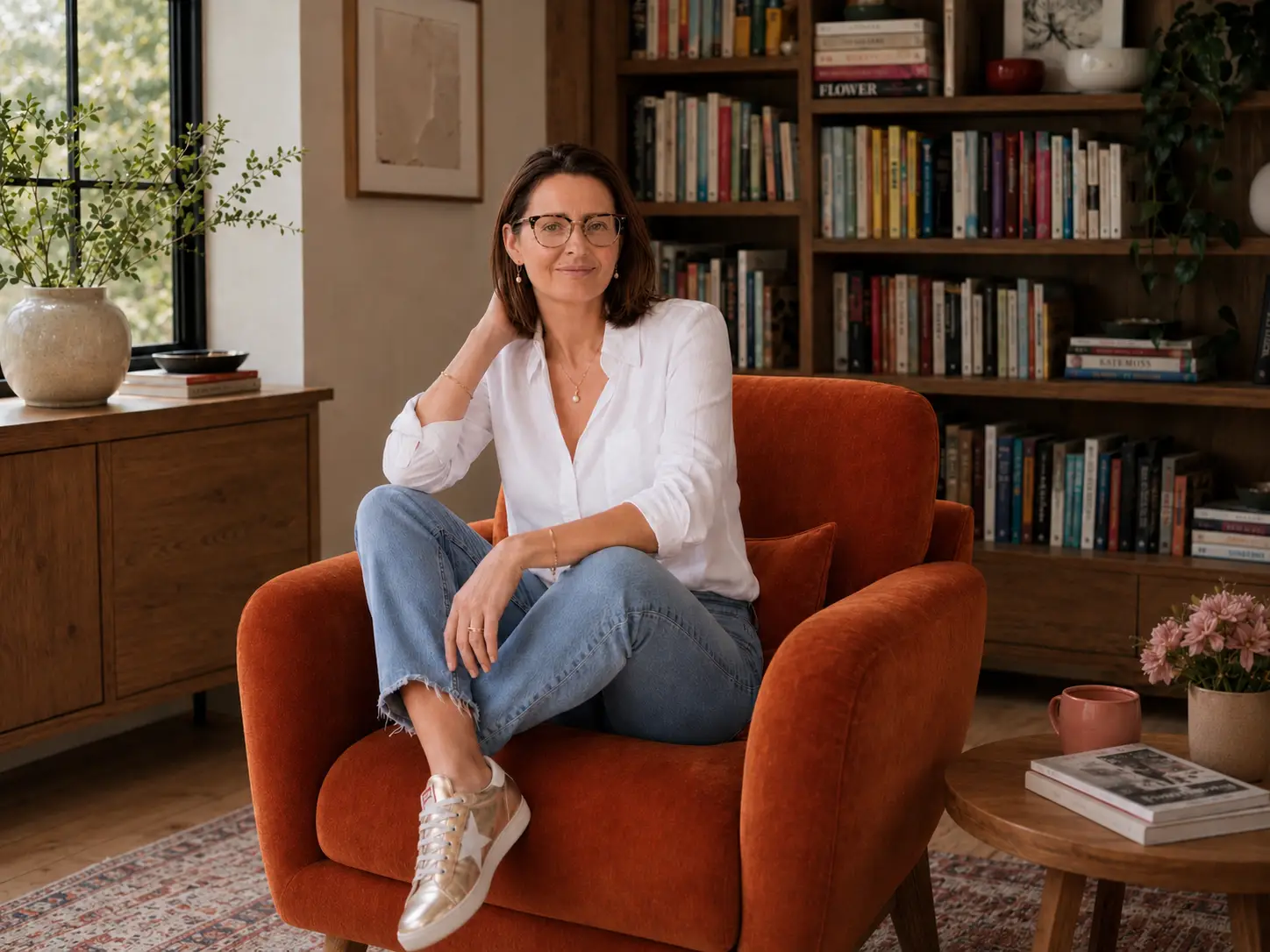
You work with me.
We make room for you.
I’m Kita. I have brought together this programme through years of learning and working with people, drawing on separate training in bilateral drawing and ThetaHealing alongside my experience as a counsellor.
I guide the process, but you have a say throughout. You can keep your eyes open, change an exercise, pause or choose not to use it. The starting point is what feels manageable for you.
Get to know me and my counselling background
A clear distinction. Beyond the Story is a complementary programme, separate from my counselling service. It is not EMDR therapy or an independently validated PTSD treatment. My BACP registration relates to my counselling practice and does not mean BACP endorses this programme. ThetaHealing is an optional spiritual practice, included only with your agreement.
Beyond the Story.
Your six-week programme.
A defined space to explore what you carry, with preparation, guided work and aftercare planning included.
- Six individual online sessions with Kita
- 60 minutes each, once a week at weekends
- Body awareness, imagery, hand painting and belief exploration
- A pace and focus agreed with you
- Review and a personal aftercare plan within the six sessions
Please enquire at least one month before your preferred start. We confirm suitability, weekend availability and whether I can offer this work in your country before you commit.
The complete programme
£800total
One payment, or spread the same total over two or three payments.
Email your country, time zone and preferred starting month. A brief outline of what you hope to explore is enough.
Enquire by emailThis opens your email app. No payment is taken here. Please keep detailed memories and sensitive clinical information out of your first email.
- 1. Email your enquiry
- 2. Discuss suitability and dates
- 3. Agree the terms before paying
We agree payment dates, confidentiality, cancellation, early-ending arrangements and any contact outside sessions before you commit. This programme is booked by email, not through Carepatron. It does not provide urgent or crisis support.
A few things
you may be wondering.
You can also ask me before deciding.
Do I need to know how to paint?
No. The painting uses your hands directly in wet paint. You move, notice and explore, rather than work towards a finished picture. No artistic experience is needed. We discuss the materials and practical setup before you commit.
Will I have to describe everything that happened?
No. We agree a manageable focus and you choose what you share. We work with experiences you recognise, rather than trying to recover hidden memories. You can pause, change or decline any exercise.
How is guided imagery used?
I guide you step by step, beginning with preparation and an image or place you associate with steadiness if that feels helpful. Where appropriate, we may explore a known event, image, emotion or belief. You can keep your eyes open, pause, change or decline an exercise. We do not use imagery to try to recover hidden memories.
What support and aftercare are included?
Preparation, time to settle and reflect, reviews of how you feel between appointments, and a personal aftercare plan are included within the six 60-minute sessions. We agree the scope and arrangements for any contact or support outside those appointments before you book. The programme does not provide on-call or crisis support.
Is this EMDR therapy?
No. Beyond the Story is a complementary programme combining body awareness, guided imagery, hand painting and belief exploration. I do not offer it as EMDR therapy or present myself as an EMDR practitioner. It is not an independently validated treatment for PTSD or a substitute for specialist trauma care.
Do I need to share your spiritual beliefs?
No. ThetaHealing is a spiritual, complementary practice. We include it only if you want to, after discussing what it involves and agreeing its use. You do not have to adopt my beliefs or use spiritual practices to take part.
Can I pay in instalments?
Yes. The total is £800 for six 60-minute sessions. You can pay £800 once, two payments of £400, or three payments of £266.67, £266.67 and £266.66. Payment dates, cancellation and early-ending arrangements are agreed before you commit.
How do I book, and when are sessions?
Email info@kitatabachkatherapy.com at least one month before your preferred start. Sessions take place online at weekends, once a week for six weeks, subject to suitability and agreed availability. We also confirm whether I can offer this work in your country. Booking is by email, not through Carepatron.
What if I need a different kind of support?
We discuss suitability before you commit. The programme is for adults and is not crisis support or a substitute for specialist PTSD treatment. If another service would better meet your needs, we discuss that. Individual counselling remains available as a separate service.
Sources and the limits of the evidence
- National Center for PTSD: Common Reactions After Trauma. Background on physical and emotional responses to traumatic experiences.
- NCCIH: Relaxation Techniques, What You Need To Know. Explains guided imagery, evidence limitations and possible unwanted effects. Relaxation or imagery can feel unsettling for some people, which is why choice and pacing matter.
Sources checked 7 October 2026. They explain general concepts and do not evaluate or endorse Beyond the Story, hand painting or ThetaHealing. They do not establish that this programme treats PTSD.
You can begin with one question.
Ask whether this programme could fit what you need.