
Tom has a rule he made himself: never answer an email angry. He keeps it at work without trouble. At home, last Thursday, his wife asked whether he had booked the car service. He heard “you forgot again”, and he slammed the cupboard so hard a glass broke. His daughter was in the next room. He sat in the car for forty minutes afterwards.
To control anger in a relationship, learn what sits under it, catch the ten seconds before you snap, and repair quickly afterwards. Anger usually covers a softer feeling: shame, fear, or feeling useless. Men who work on the feeling underneath shout less than men who only work on the shouting.
01What sits under it
Anger is fast. It arrives before any other feeling has time to register. Therapists sometimes call it a secondary emotion, because it sits on top of something quieter. For Tom, under the slammed cupboard, was shame. A question about the car sounded like proof he was failing at the one job he still felt good at.
Four things which come out angry, and what is often underneath. Tap a card to turn it.
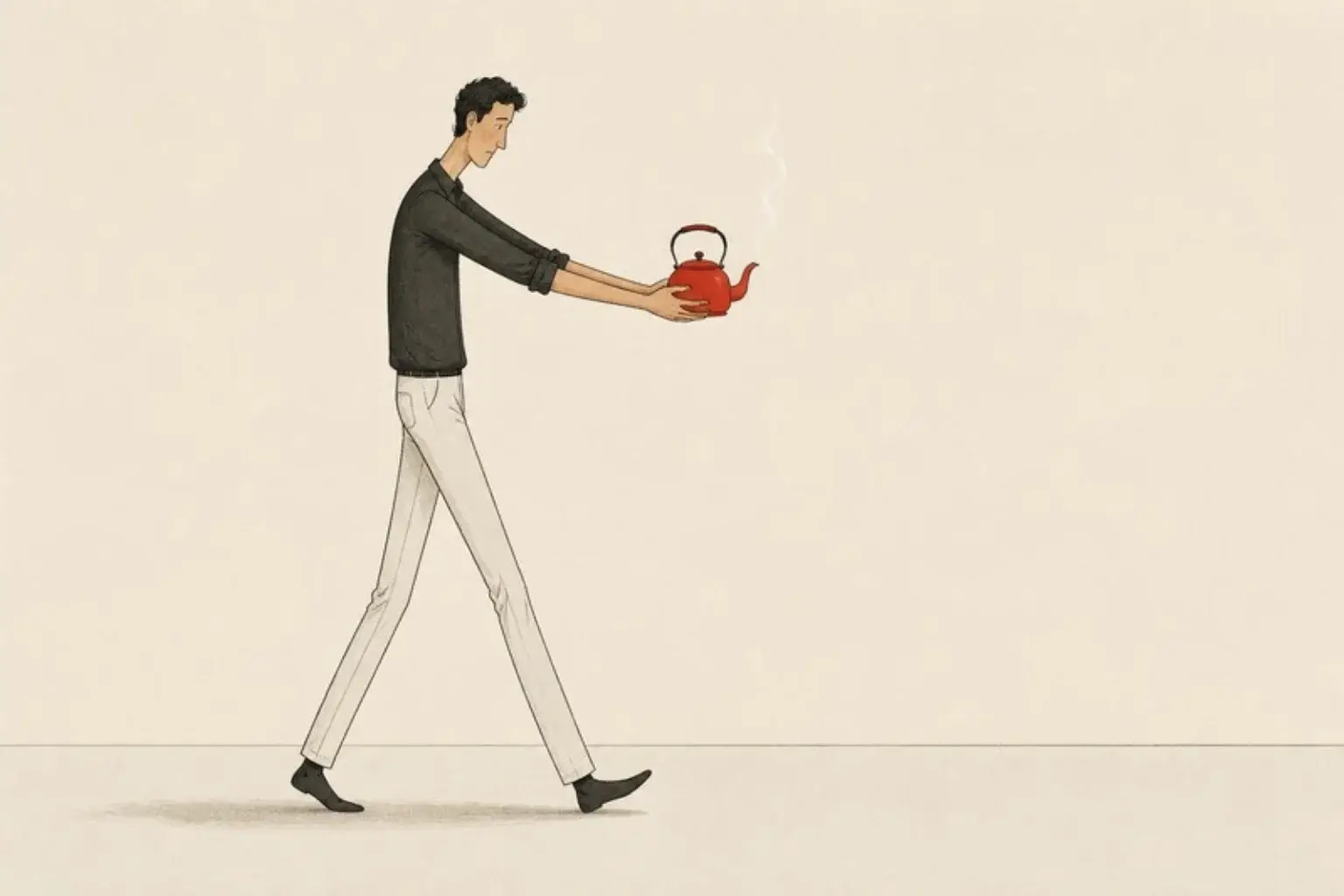
02The ten seconds
Every angry outburst has a run-up. Jaw tight, heat in the chest, voice getting louder by one notch. Most men I work with have never noticed their run-up, because it happens fast. We slow it down in sessions until they know their own first three signs.
None of this works as a performance. It works as practice, repeated on small arguments until it holds on big ones.
Anger is rarely the first feeling. It is the fastest one.
Kita Tabachka, relational therapist
03After you have snapped
You will snap again. Repair decides what it costs. A good repair is short and specific. “I shouted about the car. It was not about the car. I am sorry you and Emma heard it.” Then stop. No explanation which turns into a defence.
Tom did this on Friday. His wife cried, which surprised him, and then she told him she had been waiting two years for him to say something like it. He started sessions the following week. Much of my work is with men like Tom, in Poole, Dubai and Riyadh, who are good at their jobs and frightened of their own temper at home. Therapy for men explains how it works.
If your anger has turned into threats, breaking things near your partner, or physical force, your partner’s safety comes first. Specialist services for men who want to stop being abusive exist in most countries. If anyone is in danger, contact local emergency services.
More from the journal

Weekly written counselling with Kita
When writing feels easier than speaking.
You can enquire about weekly written counselling for your own experience of relationships and life abroad. We agree whether this format is a useful fit before you pay.
Explore written counselling£50 per week. One personal written reply through Carepatron. Suitability, your weekly reply day and terms agreed before payment.

Kita Tabachka
I am a BACP-registered relational therapist. I work with individuals and couples, many of them living far from where they began, on relationship anxiety, attachment, intimacy and the strange business of building a self in a new country. The stories here are composites. The patterns are real. My writing is a door into the work, never a substitute for it.
More about my practiceQuestions people ask
This article is written by Kita Tabachka, MBACP, and is for general education and reflection. It describes patterns seen in clinical work, but it is not therapy, and it is not a substitute for individual advice from a qualified therapist, doctor or other professional who knows your situation.
Reading it cannot diagnose anything or replace your own judgement about what you need. If something here resonates and you would like support, you are welcome to learn more about my practice or book a free consultation. If you are in crisis or immediate danger, please contact local emergency services or an urgent mental health line in your country.
Join the conversation
If you have lived this, say so. Your words may be the thing a stranger at midnight needed to read.