
Ali asked his wife to try marriage counselling three times. The third time she said, “I have been asking you to change for five years. Now you want a stranger to ask me.” He booked a session on his own the following week, mainly out of anger. He came back for the second one out of curiosity.
You save a marriage on your own by changing your half of the pattern and holding the change for long enough for her to trust it. Couples run on repeated moves. When one person stops pursuing, defending or withdrawing, the other person has to respond differently. You cannot make her stay. You change the marriage she is deciding about.
01What one person changes
Every couple has a dance. She criticises, he defends. He withdraws, she chases. Each move triggers the next. Change one step and the dance stumbles, because the old response no longer fits.
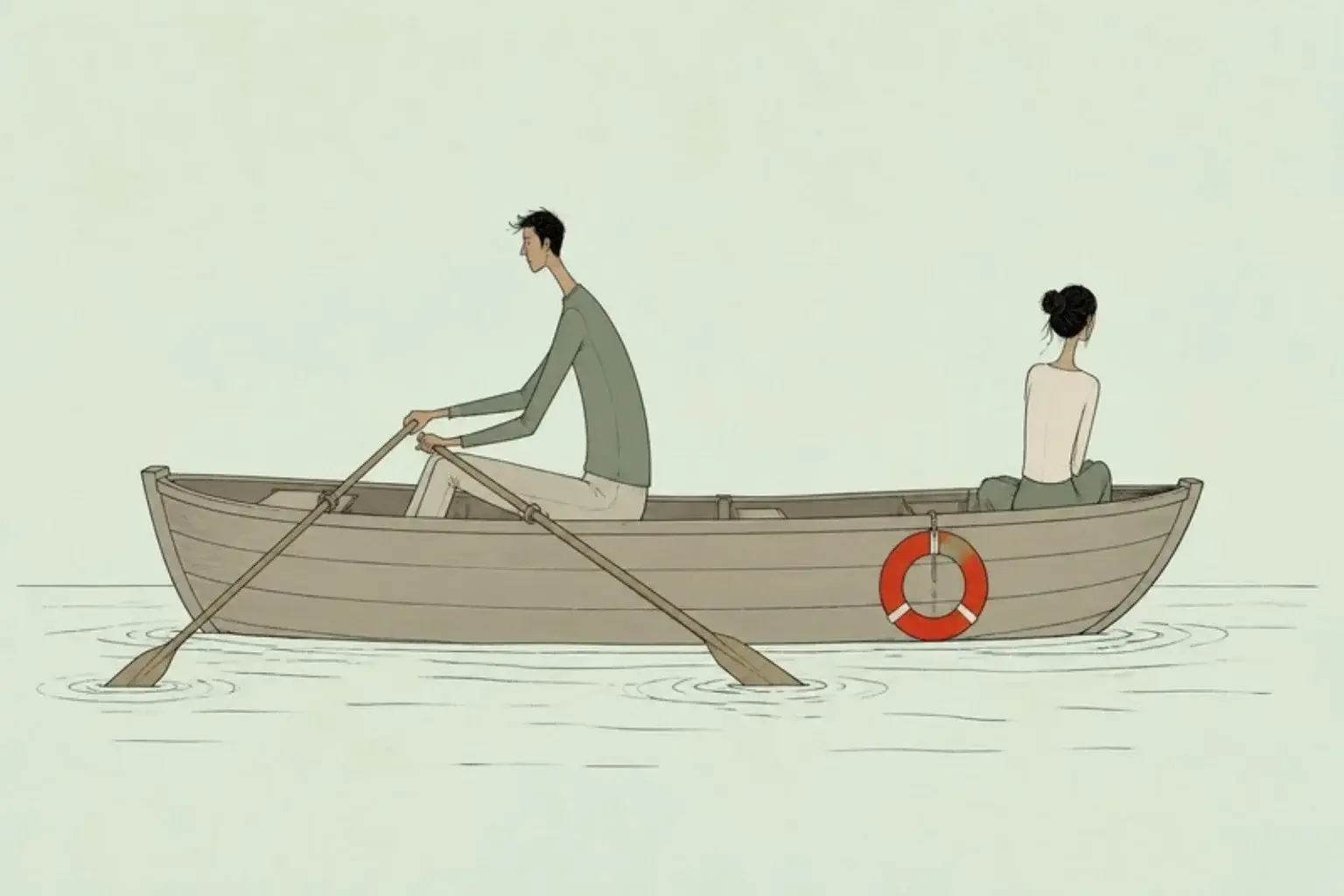
One person changing the dance changes the dance.
Kita Tabachka, relational therapist
02What one person cannot
You cannot make her feel something she does not. You cannot undo an affair on her side, fix her depression, or talk her out of a decision she has made. Saving the marriage alone works when she is tired and hurt, not when she has already gone. Individual work helps you tell the difference.
03Where to start
Start with the move you make most. For most men I see, it is defending or withdrawing. We work on the ten seconds before it happens and what to do instead. Ali’s wife joined him at session eleven. She said she came because she wanted to meet whoever had taught her husband to stop arguing back. Read why men shut down in arguments for the withdrawing side.
More for men, from the journal
Weekly written counselling with Kita
When writing feels easier than speaking.
You can enquire about weekly written counselling for your own experience of relationships and life abroad. We agree whether this format is a useful fit before you pay.
Explore written counselling£50 per week. One personal written reply through Carepatron. Suitability, your weekly reply day and terms agreed before payment.

Kita Tabachka
I am a BACP-registered relational therapist. I work with individuals and couples, many of them living far from where they began, on relationship anxiety, attachment, intimacy and the strange business of building a self in a new country. The stories here are composites. The patterns are real. My writing is a door into the work, never a substitute for it.
More about my practiceQuestions men ask me
This article is written by Kita Tabachka, MBACP, and is for general education and reflection. It describes patterns seen in clinical work, but it is not therapy, and it is not a substitute for individual advice from a qualified therapist, doctor or other professional who knows your situation.
Reading it cannot diagnose anything or replace your own judgement about what you need. If something here resonates and you would like support, you are welcome to learn more about my practice or book a free consultation. If you are in crisis or immediate danger, please contact local emergency services or an urgent mental health line in your country.
Join the conversation
If you have lived this, say so. Your words may be the thing a stranger at midnight needed to read.