
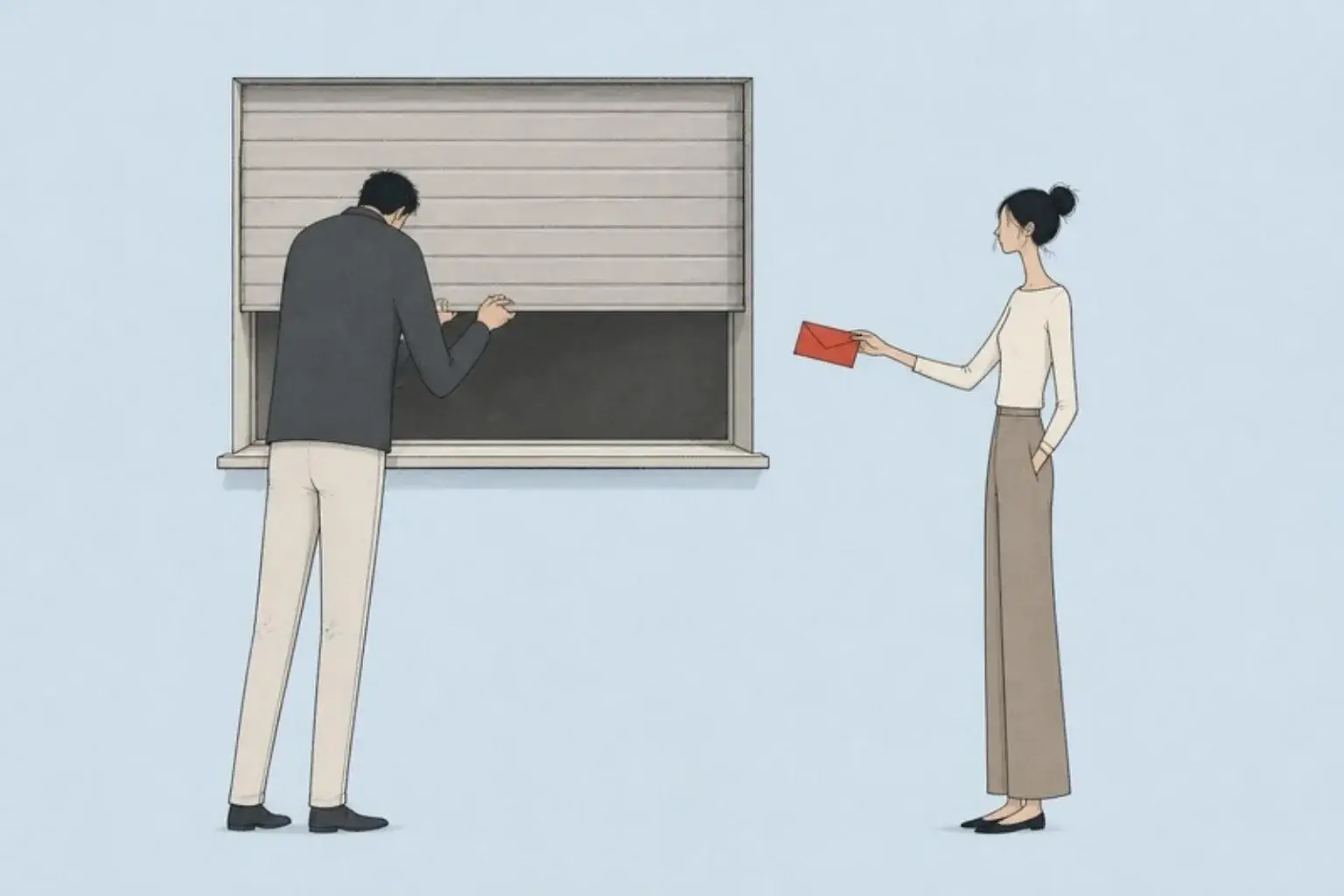
Karim’s wife describes it as a door closing. She says one sentence about the school fees, and his face goes still. He looks at the table. His answers get shorter. Then he says “fine” and picks up his phone, and the conversation is over for the night. Karim describes the same moment differently. “It is like someone turned the volume up on everything.”
Men shut down in arguments because their body floods. Heart rate climbs, thinking narrows, and the fastest way to make it stop is to withdraw. John Gottman’s research calls it stonewalling and found it far more common in men. It looks like indifference. Underneath it is usually overwhelm and a fear of making things worse.
01What the shutdown is
In Gottman’s lab, couples argued while wired to heart monitors. When a partner’s heart rate passed about a hundred beats a minute, they stopped taking in what was said. He called it flooding. The stonewalling partner was the most flooded person in the room, not the calmest.
From the outside, the man looks like he has left. On the inside, he is holding on. He goes quiet because every sentence he thinks of feels dangerous, and silence feels like the only move which will not make it worse.
02Why men in particular
Many boys learn early: strong feeling is a problem to be solved alone. Crying gets mocked. Anger gets punished. Fear has nowhere to go. By thirty, a man has one reliable tool for emotional overload, and the tool is going quiet.
Four things a man says when he shuts down, and what is usually underneath. Tap a card to turn it.
The partner, often a woman, reads the silence as contempt and pushes harder to get a response. The harder she pushes, the more he floods. The more he floods, the further he withdraws. Each of them is doing the thing which makes the other one worse.
He goes quiet because every sentence he thinks of feels dangerous.
Kita Tabachka, relational therapist
03What helps
For him: name it before the shutter falls. “I am getting flooded. I need twenty minutes and I will come back at eight.” Then go for a walk, not to the phone, and come back at eight. The break only works if the return is reliable.
For her: when he names it, let him go. Chasing a flooded man down the corridor gets you silence, not an answer. When he comes back, start with one sentence, softly, about what you need, not about what he did. I wrote more about this dance in how to stop arguing with your wife.
Many of the men I work with, in the UK and abroad, came in because of this silence. We work on what floods them, on the words for it, and on staying in the room a little longer each time. Therapy for men explains how sessions run.
More from the journal

Weekly written counselling with Kita
When writing feels easier than speaking.
You can enquire about weekly written counselling for your own experience of relationships and life abroad. We agree whether this format is a useful fit before you pay.
Explore written counselling£50 per week. One personal written reply through Carepatron. Suitability, your weekly reply day and terms agreed before payment.

Kita Tabachka
I am a BACP-registered relational therapist. I work with individuals and couples, many of them living far from where they began, on relationship anxiety, attachment, intimacy and the strange business of building a self in a new country. The stories here are composites. The patterns are real. My writing is a door into the work, never a substitute for it.
More about my practiceQuestions people ask
This article is written by Kita Tabachka, MBACP, and is for general education and reflection. It describes patterns seen in clinical work, but it is not therapy, and it is not a substitute for individual advice from a qualified therapist, doctor or other professional who knows your situation.
Reading it cannot diagnose anything or replace your own judgement about what you need. If something here resonates and you would like support, you are welcome to learn more about my practice or book a free consultation. If you are in crisis or immediate danger, please contact local emergency services or an urgent mental health line in your country.
Join the conversation
If you have lived this, say so. Your words may be the thing a stranger at midnight needed to read.