
She did not cry about the future when she sat down. She cried about a photograph. A holiday, three years ago, the two of them squinting into the sun. She had loved that photo. Now she did not know whether she had been on holiday with her husband, or with a man who was, that same week, texting someone else.
This is the part of infidelity that the advice columns miss. They treat an affair as damage to the future. A trust that must be rebuilt going forward, like a fence. But the cruellest theft happens in the other direction, and almost nobody names it.
An affair does not only break your future. It burgles your past.
Suddenly every memory is a suspect. The anniversary dinner. The morning he brought you coffee and said something tender. Were those real, or were they performances, or were they guilt, or were they nothing at all. You are not only grieving what you will not have. You are being evicted from what you thought you already lived. That is why people who have been betrayed often describe feeling mad. They are not mad. Their history has been quietly rewritten while they slept, and no one asked permission.
01Discovery does not feel like a fact. It feels like a floor giving way
It usually arrives through a screen. A message that was not meant for you. A name that appears too often. A second account. The body knows before the mind agrees, which is why people describe the moment of discovery as physical, a lurch, a drop, a crack of light across an ordinary living room.
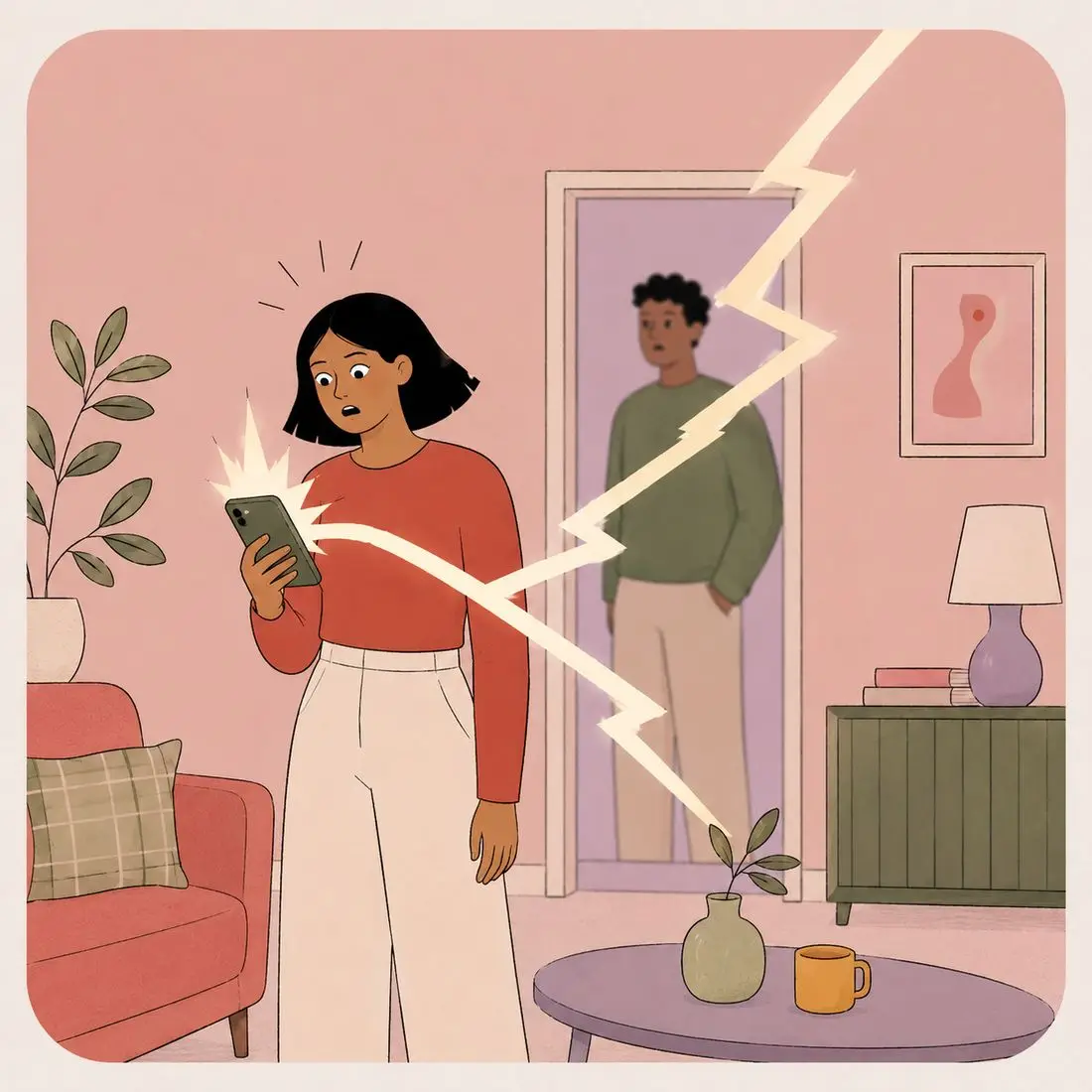
And here is the first cruelty. Knowing does not bring relief, even though the not-knowing was agony. You wanted the truth, and the truth turns out to be a building you now have to live inside.
02The affair was rarely about the other person
I am going to say something that may annoy you, and I am going to say it anyway, because in the end it is the thing that helps. Most affairs are not really about the other person. The other person is a doorway, not a destination.
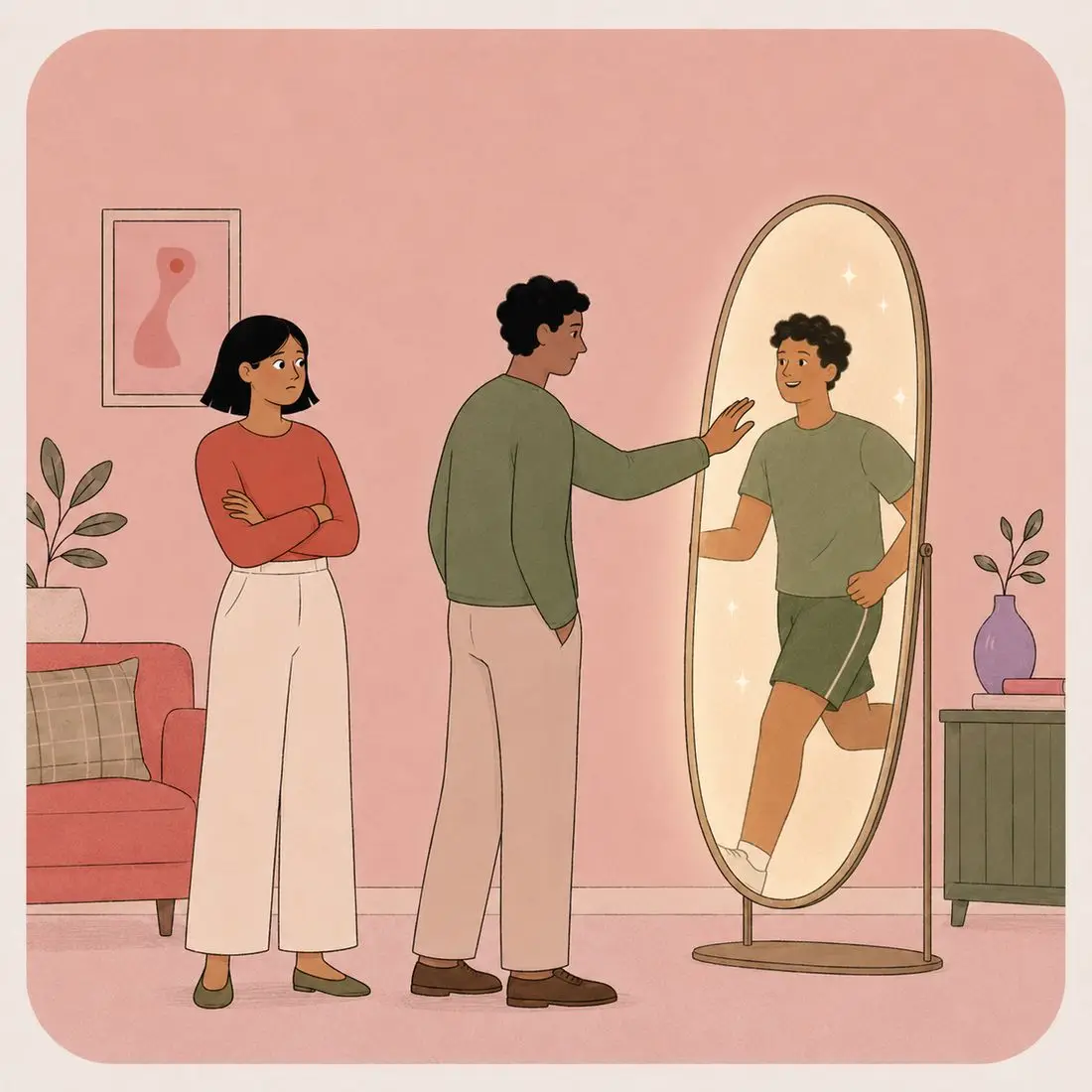
People stray toward feeling young again, or wanted, or unburdened, or simply seen by eyes that do not already know the worst of them. This is an explanation. It is not an excuse, and I want to be very clear about that distinction, because the unfaithful often try to smuggle one inside the other. Understanding why a person betrayed you does not soften that they chose to. But it does tell you something useful. If the affair was about an unlived part of them, then the question for the relationship is not only “how do we rebuild trust,” it is “what went unspoken for so long that a lie felt easier than a conversation.” And it is worth saying that this goes quiet most easily when a couple has become each other’s entire world, with no one else to turn to, which is why affairs so often grow in the isolation that can follow moving abroad and making one person your whole country.
03The double life, and the ordinary monster
You will want them to be a monster. A monster is simpler. A monster you can leave without grief. But the person who did this is almost never a monster, and that is the part that keeps people awake.

The horror of betrayal is rarely its drama. It is its ordinariness. The same person who lied was also the one who remembered your sister's birthday. Both were real. Holding that contradiction without collapsing it into “he was always a liar” or “it meant nothing” is some of the hardest work a betrayed person does. The truth is more uncomfortable than either. They were a whole person who made a series of small, deniable choices, each one slightly easier than the last.
04The detective years
After discovery, the betrayed person very often becomes a detective. The phone checked at three in the morning. The old messages read until the words lose meaning. The timeline reconstructed, cross-examined, rebuilt. It feels like control. It feels like the only way to ever be safe again.
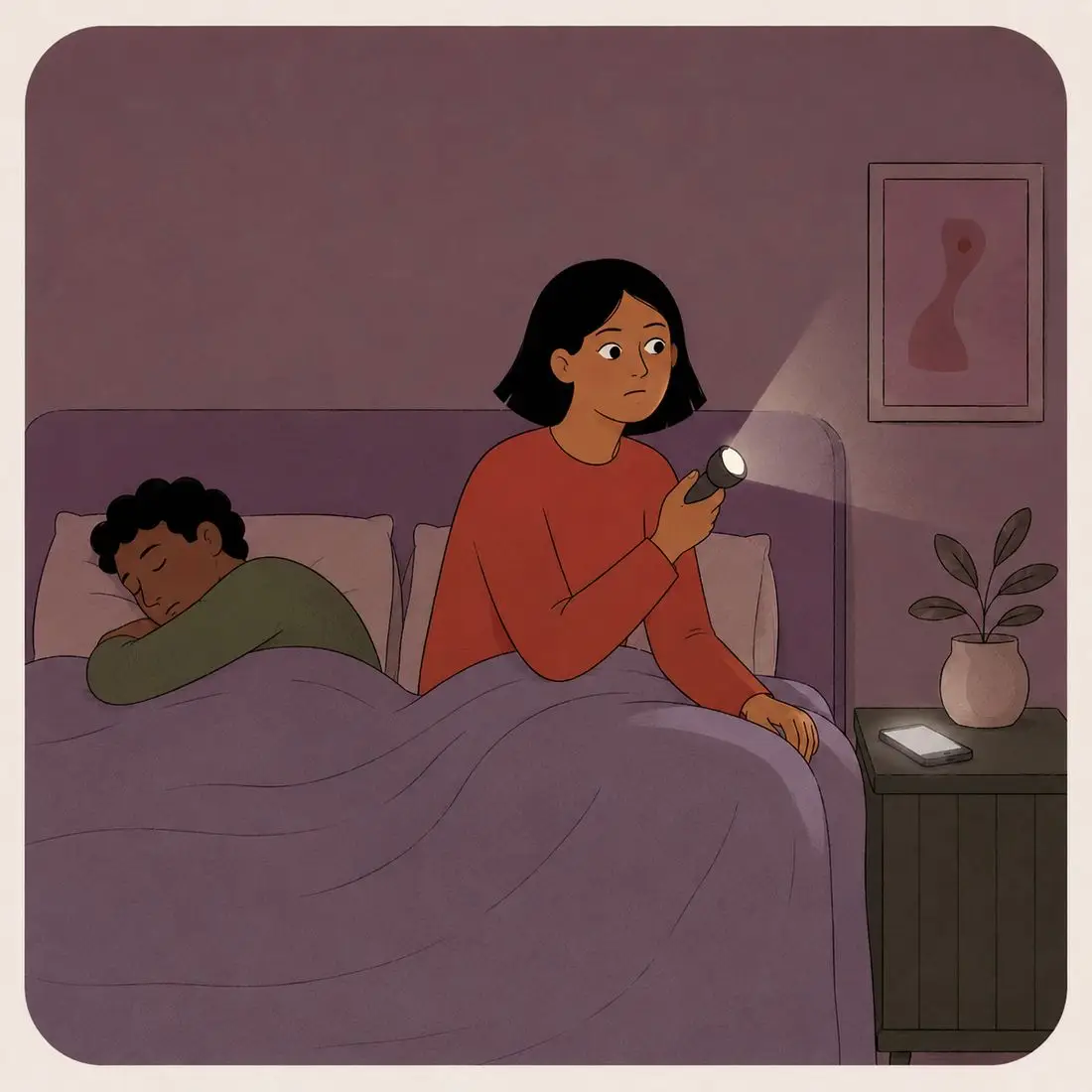
Here is the quiet tragedy of it. The more hours you give to surveillance, the less of you remains for anything else. Detection promises certainty and delivers exhaustion. At some point the work is not to find more proof. It is to decide whether you can live in a house you have chosen to stop searching.
05The third person is still in the room
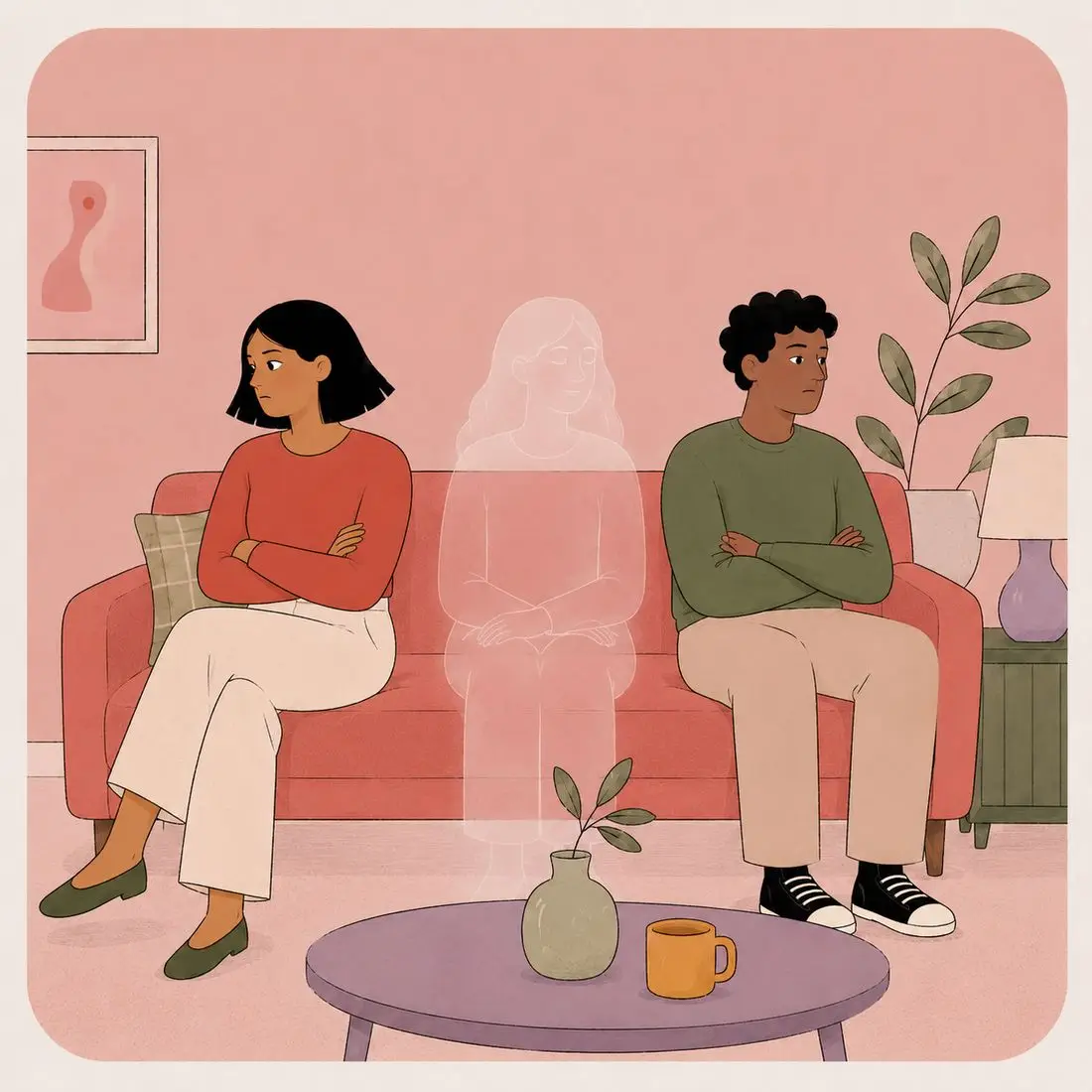
For a long time after, there are three people in every conversation. The affair sits on the sofa between you, uninvited, taking up the middle cushion. A delayed text reply, a late meeting, a particular song on the radio, and suddenly the third person is fully in the room again. This is normal. It does not mean repair has failed. It means a wound this large does not close on the timeline anyone would prefer. The aim is not to pretend the third figure was never there. It is to slowly stop giving it the best seat in the house.
06Conditional return, or staying without ever deciding
There is a particular limbo I see often. One partner has technically stayed. They sleep in the bed, they share the calendar, they go to the dinners. But they have kept a packed suitcase by the chair, in their mind if not by the door. They have moved back in without ever quite moving back in.
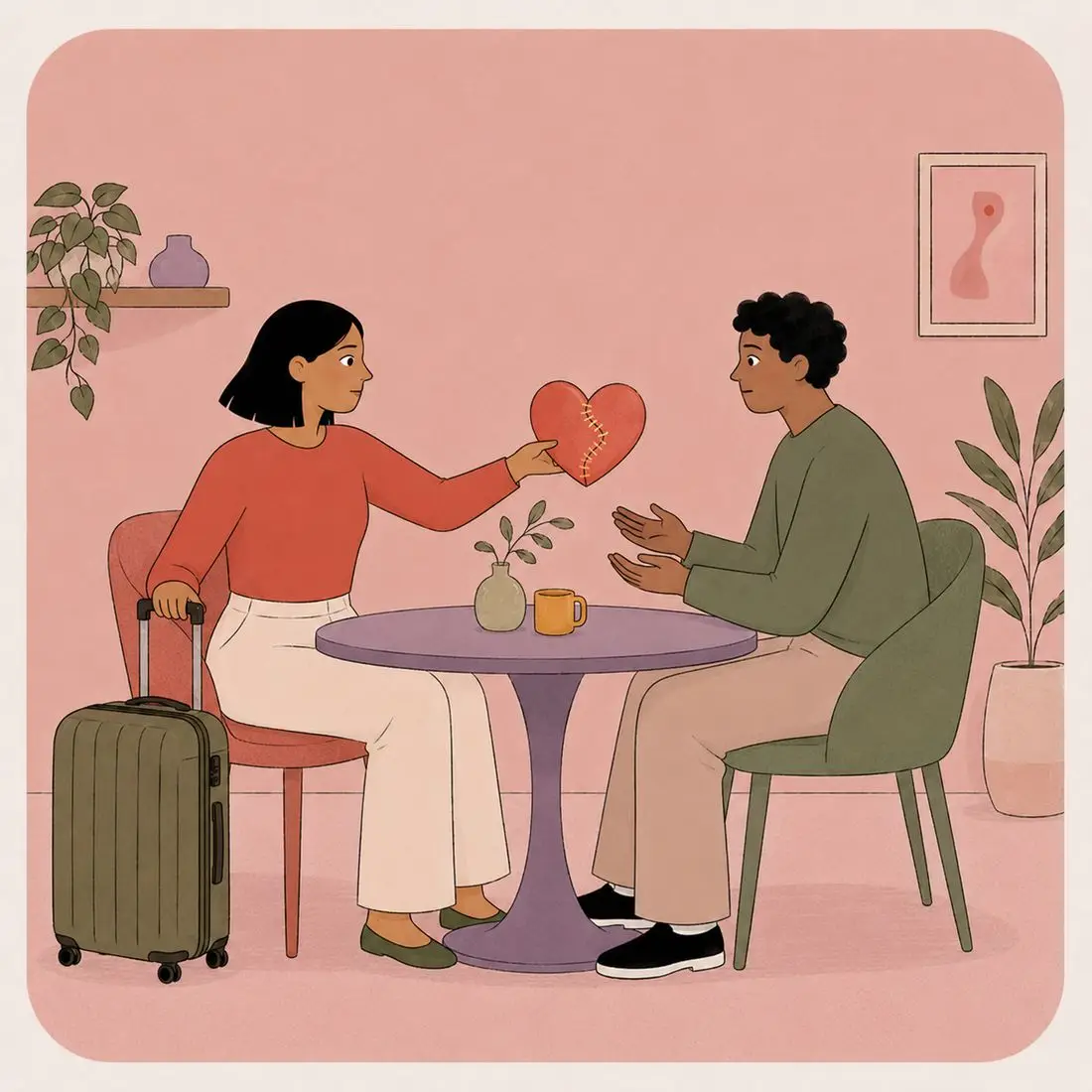
The half-stay protects you from the terror of choosing, and it guarantees that nothing heals. The relationship cannot rebuild on a foundation that is always provisionally leaving. At some point the kindest and bravest thing is to actually decide. To put the case down, or to pick it up. Both are honest. Limbo is the only dishonest option, because it pretends to be patience when it is really fear.
07The lie the culture tells you about staying and leaving
There is a loud script in one direction. Strong people leave. Self-respect means the door. Anyone who stays is a fool with poor boundaries. And there is an equally loud script in the other direction. Real love forgives. Keep the family whole. Do not throw away years over one mistake.
Both scripts are lies, because both make the decision for you before you have met your own actual life. I have watched people leave and find air for the first time in a decade. I have watched people stay and build something more honest than the marriage that preceded the affair. I have also watched the reverse of both. The bravery is not located in staying, and it is not located in leaving. The cowardice is in refusing to choose, and letting the limbo choose for you.
08Repair is not forgetting. It is a burial and a building
If you do try to repair, you must understand what repair actually is, because most couples get it wrong and then wonder why returning to normal feels impossible. You do not rebuild the relationship you had. That relationship is gone. It has to be grieved, and buried, properly.

This asks something fierce of the one who betrayed. Not grovelling, which is just guilt performing. Something steadier. To become a relentless protector of the truth. To offer transparency before it is demanded. To answer the same painful question for the hundredth time without sighing, because they understand they are not being interrogated, they are slowly returning something they took. Repair is not the betrayed person learning to trust again by willpower. It is the betrayer becoming, over a long time, genuinely trustworthy.
09The unglamorous middle nobody photographs

Nobody warns you that surviving an affair is mostly boring. Shared calendars. A phone offered openly, not seized. A hundred small, dull deposits into an account that was emptied in a single night. There is no soundtrack. There is no single moment of cinematic forgiveness. There is a cracked pot, carefully taped, with something small and green deciding, against the odds, to grow in it. That is what real repair looks like, and its ordinariness is exactly why it works.
None of this applies where the infidelity sits inside a wider pattern of deceit, control, or abuse, or where you are being blamed for your own betrayal. Repair cannot be built on a continuing lie, and couples work is never appropriate where there is coercion or fear. If that is your situation, individual support is the safer first step. If you are ever in danger, contact local emergency services or a domestic abuse helpline in your country.
10What the work actually is
Therapy after an affair is not a courtroom that assigns blame and then files the case. It is a room that can hold two realities at once. The unbearable injury of the one betrayed, and the harder question of how a person comes to betray someone they love. The work is to find out whether this relationship can survive the truth being fully in the room, which is the one place the affair could never live.
11The question under the question

It is not really “can I forgive them.” It is “can I choose this person again, on purpose, knowing what I now know.” Those are not the same. Forgiveness is not a warm feeling that arrives one morning and settles the matter. It is a decision you make, and then make again, and then make again, until one day you notice you have not had to make it for a while.
Tap each card — what the betrayed person asks, and what is underneath it.
The betrayal is never the gift. But the reckoning afterwards is sometimes the first wholly honest conversation a couple has ever had.
You will not get your old story back. It is gone, and it deserves to be mourned rather than counterfeited. But you might, if you both find the courage, get a truer one. Not cleaner. Truer.
The goal is not to forget what happened. The goal is to decide, with your eyes open, what happens next.
Is this repair, or is it limbo?
Six honest questions for anyone living in the aftermath of an affair. Not a verdict on your relationship. A mirror.
This cannot see your life, and it cannot make the decision for you. If anything here resonates, it is worth exploring with a person, not a page.
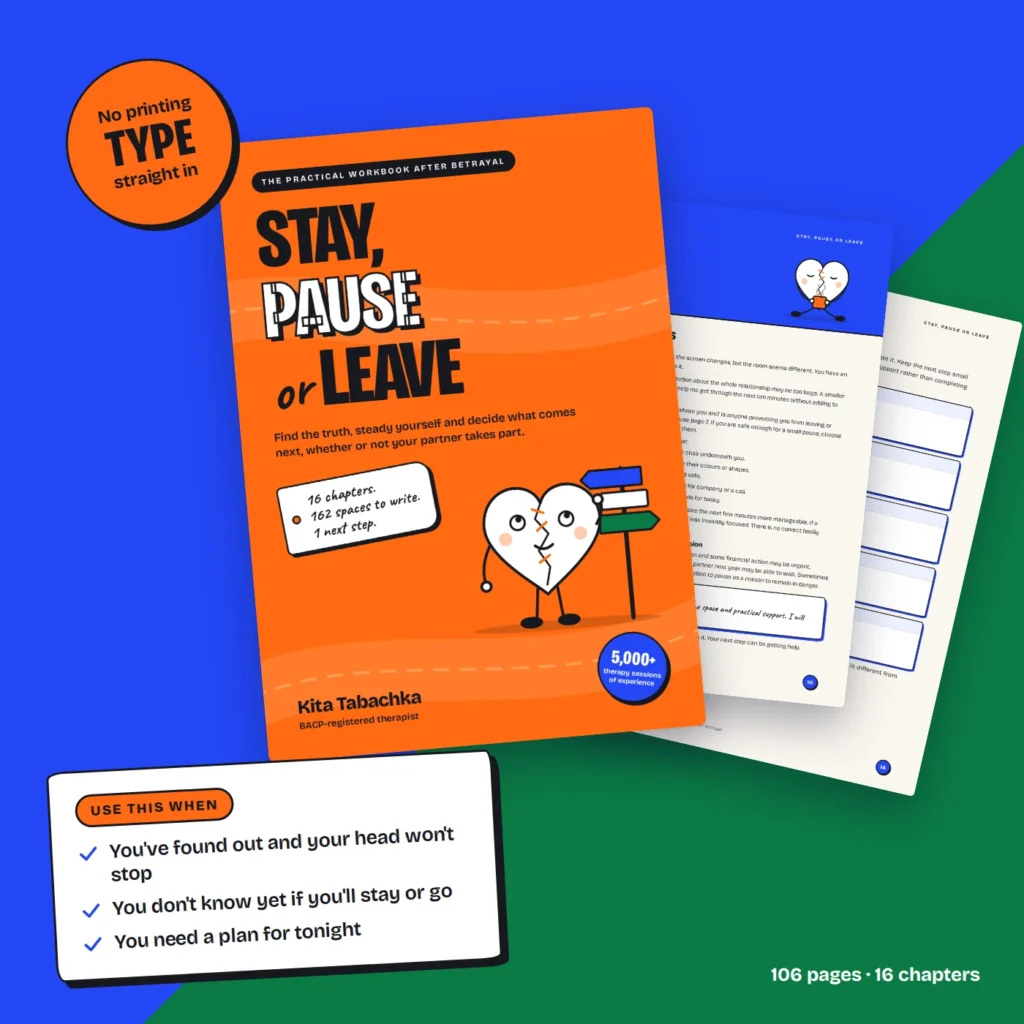
Book a free consultationFor the practical side of the weeks after discovery, I wrote Stay, Pause or Leave: The Practical Workbook After Betrayal: 16 chapters, 150 prompts and a solo route through every chapter.

Kita Tabachka
I am a BACP-registered relational therapist. I work with individuals and couples through betrayal, intimacy, attachment and the long, unglamorous business of repair. The stories here are composites. The patterns are real. My writing is a door into the work, never a substitute for it.
More about my practiceQuestions people actually ask me
This article is written by Kita Tabachka, MBACP, and is for general education and reflection. It describes patterns seen in clinical work, but it is not therapy, and it is not a substitute for individual advice from a qualified therapist, doctor or other professional who knows your situation.
Reading it cannot diagnose anything or replace your own judgement about what you need. If something here resonates and you would like support, you are welcome to learn more about my practice or book a free consultation. If you are in crisis or immediate danger, please contact local emergency services or an urgent mental health line in your country.

Join the conversation
If you have stood in this, say so. Your words may be the thing a stranger at three in the morning needed to read.