
Imagine this: your partner smiles at a message during dinner. You miss being the person they turn towards. Later, you learn they have been hiding an intimate conversation. The difficult part is no longer the phone. It is wondering what you did not know about your own relationship.
This is an illustrative scene, not a client account.
An emotional affair is an intimate connection outside a relationship that breaches the couple's agreed boundaries, often through secrecy or concealed romantic involvement. It can hurt without physical contact. A close friendship, private conversation or face-down phone does not establish an affair.
01What it is
Close friendships can be an important part of life. The concern is whether someone conceals a connection that crosses the relationship's boundaries. The Gottman Institute discusses secret flirtation and concealed emotional connections as possible breaches of trust. Couples need to discuss their own agreements rather than assume every friendship means the same thing.

02The signs
These observations are prompts for a conversation, not a checklist that diagnoses an affair. Focus on what you know, what has been agreed and what remains unclear. If worry keeps looping, why do I overthink my relationship offers reflection prompts, not a way to establish what your partner has done.
Privacy and secrecy are not the same. Ask which agreement has been broken.
Kita Tabachka, relational therapist
03Repair
Repair needs accountability for the breach, honest answers and agreed boundaries around further contact. The Gottman Institute's guidance on affair recovery emphasises taking responsibility rather than blaming relationship difficulties. It also recognises that questions and conversations may take more than one session. There is no fixed recovery deadline.
If necessary work contact continues, discuss clear limits. Transparency should be agreed freely, not enforced through threats, tracking or forced access to messages. If you are afraid to disagree, seek individual support before trying a joint conversation.
A conversation could begin: I know these messages were hidden, and that has changed how safe I feel with you. I need an honest account of what happened and a discussion about what contact continues. Can we take this slowly enough for both of us to listen?
You do not have to decide the relationship's future at the dinner table tonight. Read about choices after infidelity, or explore therapy for trust and betrayal.
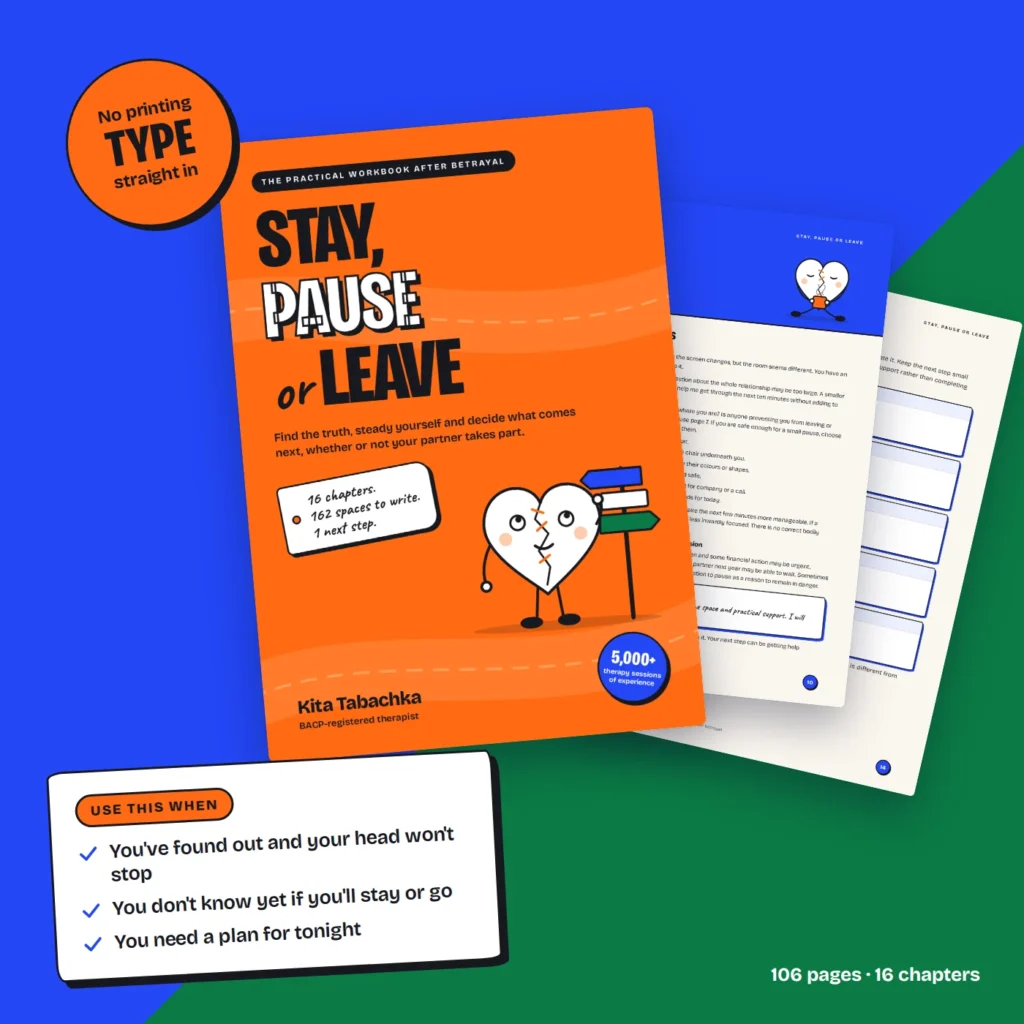
An emotional affair still breaks trust, and the same three paths stay open. Stay, Pause or Leave, my workbook after betrayal, helps you sort fact from fear before you decide anything.
Gottman Institute: boundaries and concealed connections; affair recovery and accountability. These are professional guidance, not a diagnostic test or a promise of recovery. Sources checked 3 November 2026.
More from the journal

Weekly written counselling with Kita
When writing feels easier than speaking.
You can enquire about weekly written counselling for your own experience of relationships and life abroad. We agree whether this format is a useful fit before you pay.
Explore written counselling£50 per week. One personal written reply through Carepatron. Suitability, your weekly reply day and terms agreed before payment.

Kita Tabachka
I am a BACP-registered relational therapist. I work with individuals and couples, many of them living far from where they began, on relationship anxiety, attachment, intimacy and the strange business of building a self in a new country. The scene and conversation wording in this article are illustrative, not client accounts. My writing is a door into the work, never a substitute for it.
More about my practiceQuestions people ask
This article is written by Kita Tabachka, MBACP, and is for general education and reflection. It includes general guidance and an illustrative scene, but it is not therapy, and it is not a substitute for individual advice from a qualified therapist, doctor or other professional who knows your situation.
Reading it cannot diagnose anything or replace your own judgement about what you need. If something here resonates and you would like support, you are welcome to learn more about my practice or book a free consultation. If you are in crisis or immediate danger, please contact local emergency services or an urgent mental health line in your country.

Share a reflection privately
If you would like to respond to this article, you can use the contact form. Please keep your first message brief.
Contact Kita