
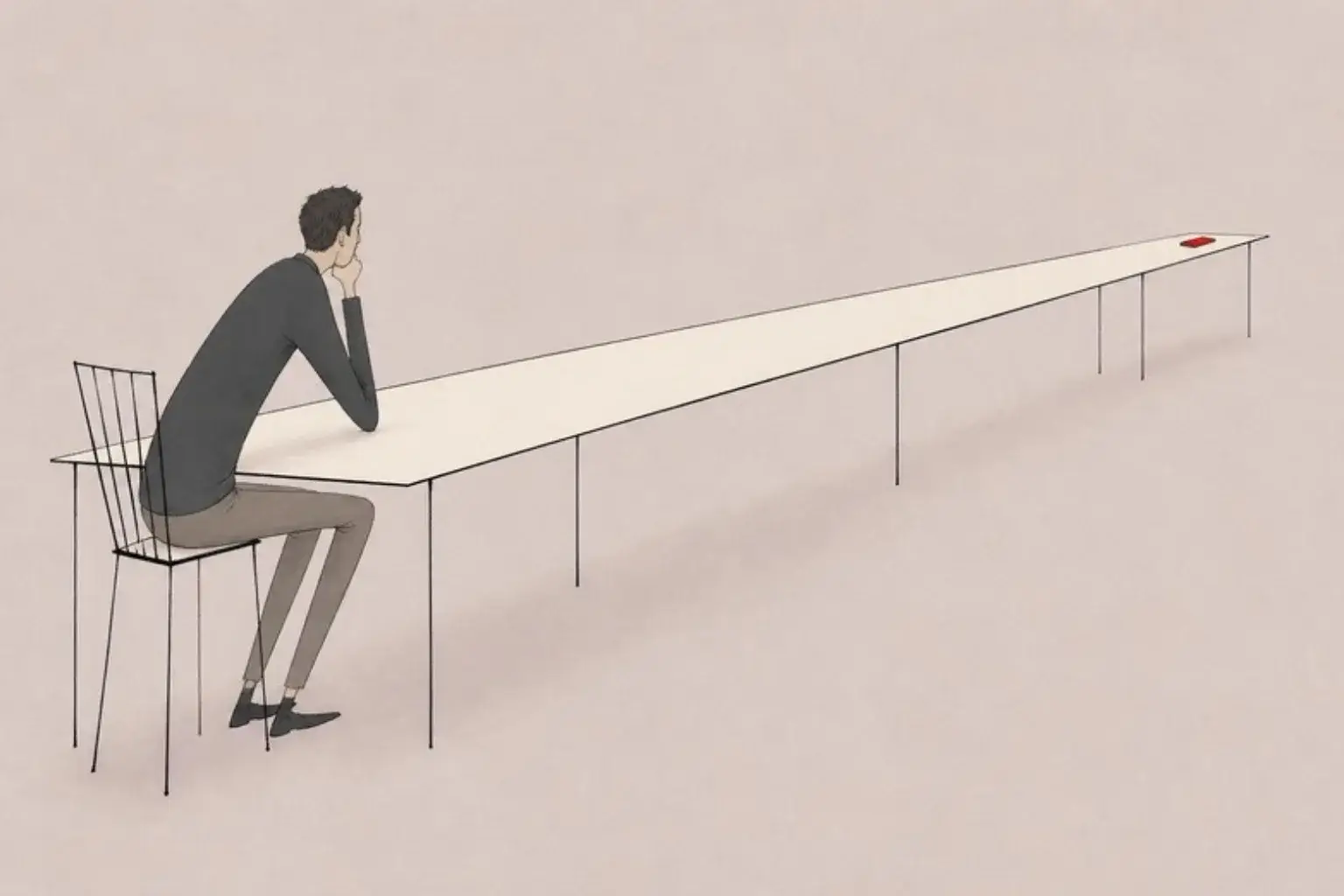
It is one in the morning in Dubai. Omar has read the messages four times. The flat is quiet in the way flats are quiet when everyone is awake. He has a meeting at nine. He is drafting a text to his brother in Manchester and deleting it. He wants a reason, and he wants it to be a reason he did not cause.
Two floors down, in a different marriage, a woman has found a hotel receipt in a jacket pocket. She wants the same thing.
The people in this article are composites, not clients. The pattern is real. The first question after a discovery is nearly always why, and the first mistake is to answer it at one in the morning with a phone in your hand. This page is written for you, the person who found out. Read it before you book a lawyer, and read it before you forgive.
People cheat for reasons which sit inside the person more often than inside the marriage: a habit of pleasing everyone and never saying no, a family or relationship with no private space in it, an opportunity with no witnesses, and sometimes an exit they were too frightened to ask for. The affair is often the only place they were a separate person. Knowing this excuses nothing. It tells you what a repair would have to include, and it is a reason to decide slowly.
Most affairs are not a search for someone better. They are a search for a self.
Kita Tabachka, relational therapist
01The night after
You are allowed to leave. Nothing on this page says otherwise. What it says is: not this week, and not on the strength of the first story you told yourself at one in the morning.
Most people who make a decision they still stand by a year later make it between month two and month six, once the shock has thinned and the person who strayed has shown, rather than promised, what they are prepared to do. People who file in the first fortnight often describe it later as the only way they knew to feel in control. Control is worth having. There are cheaper ways to get it.
02What an affair is usually not
Before the reasons, three things to put down, because you will pick them up again at three in the morning.
Now the reasons. Two of them turn up in my room far more often than the rest, and neither is the one people expect.
03The man who never learned to say no
Daniel has lived in Singapore for six years. He said yes to the posting, yes to the flat, yes to his in-laws every Christmas, yes to sex he did not want and yes to a life which suited everyone slightly more than it suited him. He is easy to live with. He is also, by his own account, invisible in a life he built to please people.
Therapists call this the fawn response, a term from Pete Walker’s work: some children learn safety by being useful, agreeable and hard to be angry with. Boys pick up a particular version. Be the calm one. Be low maintenance. Provide. Do not make a fuss. It is rewarded everywhere, at work above all, and it is a slow catastrophe in a marriage.

A person who cannot say no has no way to say “I am unhappy” at the dinner table. The no comes out sideways instead: sarcasm, silence, a row about the dishwasher. And sometimes it comes out as an affair, because the affair is the one place where nobody needs pleasing and nothing is expected of him except to be wanted.
Four things a people-pleaser says at home, and what sits underneath each one. Tap a card to turn it.
If your partner is this person, the affair was not a search for someone better. It was a search for a self. The repair is not only about ending contact. It is about him learning to say no to you, out loud, which will feel worse before it feels better, and which is the only version of him you will ever be able to trust.
04The man who never had a room of his own
Ahmed is thirty-four and lives in Riyadh with his wife and daughter. Every evening at seven his mother calls from Amman. On Sundays the call includes his sisters and a decision about a cousin’s wedding. Money goes home monthly. His wife stopped asking about the calls a year ago. Ahmed is a good son, a competent husband and a man who has never once had a private inner life, because in the family he grew up in a private inner life was a form of disloyalty.
This is enmeshment, a term from Salvador Minuchin’s work on family structure. A close family shares meals and opinions. An enmeshed family shares feelings as if they were one nervous system, and treats a locked phone, a separate account or a conversation with a therapist as a secret. So its members stop having private spaces, or they keep the biggest one they have ever kept.
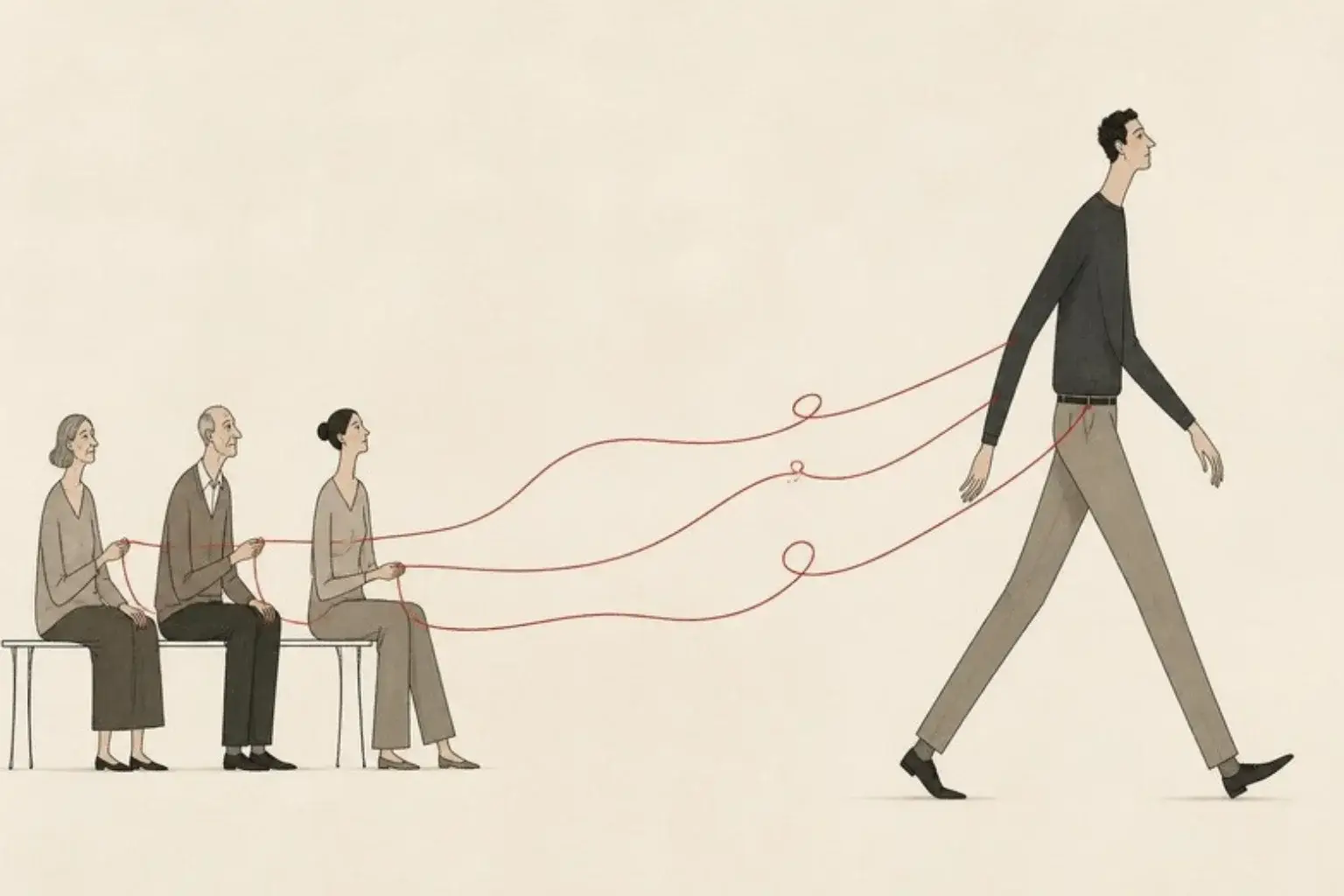
Men who grew up as the eldest son, the family’s translator and provider and emotional plumbing, describe it in almost those words. Migration tightens the pattern rather than loosening it: the phone becomes the whole relationship with home, and guilt about leaving is added to guilt about everything else.
If your partner is this person, the marriage was already sharing him with a committee before the affair began, and some part of you knew. Repair here means him building a self with a door on it, in daylight, with you rather than against you: one decision which is his, one boundary with his family, one evening a week which belongs to the two of you.
05The reasons you share
Some affairs grow in a gap both people knew about and neither named. Years without a proper conversation. Resentment about who moved for whose career. A sex life which stopped after the second child and was never mentioned again. Two people running a household abroad like colleagues, competent and polite and lonely.
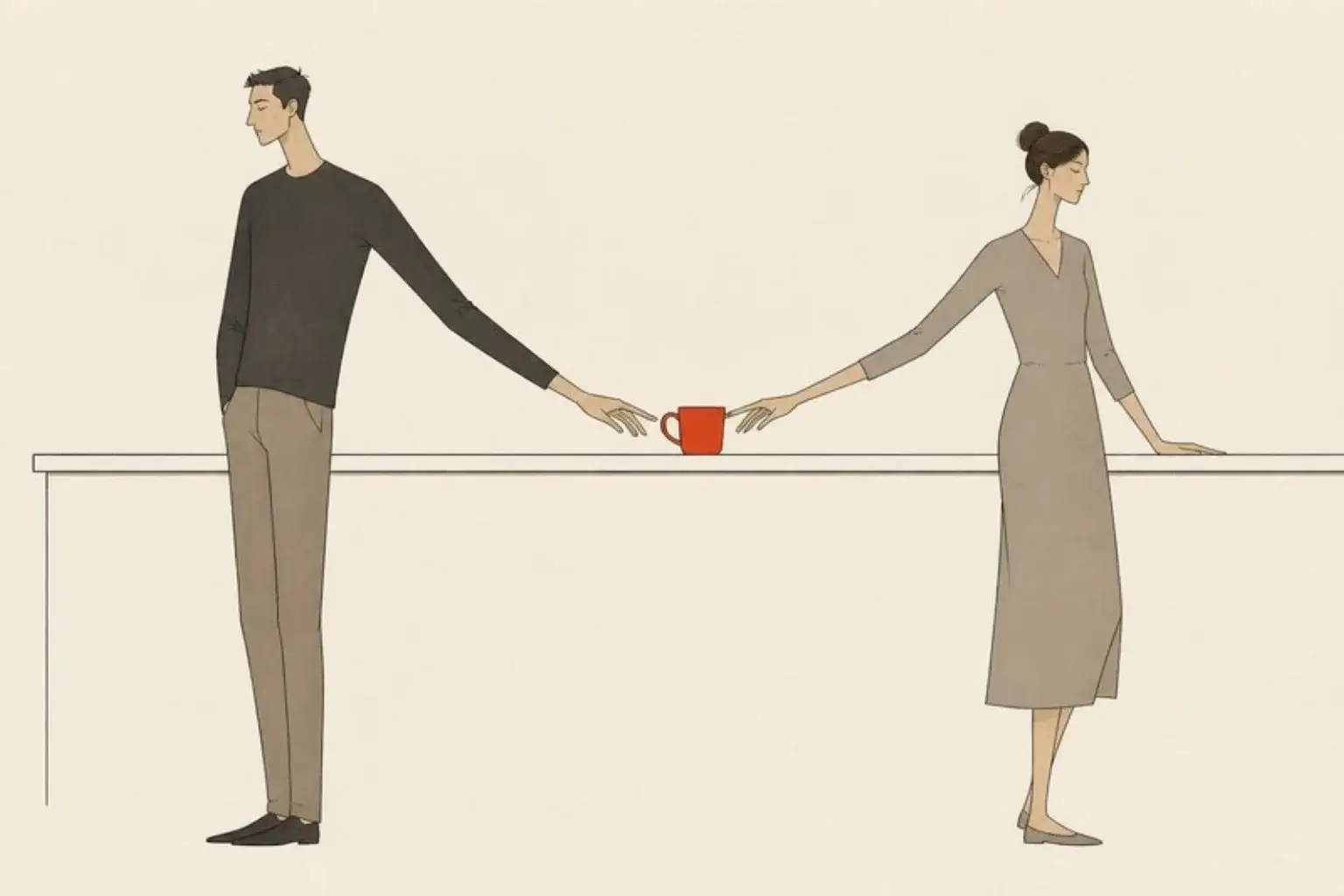
Here the reason is shared, and so is the repair. This is the hardest thing to hear in the first month and the most useful thing to hear in the sixth. Being part of the gap is not the same as being responsible for the affair. Your partner chose the affair. The gap was a joint account, and if you stay, you will both be paying into it.
06When someone looks for someone else instead of fixing what is there
One kind of affair is an exit with the door left open. The person wants the marriage to end but cannot bear to be the one who ended it, so they wait to be caught. Or they line up the next relationship before leaving the current one, because being alone abroad, far from family, feels worse than being unfaithful.
It reads as cowardice. Underneath it is nearly always fear: of being the villain, of the children, of a visa which depends on the marriage, of a family at home who will never understand. None of this makes it kind. It does make it human, and it tells you the honest sentence your partner has been avoiding for a year: “I stopped wanting this and did not know how to say so.” If you hear this sentence now, late, it still counts. It is the first true thing in a while.
Most affairs happen on the near side of a door nobody knocked on.
Kita Tabachka, relational therapist
Some men say they looked elsewhere because they tried to fix things and failed. Ask what “tried” involved. One conversation which went badly is not a repair attempt. Six months of honest effort, a clear request and a partner who refused: this is a repair attempt.
07Why this matters before you decide anything
Understanding the reason does not oblige you to stay. It tells you what a repair would have to include, so you know what you are saying yes or no to. A people-pleaser who is learning to say no is a different proposition from one who has apologised and changed nothing. An enmeshed son who has moved the Sunday call is different from one who has not. You get to watch, and you get to take your time.
Is repair on the table, or are you being managed?
Six honest questions for the person who found out. Not a verdict. A mirror.
This cannot see your marriage. If anything here resonates, it is worth exploring with a person, not a page.
Book a free consultation08What repair looks like, from both sides
For the person who strayed, the first three months are three things: end the contact completely and prove it, tell the whole truth in one sitting rather than in instalments, and tolerate your partner’s anger without managing it, defending against it or timing it. The year after is the pattern: learning to say no if he never did, building a self with a door if he never had one.
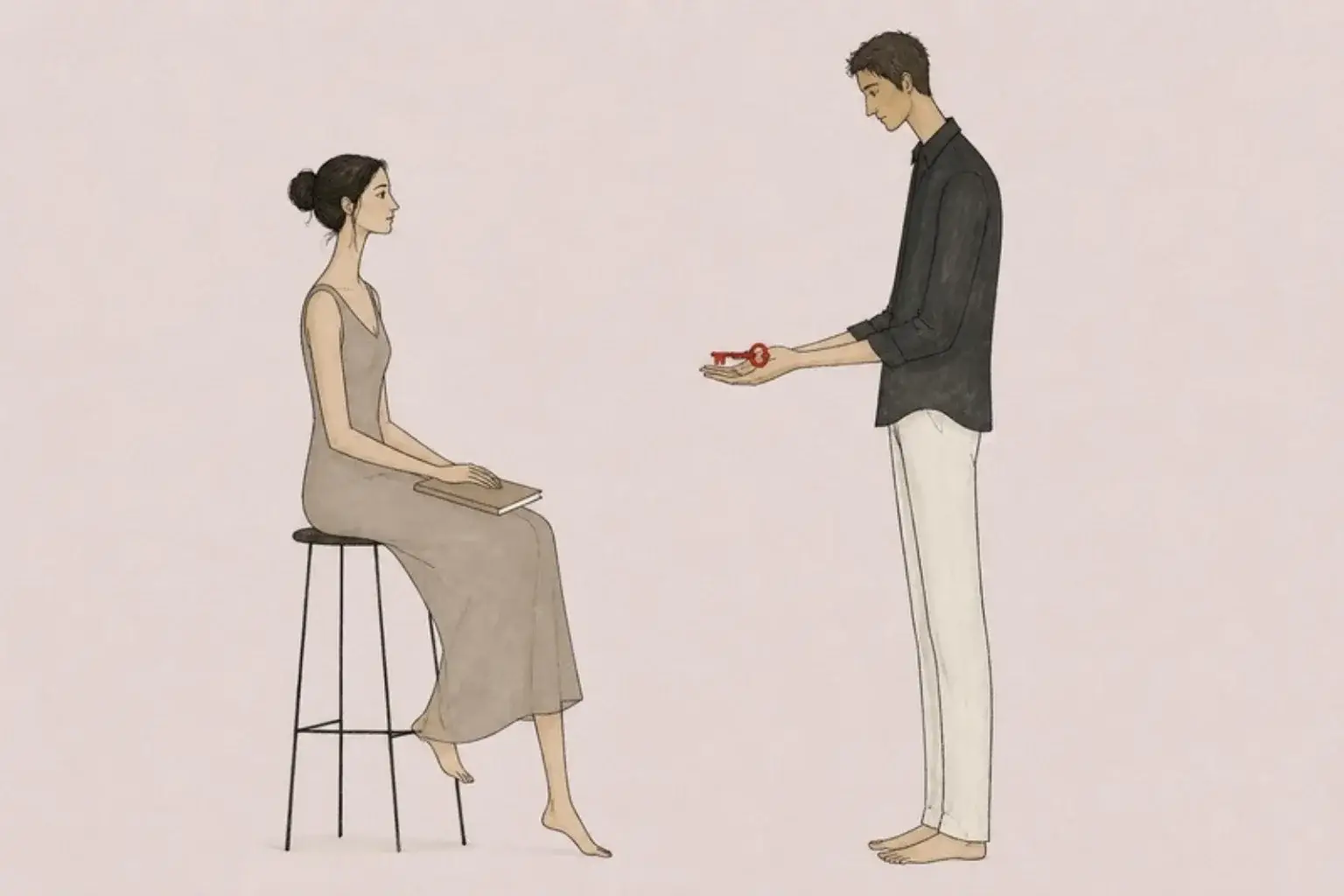
For you, the person who was betrayed, repair is not swallowing it. You are entitled to the facts which affect your health, your money and your decision. You are not obliged to hear the details which will live in your head for years. The question “how many times” rarely helps. “Has all contact ended, and how would I know” nearly always does.
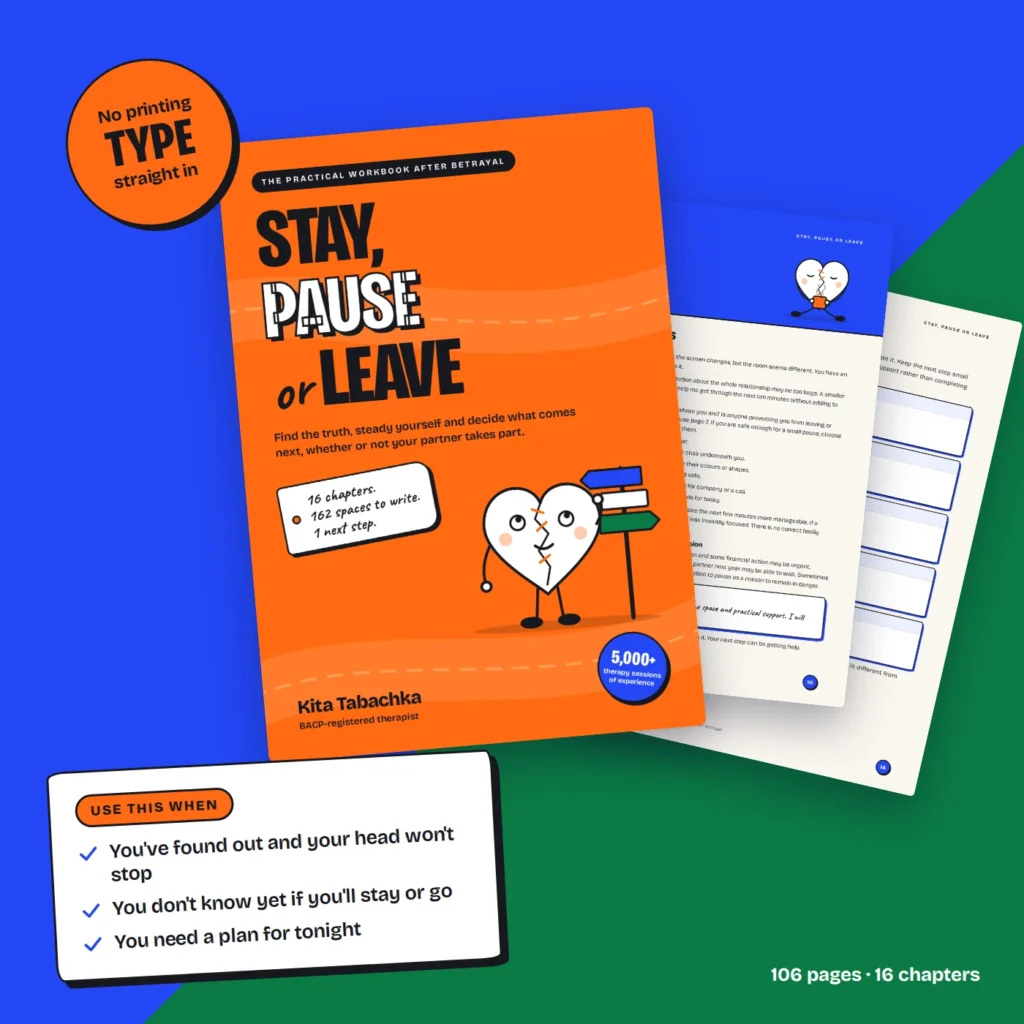
I wrote a workbook for exactly this stretch, the weeks between the discovery and the decision: Stay, Pause or Leave, 106 pages with a route for each direction and a chapter for the person doing it without their partner’s help. Five pages are free to read. It is educational, not therapy.
09A note for men on either side of this
Men often arrive at this in one of two states. The betrayed man is furious and cannot say the other word, which is frightened. The man who strayed is ashamed and cannot say the other word, which is lonely. Both reach for action: confront, leave, fix, forgive fast, move out, move on. Action feels like strength. Mostly it is a way of not sitting with the feeling for one more hour.
You are allowed to be the man who books one conversation with someone outside the marriage before he books a flight or a lawyer. Doing this slowly is the whole skill. Much of my work is with men and couples in Dubai, Riyadh, Singapore and London in the weeks after somebody has found something out. We start with the last forty-eight hours, not with your whole history, and we do not start with a verdict.
If you live somewhere where disclosure carries legal, immigration or physical risk for either of you, get specialist advice before any confrontation. A therapist is not a lawyer. Safety comes before truth, and before repair. If you are ever in danger, contact local emergency services or a domestic abuse helpline in your country.

Weekly written counselling with Kita
When writing feels easier than speaking.
You can enquire about weekly written counselling for your own experience of relationships and life abroad. We agree whether this format is a useful fit before you pay.
Explore written counselling£50 per week. One personal written reply through Carepatron. Suitability, your weekly reply day and terms agreed before payment.

Kita Tabachka
I am a BACP-registered relational therapist. I work with individuals and couples, many of them living far from where they began, on relationship anxiety, attachment, intimacy and the strange business of building a self in a new country. The stories here are composites. The patterns are real. My writing is a door into the work, never a substitute for it.
More about my practiceQuestions people ask after finding out
This article is written by Kita Tabachka, MBACP, and is for general education and reflection. It describes patterns seen in clinical work, but it is not therapy, and it is not a substitute for individual advice from a qualified therapist, doctor or other professional who knows your situation.
Reading it cannot diagnose anything or replace your own judgement about what you need. If something here resonates and you would like support, you are welcome to learn more about my practice or book a free consultation. If you are in crisis or immediate danger, please contact local emergency services or an urgent mental health line in your country.
Join the conversation
If you have lived this, say so. Your words may be the thing a stranger at midnight needed to read.