
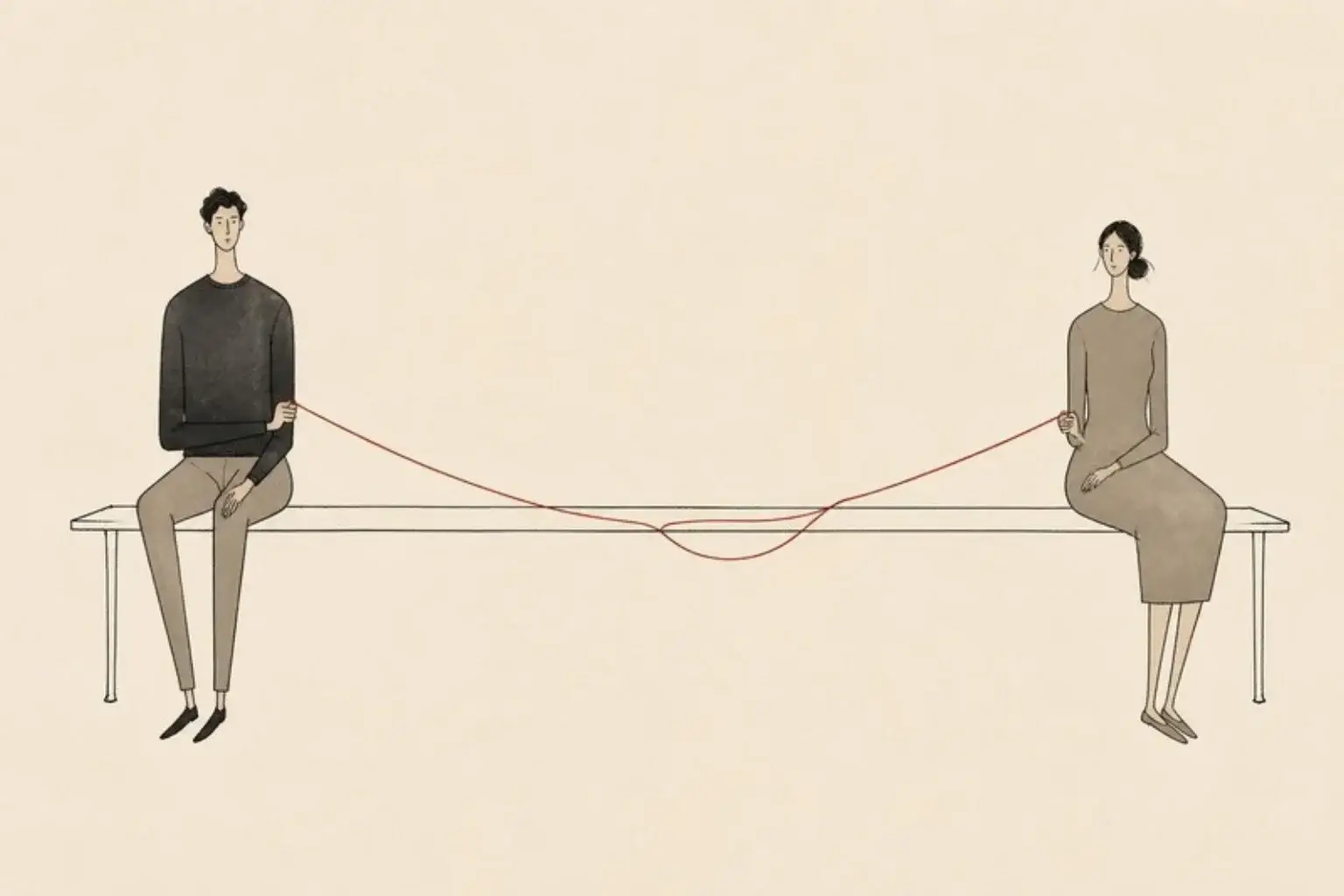
Tom is forty-one and has lived in Dubai for four years. His wife said it on a Tuesday, in the car, after the school run. She was calm, which frightened him more than tears would have.
He spent the evening listing everything he does for the family and the night lying awake next to her drafting the argument. By Thursday he had bought flowers, booked a weekend in Muscat and suggested a new car. By Sunday she had stopped answering his questions.
The people here are composites, not clients. The sequence is one I see most weeks: shock, defence, a flood of gestures, then silence on her side which he reads as the end. It is not the end. It is her waiting to see whether he heard anything.
“I love you, but I am not in love with you” is rarely sudden. By the time a woman says it she has usually been lonely inside the marriage for a year or more and has already done some of her grieving. It means she has stopped expecting anything, not stopped feeling. The first month decides most of what follows, and the instinctive moves (defending, flooding her with gestures, begging, threatening, going silent, checking her phone) are the ones which end it. What works is one question, real listening, a defined period with a date, one changed thing kept changed, and becoming a person again outside the marriage.
She did not go quiet overnight. She went quiet while you were relieved things were calm.
Kita Tabachka, relational therapist
01The sentence
It almost never means she has stopped feeling anything. It means she has stopped expecting anything. Somewhere in the last few years she raised something, more than once, and it went nowhere, and she made a private decision to stop raising it. The loneliness which follows is quieter than an argument, which is why so many men miss it.
02What “not in love” usually means
Four versions of what sits under the sentence. Tap a card to turn it.
Notice what is missing from those cards: another man. It is sometimes there, and if it is, it belongs in the open early. Far more often it is not, and the man assumes it because an affair is easier to fight than a slow disappointment.
03The six moves which make it worse

04What to do instead
Ask one question and then stop talking. “When did you first notice, and what did you try to tell me at the time?” Then listen for as long as she speaks, without defending a single point. This is the hardest thing on this page and the one which matters most.
Say back what you heard. Not what you think, not your side. “So you have felt on your own in this for about two years, and the time you tried to say so was after your mother’s visit, and I changed the subject.” If she corrects you, take the correction.
Ask for a defined period. Not “give me another chance”. “I would like three months to show you something different, with a date to talk about where we are. If nothing has changed for you by then, I will hear it.” A date makes it survivable for her.
Change one small thing and keep it changed. The thing she named. Not ten things. The one. Consistency over three months is the only evidence she will believe.
Get help early, on your own if she will not come. A man who books his own therapy in week two is telling his wife something no bouquet tells her. Couples work is possible later, when she is willing. Individual work starts now.
A date makes it survivable for her. A promise does not.
Kita Tabachka, relational therapist
05Become a person again

One thing a week which is yours: a friend, a sport, a plan, an opinion. Men abroad often have nothing of this left. The job is the week, the wife is the evening, and the man who used to have a five-a-side team and a view on films has been replaced by a provider who checks his phone at dinner. She misses someone she has not seen for years. Show her he is still in there, without asking her to applaud.
Where is this, honestly?
Six questions for the man who heard the sentence this week. Not a verdict. A mirror.
This cannot see your marriage. If anything here resonates, it is worth exploring with a person, not a page.
Book a free consultation06The expat version
In Dubai, Riyadh and Singapore the sentence often arrives with an extra weight: her visa, her right to stay, and sometimes the children’s schooling depend on the marriage. She has been weighing this for months. So when she finally says it, she has already found the courage to risk everything, and she is not going to un-say it because you booked a weekend away.
It also means her options are narrower than yours and she knows it. Any pressure you apply, even accidentally, lands on a woman who is already frightened about practicalities. Say the opposite out loud: “Whatever happens between us, I will not use the visa or the money to keep you.” Then behave as if you meant it. Few sentences have done more, in my room, to reopen a conversation which had closed.
If there is fear, threats or physical force from either side, or if one of you is trapped by documents or money, this is not a marriage conversation yet. Speak to a specialist service in your country first. If you are ever in danger, contact local emergency services.
07If there is someone else
Ask once, directly, and believe the answer unless you have hard evidence. If the answer is yes, the page on why people cheat is where to go next, and the rule above still holds: not this week. If the answer is no, stop looking for him. Every hour spent on the phone you are not checking is an hour you are not becoming the man she might stay for.
08When to get help
If you cannot listen without defending, if you have already flooded her and she has gone quiet, if the visa or money has come up as leverage from either side, or if you are drinking more or not sleeping, this has gone beyond a plan. None of these mean the marriage is over. They mean you need one hour a week with someone whose job is to stop you making it worse.
A large part of my practice is men abroad whose wives have said some version of this sentence. We start with what she said, word for word, and what you did in the first forty-eight hours. Then we work out what she is asking for, which is rarely what you have been offering. Individual online sessions in English cost £70 for 50 minutes. Couples sessions, when she is willing, cost £100 for 70 minutes, and partners in different countries join from wherever they are.

Weekly written counselling with Kita
When writing feels easier than speaking.
You can enquire about weekly written counselling for your own experience of relationships and life abroad. We agree whether this format is a useful fit before you pay.
Explore written counselling£50 per week. One personal written reply through Carepatron. Suitability, your weekly reply day and terms agreed before payment.

Kita Tabachka
I am a BACP-registered relational therapist. I work with individuals and couples, many of them living far from where they began, on relationship anxiety, attachment, intimacy and the strange business of building a self in a new country. The stories here are composites. The patterns are real. My writing is a door into the work, never a substitute for it.
More about my practiceQuestions men ask me about this
This article is written by Kita Tabachka, MBACP, and is for general education and reflection. It describes patterns seen in clinical work, but it is not therapy, and it is not a substitute for individual advice from a qualified therapist, doctor or other professional who knows your situation.
Reading it cannot diagnose anything or replace your own judgement about what you need. If something here resonates and you would like support, you are welcome to learn more about my practice or book a free consultation. If you are in crisis or immediate danger, please contact local emergency services or an urgent mental health line in your country.
Join the conversation
If you have lived this, say so. Your words may be the thing a stranger at midnight needed to read.