
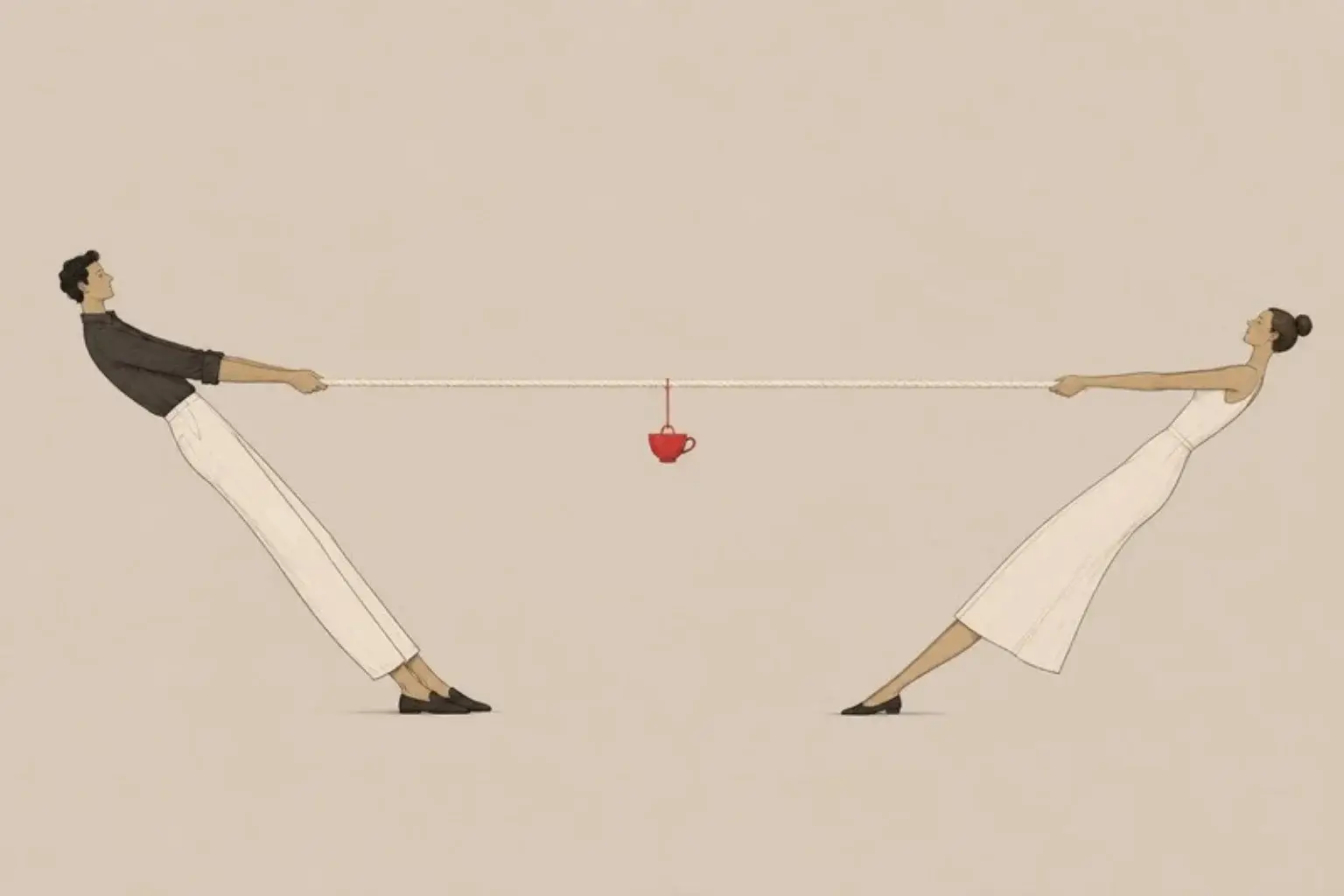
Marcus is thirty-six and has been in Singapore for three years. On Thursday night the argument is about the dishwasher. On Friday it is about his mother’s visit. On Saturday it is about the fact he checked his phone while she was talking. By Sunday they are arguing about how much they argue.
He says she is never happy. She says he never listens. Both are describing the same fifteen minutes from opposite ends.
The people here are composites, not clients. The pattern is the most common one I see in couples abroad, where two people with no family nearby and long working days become each other’s only witness, and every small failure lands with nobody else to absorb it.
Couples who argue about everything are having one argument with a hundred subjects. Underneath, one person is asking “are you with me?” and the other is answering “why am I always wrong?” Four moves make it worse: defending, fixing, going quiet and scorekeeping. It stops in the first ninety seconds: notice the heat, name the real subject, ask what she needed, repeat it back without a but, and offer one small thing tonight. Afterwards, repair the door closing, not your position.
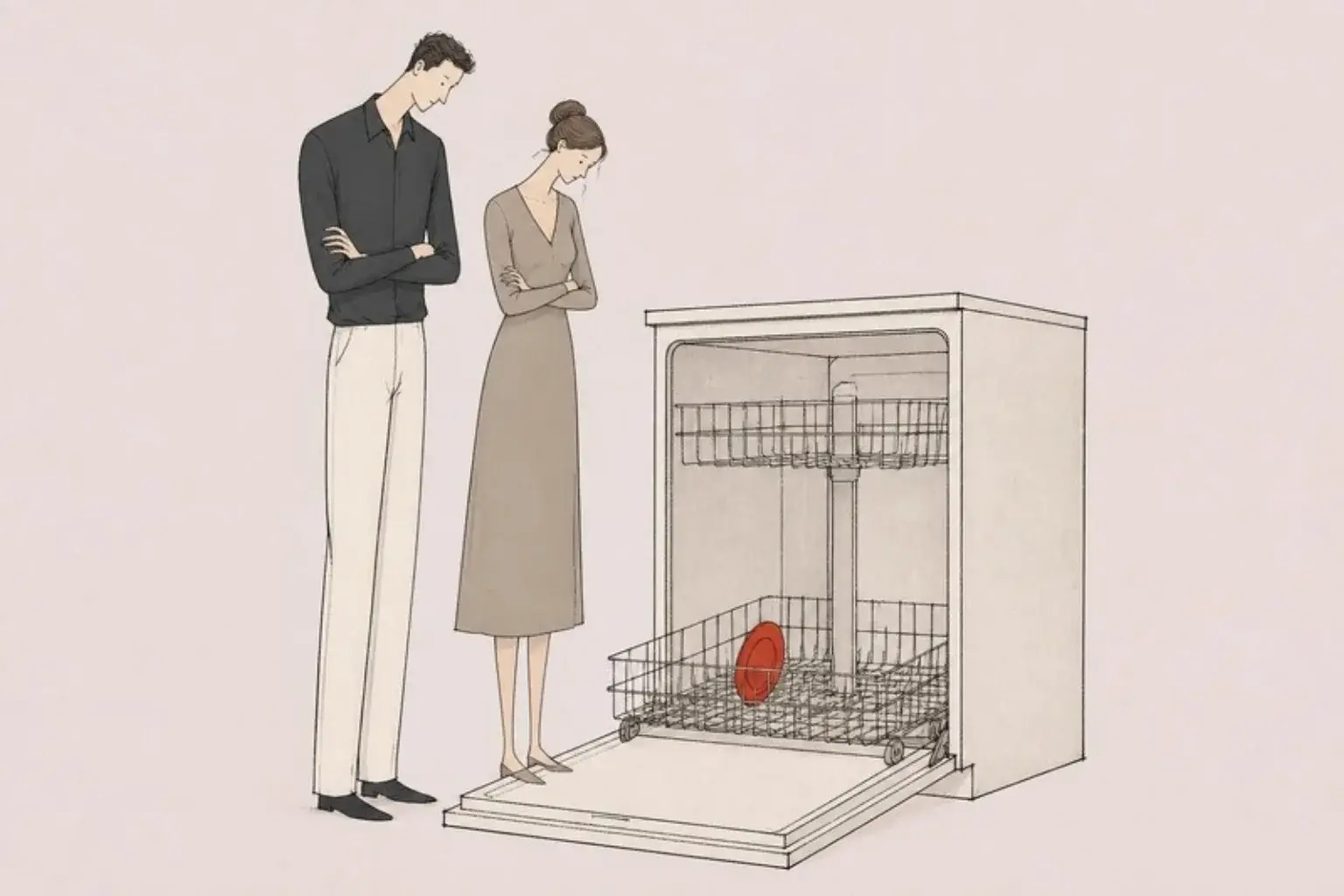
01The dishwasher
The answer she gets, when you explain why the dishwasher was loaded correctly, is no. Not because you said no. Because you answered the subject and walked past the question.
02The one argument you keep having
Most couples have a single argument with a hundred subjects. Sue Johnson, whose work on couples underpins much of mine, describes it as a pursue-and-withdraw dance. One partner, often the wife, raises something because she wants contact and does not know how else to get it. The other, often the husband, hears criticism and defends, fixes, or goes quiet. She raises her voice to be heard. He withdraws further to keep the peace. Each is responding to the other’s worst moment and neither is getting what they came for.
Four things which get said in the kitchen, and the question underneath each one. Tap a card to turn it.
Think of your last three arguments. Strip the subject away. What was she asking for underneath, and what were you protecting? If you find the same two answers three times, you have found your argument.
03The four moves which make it worse
04The ninety-second way to stop an argument
You will not stop arguments by never disagreeing. You stop them by changing what happens in the first ninety seconds, before either of you is fully in the dance.
Notice the heat. Jaw, chest, the urge to explain. This is the moment. Ten seconds later it is gone.
Say the real subject out loud. “I think we are about to have the dishwasher argument, and I do not think it is about the dishwasher.” Naming the dance interrupts it.
Ask what she needed. “What did you want from me when you said it?” Then wait. Do not fill the gap.
Repeat it back, without a but. “You wanted me to see how much you did today and I walked past it.” No defence, no explanation, no “but I…”.
Offer one thing. Not a plan. One thing, tonight. “Sit down. I will do the kitchen and then tell me about the call with your mum.”
Repeating what she said, accurately, without adding your side, is the one move which has no counter. There is nothing in it to argue with.
Kita Tabachka, relational therapist
Which dance are you in?
Six questions for the man who is tired of the same fight. Not a verdict. A mirror.
This cannot see your marriage. If anything here resonates, it is worth exploring with a person, not a page.
Book a free consultation05When you did not manage it: repair after
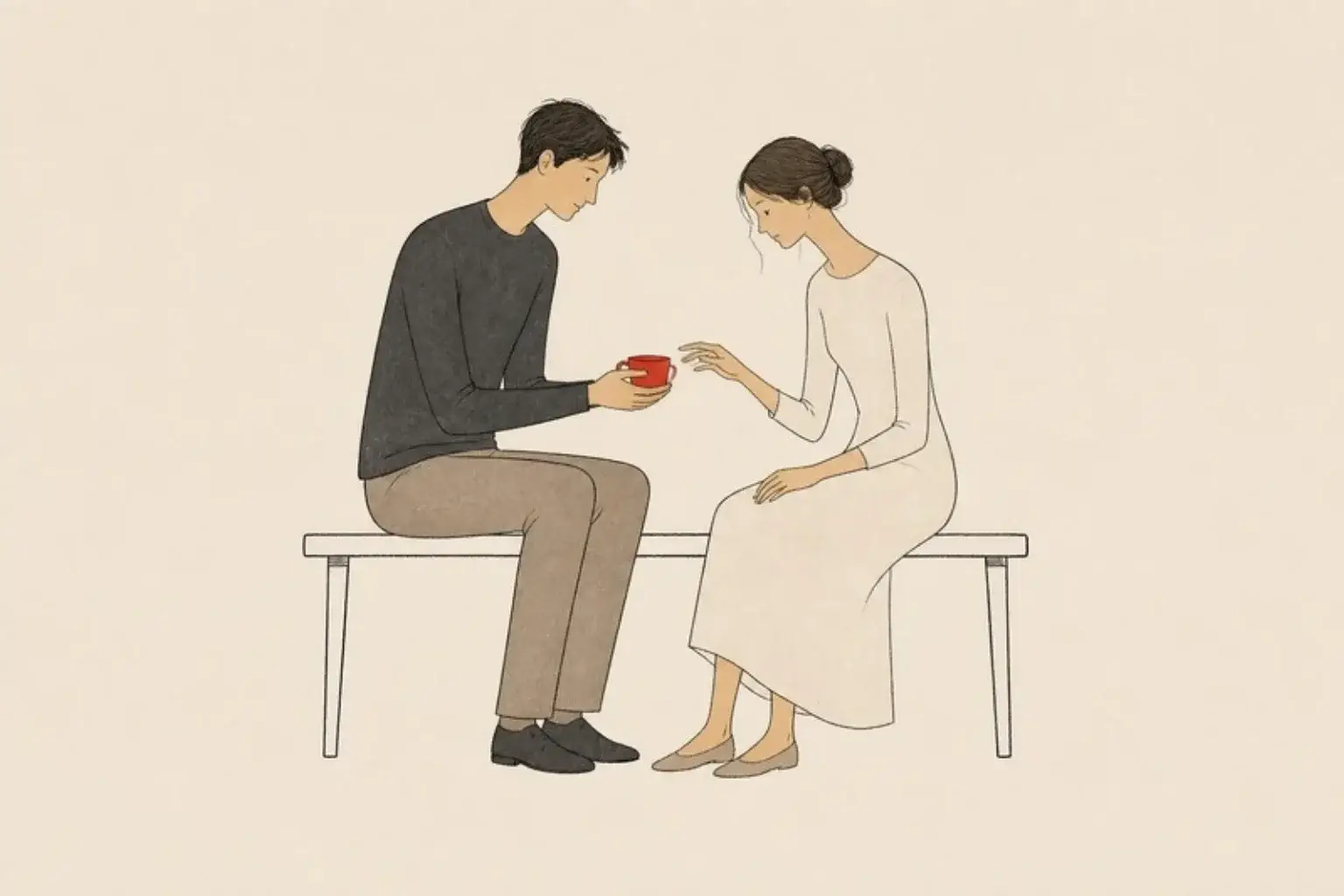
You will fail at this. Everyone does. The measure of a marriage is not how few fights it has but how quickly and how well the two people come back afterwards. John Gottman’s research on thousands of couples found repair attempts, not the absence of conflict, were the strongest predictor of couples who stayed together and stayed close.
“I went into defending last night and I did not hear you. Will you tell me again?” Make it the same day where possible, the next morning otherwise, and never in a text.
06When the subject is money, family, sex or the move
The last one deserves a whole conversation of its own rather than a hundred small ones. The page on expat relationship problems is where to start, and cross-cultural couples therapy covers families in two countries.
07When to get help
If you have both tried and the dance restarts within a day, if contempt has crept in on either side, sneering, eye-rolling, mockery, if one of you has stopped bothering to argue, or if the arguments have started to frighten either of you or the children, the pattern has outgrown a technique. Couples therapy for this is practical: we slow one argument down enough to see the dance, and we practise the ninety seconds in a room where nobody has to win.
I am trained in the Gottman approach and work mostly with couples and men abroad, in Dubai, Riyadh, Singapore and London. Couples join from the same sofa or from two countries. Couples online sessions in English cost £100 for 70 minutes. Individual sessions, if you want to work on your side of the dance first, cost £70 for 50 minutes.
If there is fear, threats or physical force from either side, this is not an argument pattern and needs a specialist service first. Couples work is never the answer where there is coercion or fear. If you are ever in danger, contact local emergency services.

Weekly written counselling with Kita
When writing feels easier than speaking.
You can enquire about weekly written counselling for your own experience of relationships and life abroad. We agree whether this format is a useful fit before you pay.
Explore written counselling£50 per week. One personal written reply through Carepatron. Suitability, your weekly reply day and terms agreed before payment.

Kita Tabachka
I am a BACP-registered relational therapist. I work with individuals and couples, many of them living far from where they began, on relationship anxiety, attachment, intimacy and the strange business of building a self in a new country. The stories here are composites. The patterns are real. My writing is a door into the work, never a substitute for it.
More about my practiceQuestions men ask me about arguing
This article is written by Kita Tabachka, MBACP, and is for general education and reflection. It describes patterns seen in clinical work, but it is not therapy, and it is not a substitute for individual advice from a qualified therapist, doctor or other professional who knows your situation.
Reading it cannot diagnose anything or replace your own judgement about what you need. If something here resonates and you would like support, you are welcome to learn more about my practice or book a free consultation. If you are in crisis or immediate danger, please contact local emergency services or an urgent mental health line in your country.
Join the conversation
If you have lived this, say so. Your words may be the thing a stranger at midnight needed to read.