Romantic obsession · A practical short read
Limerence and social media: when checking takes over
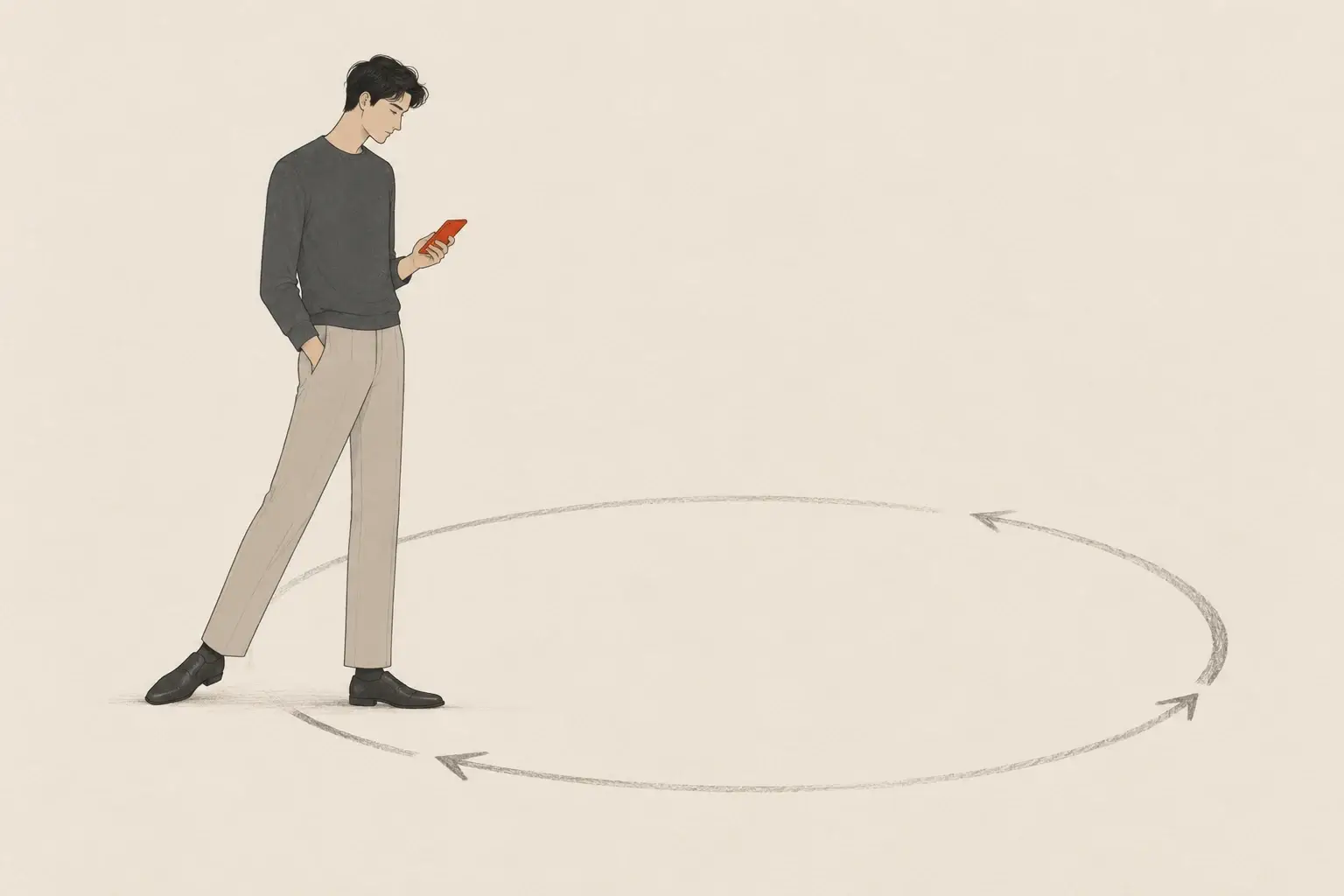
Limerence is a word used for intense romantic preoccupation with another person. Repeatedly checking their social media can keep your attention fixed on tiny signs of interest or rejection. The aim is not to shame the feeling, but to notice its cost and make room for your own life.
What is limerence?
You may spend hours imagining a future, interpreting a brief interaction or waiting for one person to notice you. Their latest post can seem more important than the day you were about to have.
Cleveland Clinic describes limerence as intense fixation and notes that it is not an official medical diagnosis. Its guidance includes repeated checking of messages and social media among possible signs. [1] A strong crush alone does not tell you that something is wrong.
Why social-media checking can keep you stuck
A new photo gives you something else to interpret. A missing reply gives you something else to fear. You may keep looking for an answer that the profile cannot provide.
Try noticing the sequence: what prompted the check, what you hoped to learn and how you felt afterwards. This is a reflection on your attention, not a method for decoding someone else's feelings.
Try it here · No score, no sign-up
Interrupt one checking moment
Choose your situation and explore three small steps. This is not a limerence or OCD assessment. Your choice is not submitted or saved.
I keep opening their profile
- Notice the cue: boredom, loneliness, uncertainty or seeing their name. You do not need to analyse their latest post.
- Choose one practical boundary, such as muting a feed or removing a shortcut. Do not switch accounts to get around a block.
- Return to a concrete activity you chose for yourself. If the urge keeps taking over, consider support rather than criticising yourself.
We need some practical contact
- Name the necessary purpose, such as work or a shared responsibility. Keep this separate from hopes about the relationship.
- Choose a reasonable channel and agreed topic. Avoid turning practical contact into a test of whether they care.
- Plan something for yourself after the contact. A clear boundary can coexist with difficult feelings.
They have asked for no contact
- Respect the request. Do not send another message, use another account or ask someone else to approach them for you.
- Take your feelings to a safe source of support that does not involve monitoring or contacting this person.
- If respecting the boundary feels difficult, seek professional help promptly. Support should protect both your wellbeing and their autonomy.
Limerence or love: look at what is mutual
Intensity alone cannot show whether a relationship is mutual or workable. Consider what you actually share: agreed contact, reciprocal interest, knowledge of each other's ordinary lives and respect for boundaries.
A story view, a like or a kind conversation does not establish romantic interest. You can care about someone and still recognise that a hoped-for relationship has not been agreed.
Choose a boundary around checking
Start with one specific change. You might mute a feed, remove a shortcut or keep necessary contact limited to its agreed purpose. Cleveland Clinic recommends boundaries and reducing social-media checking as possible ways to address limerence. [1]
If you work together or share responsibilities, total avoidance may not be realistic. A practical boundary could mean keeping contact to the task, instead of using it to search for signs of affection.
An intention to try
I can feel the urge to check without turning it into another search. I will return to the activity I had planned, and ask for support if this keeps taking over.
Make space for the need underneath
What has this hoped-for connection come to represent: being chosen, escaping a difficult period, feeling attractive or having someone to turn towards? These are questions to explore, not explanations that apply to everyone.
If loneliness is part of the picture, read about support for loneliness. If fear of rejection feels familiar, explore relationship anxiety therapy. Individual therapy can provide space to discuss the pattern and whether additional specialist support is needed.
Feelings do not cancel another person's boundaries
Respect a refusal, a block or a request for no contact. Do not use other accounts, friends or location information to get around it. Your feelings deserve support; the other person does not owe you contact.
If preoccupation is affecting sleep, work or daily functioning, seek professional help. Intrusive thoughts and compulsions can have different explanations. A qualified clinician can assess these; a blog cannot.
Watch and listen · 47 seconds
A pause in the social-media checking loop
Spoken guidance with on-screen captions and a transcript. Narration uses an AI voice. Press play to listen.
Read the video transcript
When thoughts about someone keep pulling you back to their profile, another check may promise certainty without giving you the answer you need.
Pause and name what you hope to find. A sign they care? Relief from uncertainty? Noticing the need can help you choose your next step.
Try putting the phone aside for a short, manageable activity. You can also mute reminders that keep drawing you back.
Strong feelings do not create an obligation for someone else to respond. Respect their boundaries, including any request for no contact.
If this pattern is disrupting sleep, work or relationships, seek professional support. The guide below offers reflection prompts and explains when specialist assessment may help.
Questions you may be asking
Is limerence a mental health diagnosis?
Limerence is not an official medical diagnosis. The term describes intense romantic preoccupation. If intrusive thoughts or compulsive behaviours are disrupting daily life, a qualified clinician can assess what is happening and discuss suitable support.
How do I stop checking someone's social media?
Notice what prompts checking and choose a practical boundary, such as muting the feed or removing a shortcut. Make a plan for what to do with your attention instead. If checking feels difficult to control, consider professional support. Respect blocks and requests for no contact.
Does intense attraction mean the other person is right for me?
Intensity cannot establish compatibility or mutual interest. Consider the relationship that actually exists, including reciprocal contact and respect for boundaries, rather than treating online signals or imagined possibilities as proof.
Sources and further reading
- Cleveland Clinic: limerence and obsessive attraction. Background on the term, repeated checking and boundaries. Published 12 November 2025.
Sources checked 8 October 2026. Examples and reflection prompts are original. This article offers general information, not an individual assessment or emergency support.
If you cannot keep yourself safe, seek urgent help. In the UK, use the NHS urgent mental health support guide. Elsewhere, use your local emergency or crisis service.