
Tom lived in a flat in Manchester with a view of the canal and two hundred contacts in his phone. On a Sunday in February he counted the people he would call if he had bad news. He got to one, his sister, in Perth. He sat with the number for an hour, then booked a session because he did not know who else to tell.
Loneliness is the painful gap between the connection you want and the connection you have. It affects about 1 in 6 people worldwide, according to the World Health Organization. To cope with it, start small and regular: one repeated contact a week, one place you return to, and one honest sentence to one person. Look after sleep and daylight. If loneliness has lasted months, sits alongside low mood, or follows a loss, therapy helps you find where the gap began and how to close it.
If you would like support with the disconnection described here, read about online therapy for loneliness with Kita.
01What loneliness is, and what it is not
The World Health Organization defines loneliness as “the painful feeling which arises from a gap between desired and actual social connections”. The key word is gap. Social isolation counts your contacts. Loneliness measures how far your life sits from the closeness you need.
This explains why a nurse on a busy ward feels lonely at the end of a twelve-hour shift, and why a man who lives alone on a Scottish island feels fine. Tom had colleagues, a five-a-side team and a WhatsApp group with forty people in it. He had nobody who knew him.
02How common it is, and what it costs
In England, 6.6% of adults told the government’s Community Life Survey 2024/25 they feel lonely often or always. The figure rises to 9% for 16 to 24 year olds and 8% for 25 to 34 year olds. Younger adults report more loneliness than people over 65, against the stereotype.
The World Health Organization’s 2025 report links loneliness to more than 871,000 deaths a year, around 100 every hour. A 2010 review by Julianne Holt-Lunstad, covering 148 studies and over 300,000 people, found people with strong social ties had a 50% higher chance of survival over the study periods. The body treats lasting disconnection as a threat. Sleep gets lighter, stress hormones stay high, and small social slights start to feel like danger.
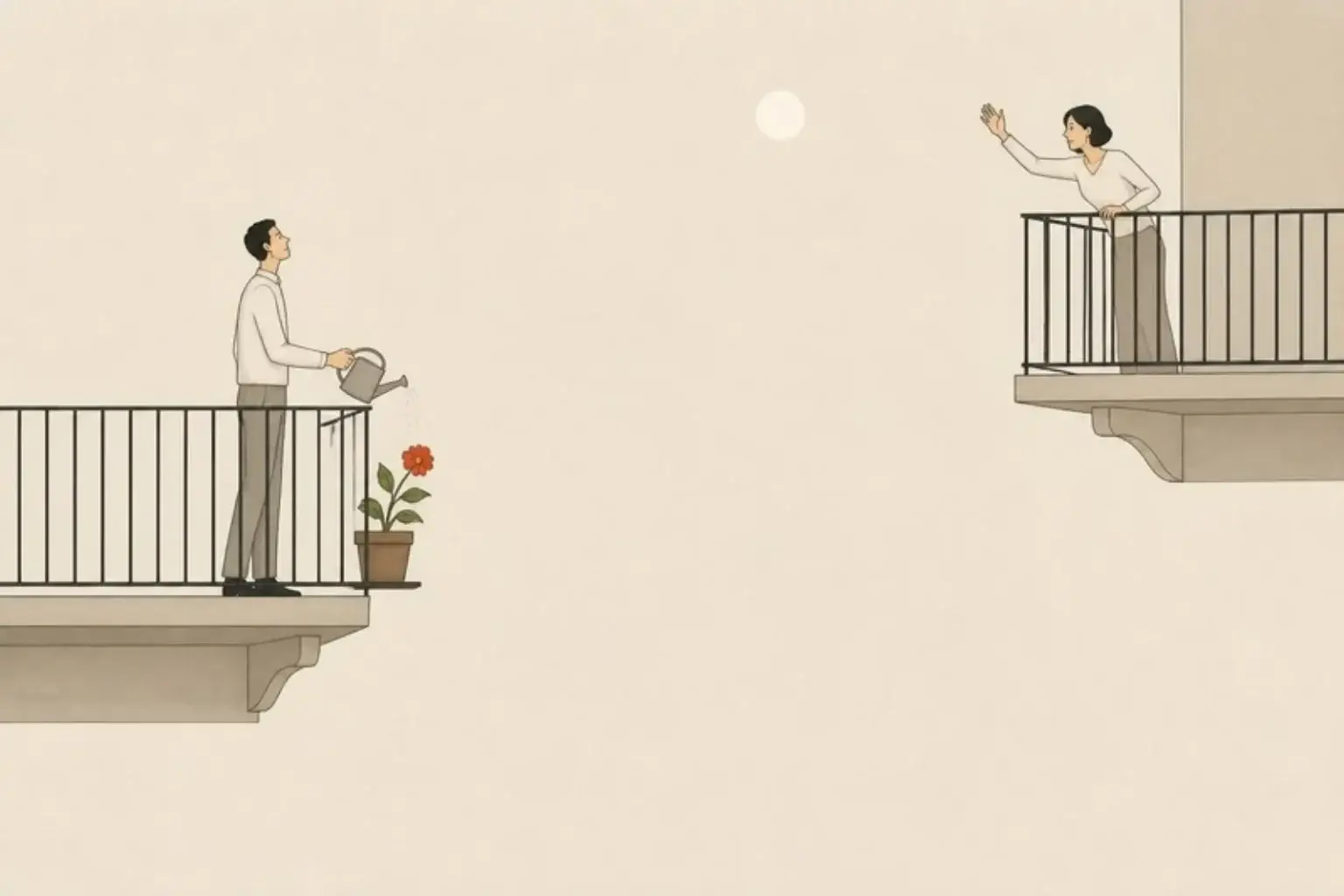
03Ten ways to cope with loneliness
1. Name it plainly. Say “I feel lonely” out loud or in a note. Shame keeps loneliness hidden, and hidden loneliness grows. Naming it turns a vague heaviness into a problem with steps.
2. Pick one repeated contact. Friendship grows from repetition more than from big moments. Research by Jeffrey Hall at the University of Kansas found it takes around 50 hours together to move from acquaintance to casual friend, and over 200 hours to become close. Choose something weekly: a Thursday running club, a choir, a language class. Go four times before you judge it.
3. Return to the same places. The same café at the same time, the same park bench, the same gym class. Familiar faces turn into nods, nods into names. Sociologists call these weak ties, and they lift mood more than people expect.
4. Send the first message. Lonely people often wait to be invited because rejection feels unbearable. Send one message a day to someone you have lost touch with. “I thought of you when I walked past the old office. How are you?” Most people reply with relief.
5. Tell one person the truth. Tom rang his sister and said, “I’ve been lonely for about a year.” She told him she had felt the same since moving to Australia. They now speak every Sunday at 9am his time.
6. Watch the scrolling. Social media shows you other people’s best evenings while you sit in your worst one. Use your phone to arrange contact, then put it down.
7. Look after the body. Loneliness disturbs sleep, and poor sleep makes people more withdrawn the next day. Morning daylight, regular meals and movement keep your nervous system steady enough to reach out.
8. Give something. Volunteering puts you beside people with a shared task, which takes the pressure off conversation. Two hours a week at a food bank or a parkrun marshal post gives you a place where you are expected.
9. Notice the inner critic. Long loneliness teaches the mind to expect rejection. You read a short reply as coldness and cancel plans to avoid disappointment. Catch the thought and test it: “She replied in four words. She was at work.”
10. Get support when it lasts. If loneliness has lasted months, follows a death, a move or a divorce, or sits alongside low mood, talk to someone trained. In individual therapy we look at where the gap began, often in early attachment, and practise closeness in a safe relationship first.
Loneliness is information. It tells you which kind of closeness you are missing.
Kita Tabachka, relational therapist
04When loneliness needs more than tips
Some loneliness has roots older than the current chapter of your life. People who grew up looking after a parent, or who learnt early to need nobody, often feel lonely inside good relationships. If you feel lonely in your marriage, read lonely in my marriage. If you live abroad, expat loneliness covers the move itself. Men often hide loneliness behind work, and no friends as a man speaks to them directly.
If you have thoughts of ending your life, please speak to someone today. In the UK, call Samaritans free on 116 123, day or night, or call 999 in an emergency. Abroad, contact local emergency services.
More from the journal

Weekly written counselling with Kita
When writing feels easier than speaking.
You can enquire about weekly written counselling for your own experience of relationships and life abroad. We agree whether this format is a useful fit before you pay.
Explore written counselling£50 per week. One personal written reply through Carepatron. Suitability, your weekly reply day and terms agreed before payment.

Kita Tabachka
I am a BACP-registered relational therapist. I work with individuals and couples, many of them living far from where they began, on relationship anxiety, attachment, intimacy and the strange business of building a self in a new country. The stories here are composites. The patterns are real. My writing is a door into the work, never a substitute for it.
More about my practiceQuestions people ask
This article is written by Kita Tabachka, MBACP, and is for general education and reflection. It describes patterns seen in clinical work, but it is not therapy, and it is not a substitute for individual advice from a qualified therapist, doctor or other professional who knows your situation.
Reading it cannot diagnose anything or replace your own judgement about what you need. If something here resonates and you would like support, you are welcome to learn more about my practice or book a free consultation. If you are in crisis or immediate danger, please contact local emergency services or an urgent mental health line in your country.
Join the conversation
If you have lived this, say so. Your words may be the thing a stranger at midnight needed to read.