
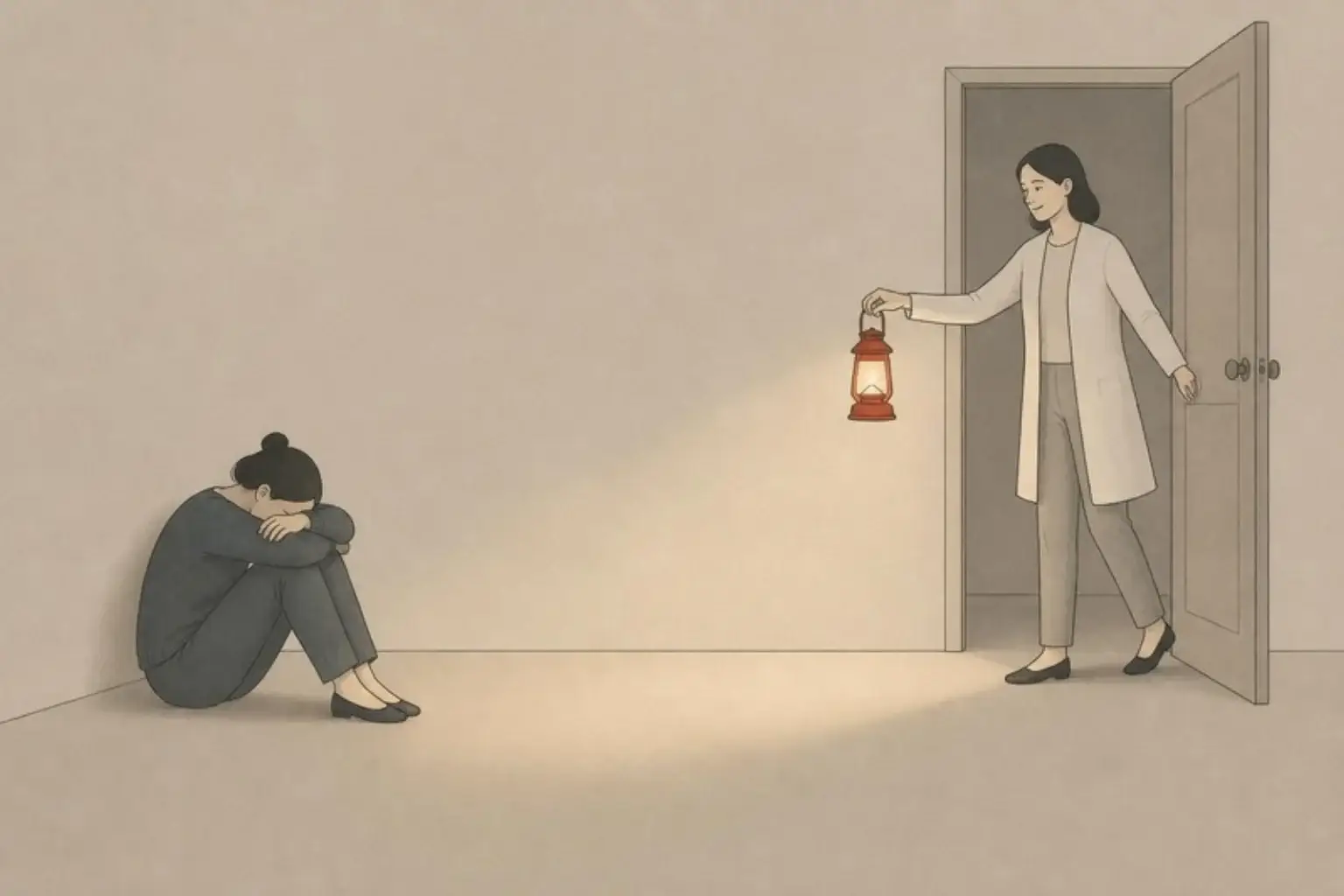
Elena had prayed every morning for twenty years. In March the words stopped meaning anything. She still went to church in Athens, still lit the candle, still said the prayer her grandmother taught her. Nothing answered. She told me she felt like a house with the lights left on and nobody home. Her priest called it a dark night of the soul. Her GP called it depression. She wanted to know which of them was right.
A dark night of the soul is a spiritual crisis: the faith, meaning or sense of purpose you relied on goes quiet, and you feel lost inside your own beliefs. It overlaps with depression, and the two often arrive together. If you struggle to sleep, eat, work or get out of bed for more than two weeks, see your GP. Therapy gives the spiritual questions room and treats the low mood alongside them.
01What a dark night feels like
The phrase comes from St John of the Cross, a Spanish monk writing in the 1500s. He described a stage where prayer feels empty and God feels absent, and he saw it as part of the path, not a failure on it.
People outside any religion describe the same thing in different words. The meditation stops working. The purpose which carried you through your thirties feels borrowed. Books which once lit you up read like instruction manuals. You keep the practice and lose the feeling.
02Dark night or depression?
The honest answer is often both. The table below shows the patterns I listen for in the first sessions.
Depression is a health condition with real treatments. Calling it only a spiritual test leaves people suffering for months without help they need. Calling every spiritual crisis an illness leaves people feeling misread. Good care holds both questions at once.
You did not lose your faith. You lost the version of it which no longer fits your life.
Kita Tabachka, relational therapist
03What tends to trigger it
- A death, especially a sudden one, which your beliefs did not prepare you for.
- A move abroad which takes away your church, your teacher or your community.
- Betrayal by a religious leader or a spiritual group.
- Burnout, after years of giving to others in the name of your values.
- A midlife moment when the old answers stop fitting the new questions.
04How to move through it
Keep a light structure. Elena kept lighting the candle without asking it to mean anything. The habit held a place for meaning to return.
Tell one person the truth. Not your whole theology, one sentence: “My faith has gone quiet and it scares me.” Shame grows fastest in spiritual communities where everyone else looks certain.
Look after the body. Sleep, daylight, food and movement do not fix a crisis of meaning. They keep you well enough to stay in the question.
Speak to someone trained. In individual therapy we work with your beliefs as they are, not as I would want them. Elena started praying again in the autumn, in a shorter, plainer form. She said it felt like her own voice for the first time. If you live abroad and lost your community in the move, expat therapy covers the loneliness under the question.
If you have thoughts of ending your life, please speak to someone today. In the UK, call Samaritans free on 116 123, day or night, or call 999 in an emergency. Abroad, contact local emergency services.
More from the journal

Weekly written counselling with Kita
When writing feels easier than speaking.
You can enquire about weekly written counselling for your own experience of relationships and life abroad. We agree whether this format is a useful fit before you pay.
Explore written counselling£50 per week. One personal written reply through Carepatron. Suitability, your weekly reply day and terms agreed before payment.

Kita Tabachka
I am a BACP-registered relational therapist. I work with individuals and couples, many of them living far from where they began, on relationship anxiety, attachment, intimacy and the strange business of building a self in a new country. The stories here are composites. The patterns are real. My writing is a door into the work, never a substitute for it.
More about my practiceQuestions people ask
This article is written by Kita Tabachka, MBACP, and is for general education and reflection. It describes patterns seen in clinical work, but it is not therapy, and it is not a substitute for individual advice from a qualified therapist, doctor or other professional who knows your situation.
Reading it cannot diagnose anything or replace your own judgement about what you need. If something here resonates and you would like support, you are welcome to learn more about my practice or book a free consultation. If you are in crisis or immediate danger, please contact local emergency services or an urgent mental health line in your country.
Join the conversation
If you have lived this, say so. Your words may be the thing a stranger at midnight needed to read.