
One. I have ADHD, which means I am very often the one who goes quiet in a room, and for years I mistook my own shutdown for not caring. Two. I am Bulgarian, I live in Britain, and I travel for a living, which means I have now watched couples argue, and refuse to argue, in more countries than I can keep track of. Both of these are why I can see the thing I am about to describe with an irritating clarity. You have been warned.
A relationship is a language. Most of it is not even spoken. It lives in faces, in moods, in the temperature of a kitchen, in the precise volume at which a cupboard door is closed. And here is the part nobody tells you. When two people stop speaking that language, the language does not stop. It just goes underground and turns into weather.
You know the weather I mean. The flat "fine." The clipped "it’s nothing." The evening spent on two separate phones on the same sofa, conducting an entire marriage through the medium of not quite looking at each other. No one is shouting. No one is crying. Everyone is being terribly, lethally polite. And it is the most frightening sound a home can make, because silence is the only relationship problem that never announces itself. It just lowers the temperature one degree a week until one of you notices you are living in a fridge.
Conflict is not the opposite of love. Indifference is. The argument is just the invoice love sends you for staying.
01The drift is not a slow loss of love. It is a fast pile of unsaid things.
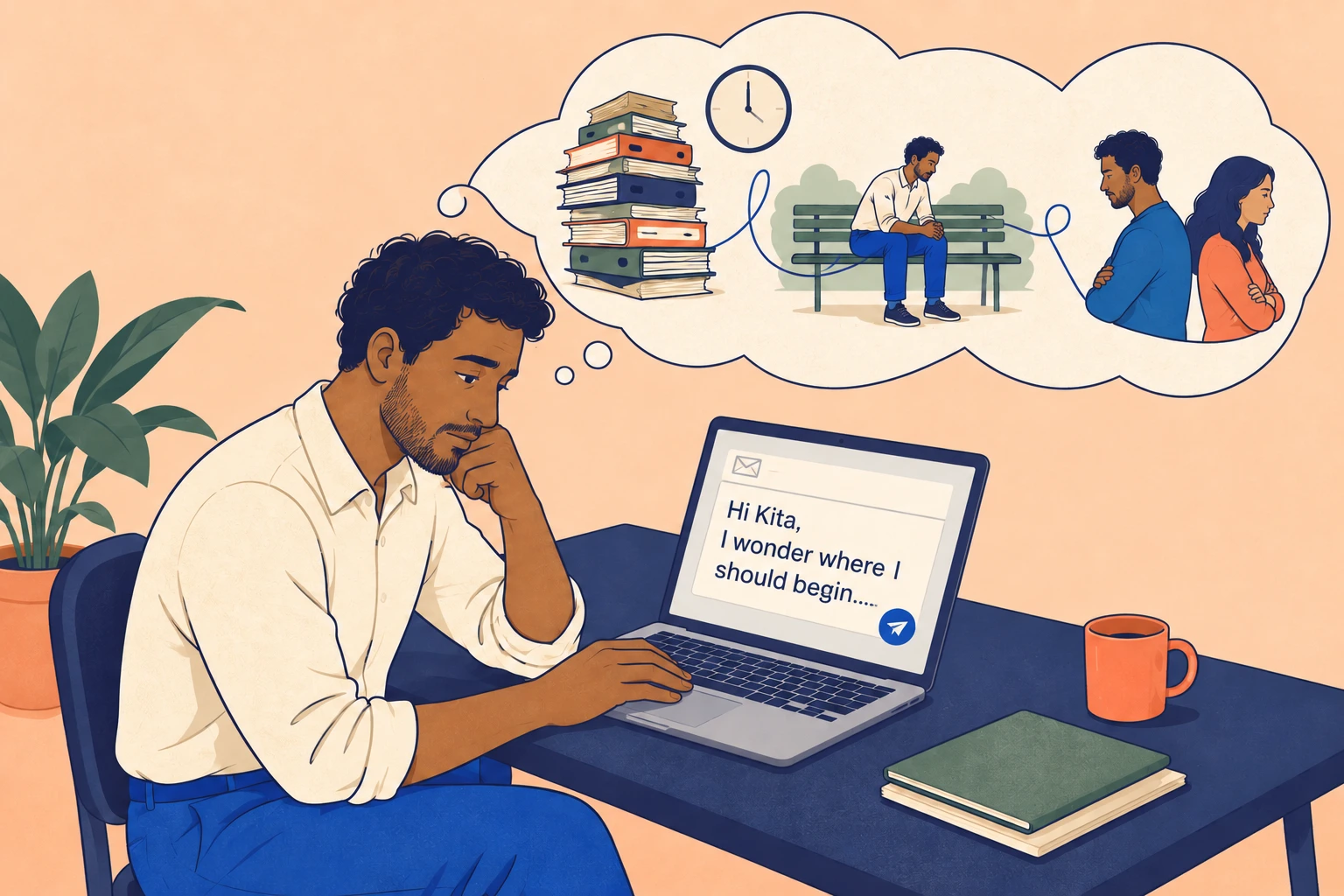
Couples imagine the end as a dramatic event. A door slammed, a secret found, a sentence that cannot be unsaid. Far more often it is the opposite. It is a thousand small things that were never said at all, each one swallowed for the sake of a quiet evening, stacked in a corner of the relationship until the pile is taller than the people.
One of you starts reaching across the gap, asking what is wrong, sending the second text, needing the conversation. The other goes still, answers in three words, and finds the nearest exit, which is sometimes the kitchen and sometimes just the inside of their own head. From the outside they look like opposites. They are not. They are two people frightened of the same thing, fleeing in the only two directions a scared nervous system knows.
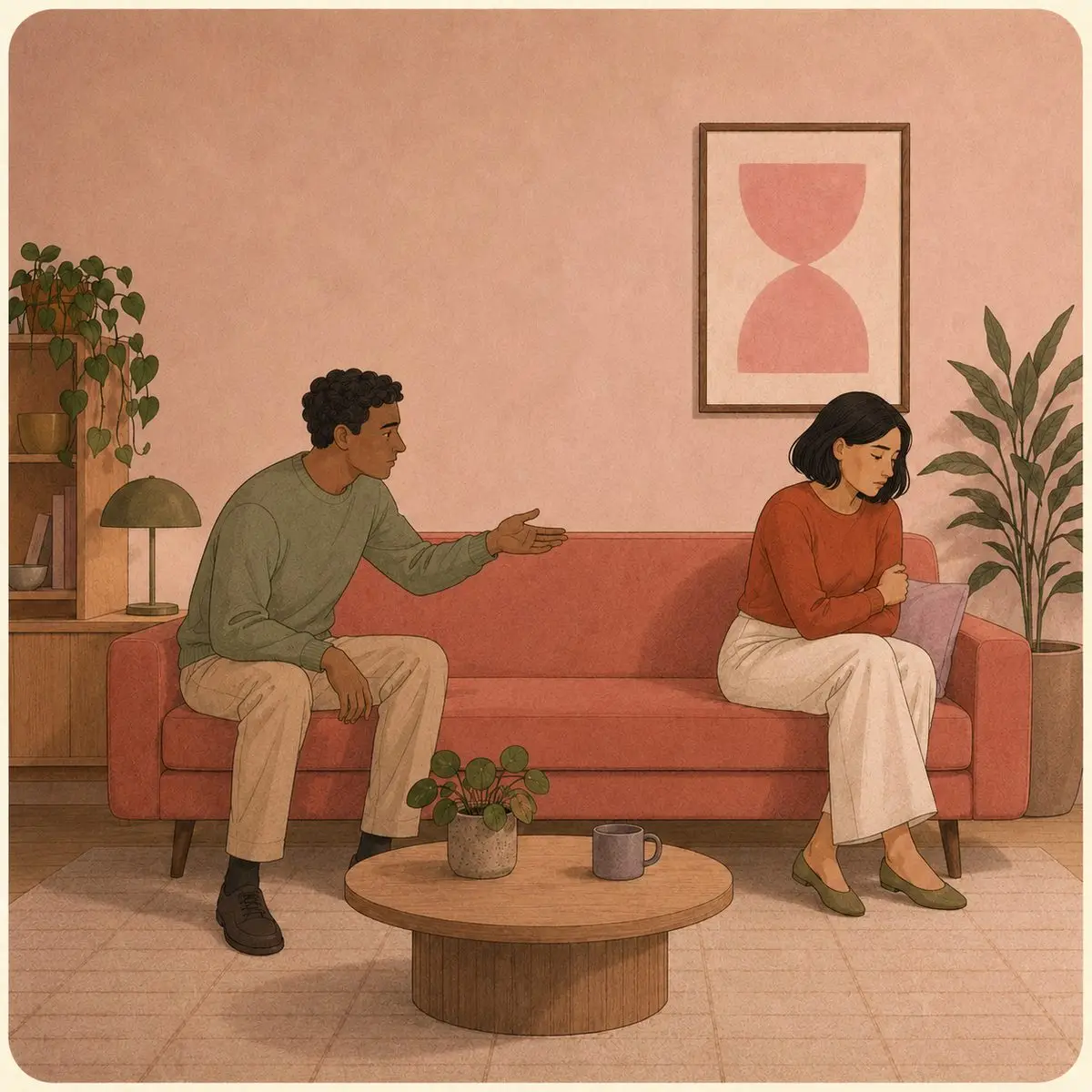
02Some cultures argue as a love language. Britain invented the atmosphere instead.
Let me tell you what travel does to a therapist. It ruins your ability to believe that the way your own culture handles feelings is simply how feelings work.
I am from a place where a family dinner sounds, to the untrained ear, like a minor diplomatic incident. Everyone talks over everyone. Voices rise. Hands go up. Someone declares they are leaving and then asks what is for pudding. And here is the thing the volume hides. Nobody actually leaves. The row is not the breakdown of the bond. The row is proof of it. We argue because we are still in it. The French do it in cafes and call it Tuesday. The Italians treat a disagreement as light cardio. In a great deal of the world, a good argument is intimacy with its sleeves rolled up.
Then I moved to Britain, where a couple will sooner quietly dismantle a fifteen year marriage than say "that actually hurt my feelings" at full volume over the washing up. Where conflict is treated as a small social accident, like a sneeze, to be apologised for and never mentioned again. Where "I’m fine" is not information. It is a locked door with a smile painted on it.
This is a caricature, of course. Caricatures survive because they are eighty per cent true and twenty per cent unfair, and it is the true eighty per cent that ends relationships. Because if you were raised to believe that raising your voice is the same as losing control, and that needing something out loud is the same as being a burden, you will choose the atmosphere every single time. You will pick the cold war over the hot one. And the cold war has no survivors. It just has a longer ceasefire.
03So what, exactly, are we so afraid of?
This is the real question, and almost nobody asks it, so I will. When you swallow the true sentence, when you choose the silence, what is the fear actually protecting you from?
It is rarely the argument itself. It is what the argument might reveal. Underneath the politeness sits a quiet, unbearable suspicion: that the bond between you is too fragile to survive the truth. And so a deal is struck, usually without a word. As long as we never say the real thing, we never have to watch the relationship fail to hold it. The silence is not peace. It is insurance. It is a bet that if the bond is never tested, it can never lose.
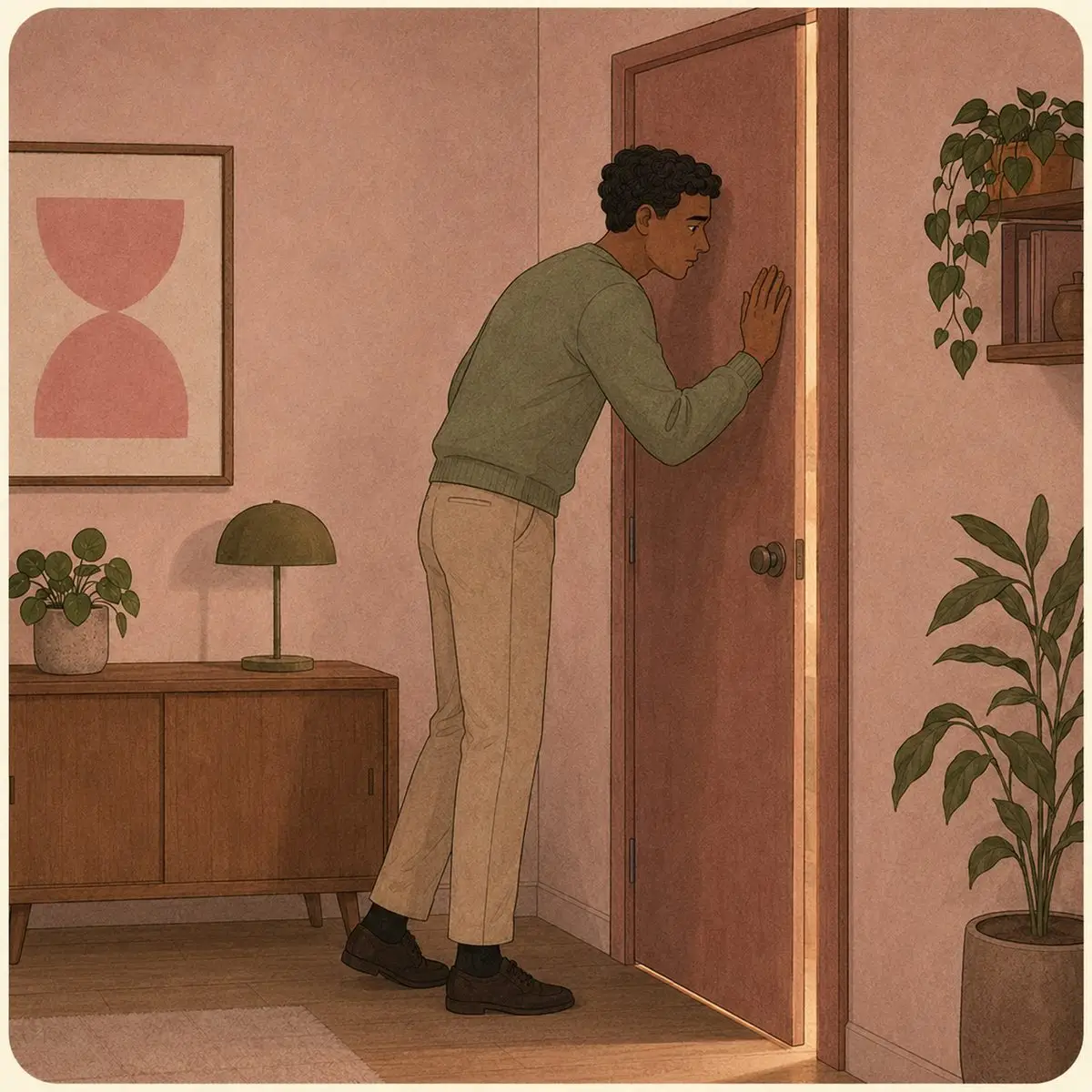
It is a terrible bet, because the relationship fails anyway. It just fails slowly, and with excellent manners, and with both people swearing under oath that everything is fine. A locked room does feel safer than an open one. Nothing can get in. The small problem is that nothing can get out either, and that includes the two of you.
04And then you add ADHD, which evacuates the building mid-sentence
Now take that culturally trained flinch, and bolt a turbocharger to it. Because if one of you has ADHD, you do not merely dislike conflict. Your nervous system leaves the premises before the conversation has finished its opening line.
I will tell you what it is like from the inside, since I live there. When a conversation gets too fast, or too loud, or carries the faint smell of "you have disappointed me," I do not calmly take in the information. I flood. Twelve thoughts arrive at once and not one will hold still long enough to become a sentence. The thing I most wanted to say was here a second ago, and now there is only static. So I go quiet. Not because I have stopped caring. Because there is a fire alarm going off in my skull, and you cannot make small talk over a fire alarm.
05The forgetting that gets read as “you do not matter”
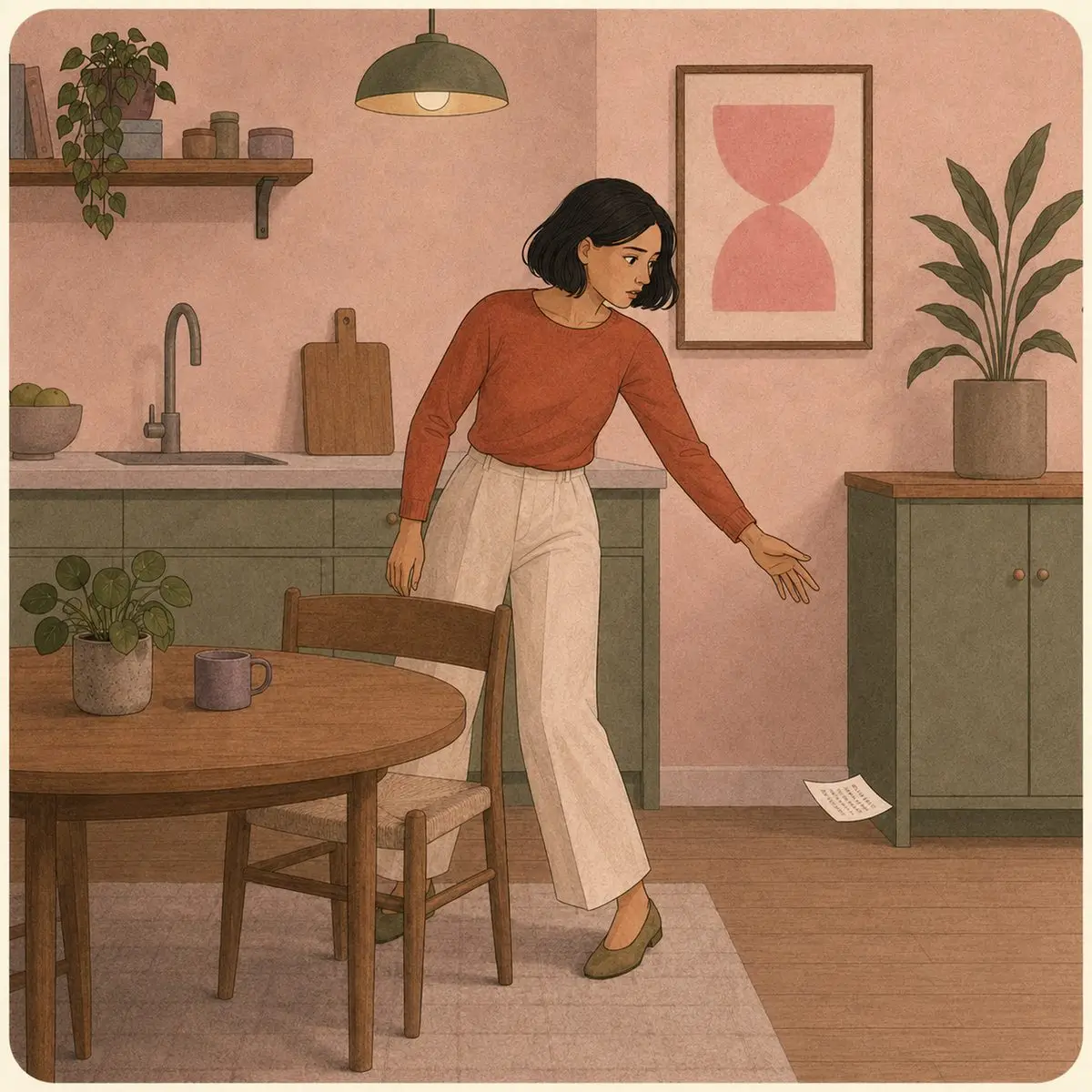
This one ends more relationships than infidelity, and nobody even files it as a wound, because it is so small and it happens forty times a week.
They forgot. The appointment, the errand, the entire conversation you are certain you had on Tuesday. And underneath it you hear the cruellest sentence a person can receive in their own home: I am not important enough to be remembered.
06Why a mild comment lands like a slap
Many people with ADHD describe what gets called rejection sensitive dysphoria, which is a very tidy clinical phrase for a very untidy experience. I will describe it the way it actually feels, because the textbook badly undersells the violence.
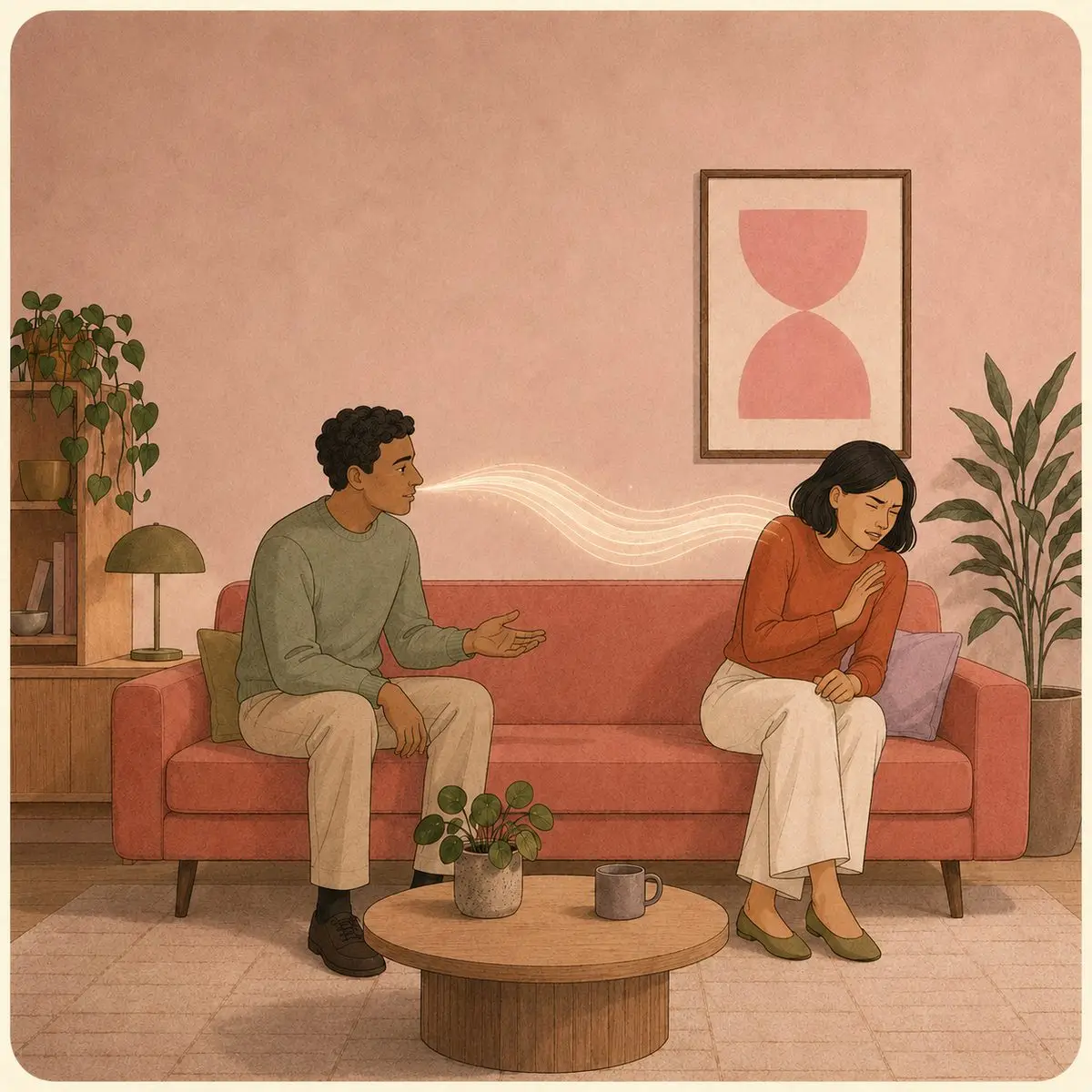
A slightly sharp tone, a face that falls for half a second, a mild "you said you’d do that," and it does not register as feedback. It registers as a blow to the body. Shame arrives before thought does. And the flooded person does one of two ugly little things. They over-apologise, far past what the moment asked for, or they go cold and hard and slam an inner door, because the door is the only thing standing between them and a feeling they genuinely do not think they can survive in front of you.
Tap each card — what it looks like, and what it actually is.
07The shame spiral you never get to see
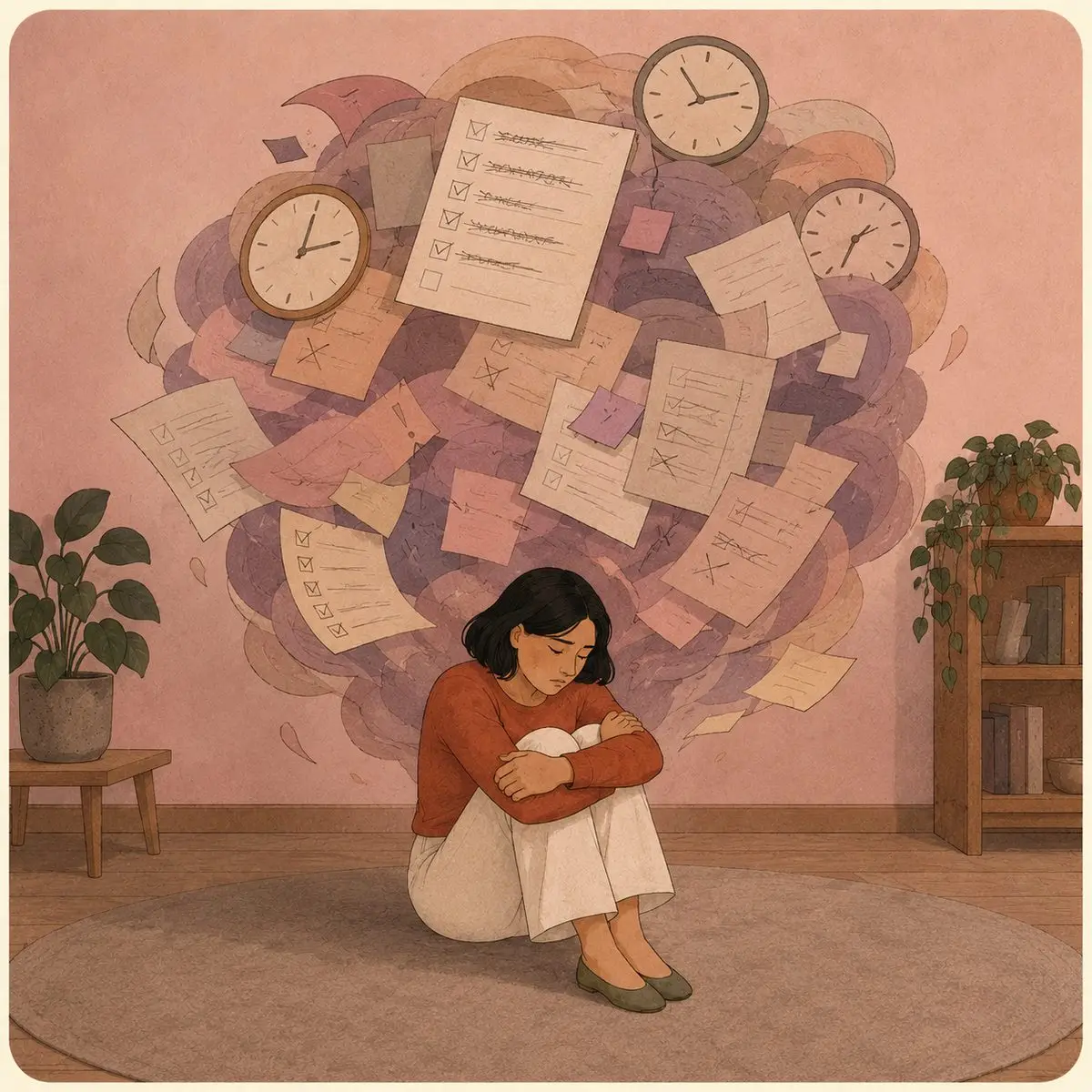
There is a second conversation happening that the pursuing partner almost never witnesses. It is the one the quiet one is having with themselves, and it is brutal.
They forgot again. They went blank again. They were late, or sharp, or absent again. And before you have said a single word, they have already passed sentence on themselves. I am too much. I am a disappointment. They would be lighter without me. The stonewalling you are watching is often just this: a person who has already lost the argument inside their own head, and has nothing left over for the one with you.
08How the polite little cycle locks shut
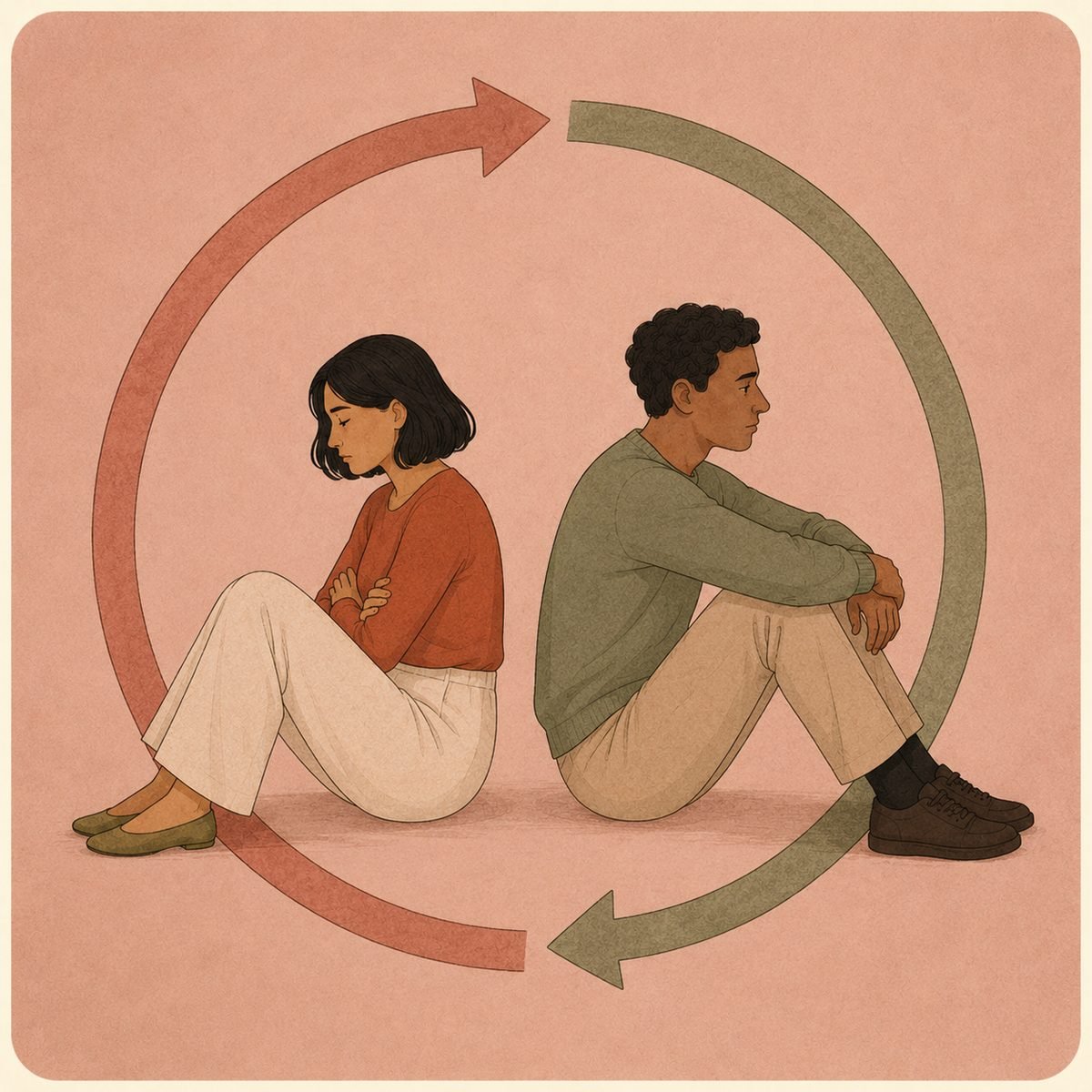
Watch how neatly the trap closes, because once you see it you cannot pretend you did not.
One fears losing the other, so they pursue. The pursuit floods the quiet one, so they withdraw. The withdrawal confirms the first one’s deepest fear, so they pursue harder. The harder pursuit deepens the quiet one’s shame, so they vanish further. Round and round, each one’s cure feeding the other one’s panic, both of them certain they are the reasonable one. Nobody is doing anything wrong on purpose. That is exactly why blame will never get you out. You cannot scold two frightened people into feeling safe.
09Learn to argue properly, and build the external brain
Here is where it changes, and it changes faster than couples expect once they stop solving the wrong problem.
First, the cultural fix, which is almost rude in its simplicity. Have the argument. Not the cruel kind, the honest kind. Learn that a raised voice is not the end of the world, that "that hurt me" is a sentence you can both survive, that the bond you are so busy protecting is far sturdier than your silence has let you believe. You do not test a bridge by tiptoeing across it forever. You test it by letting something heavy cross, and watching it hold.
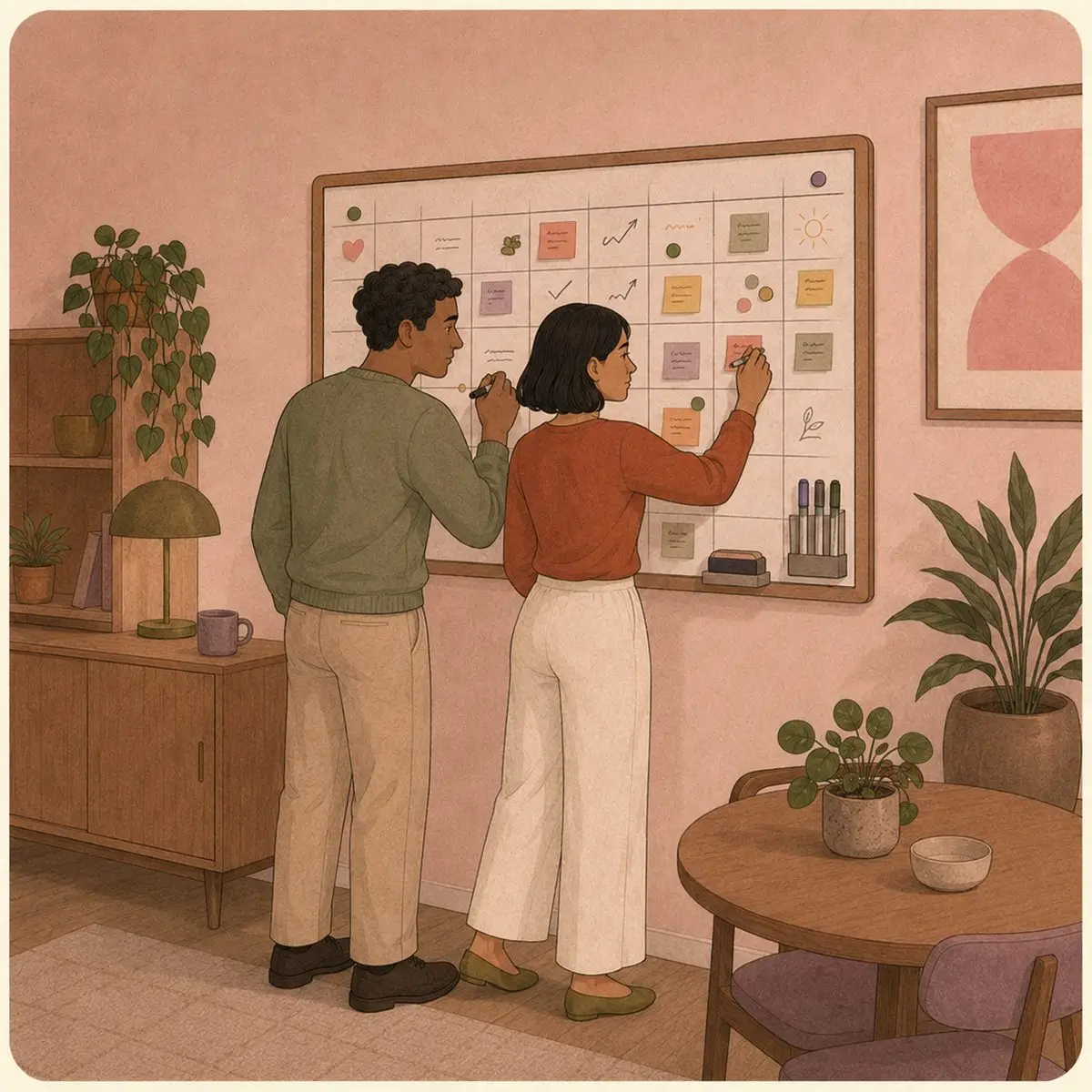
Second, the ADHD fix, which is just as simple. Stop asking the forgetful one to care more. Caring was never the problem. Move the load out of the broken part and into the room, where you can both see it. The shared calendar on the wall. The visible reminders. The agreement that the system is the enemy of the forgetting, so neither of you has to be.
Whether it is the diagnosis or the cultural difference, the same rule holds. It can be a shared map or a loaded gun. "Let us look at this pattern together" builds a team. "You only think that because of your ADHD," or "you are just being dramatic, that is your culture," builds a hierarchy, with one of you the permanent patient and the other the permanent saint. Nothing kills desire faster than being someone’s project.
10What the work actually is
Therapy here is not about teaching the quiet one to perform extroversion, or the loud one to swallow more. It is about helping two nervous systems, trained by different families and sometimes different countries, learn to read each other’s alarms. The pursuer learns that silence is not abandonment, and that a softer arrival gets a more honest answer. The withdrawer learns to leave a light on in the quiet, even just "I have gone blank, I am still here, give me ten minutes," so that absence stops being mistaken for an exit.
None of this means every silence is innocent or every culture is an excuse. ADHD explains, it does not absolve. A cultural style is a context, not a permanent licence. If "that is just how I am," or "I cannot help it," is being used to wave away repeated harm, contempt, or a load silently dumped on you for years, the problem is no longer the diagnosis or the upbringing, it is what is being done with them. If you ever feel controlled, frightened, or worn to nothing, please talk to someone outside the relationship, and contact a local support service if you feel unsafe.
11From someone who lives on both sides of this
I still go quiet. I still lose the thing that was in my hand a moment ago. I still feel the old cultural urge to smooth a room over rather than say the true, inconvenient sentence. I have not been cured of any of it, and I no longer want to be.
What changed is that the people who love me learned to read my silence, and I learned to stop mistaking their honesty for an attack. They know now that my quiet is the sound of me trying, not the sound of me leaving. And I have learned, slowly, to leave a light on in it, and occasionally, terrifyingly, to just say the thing.
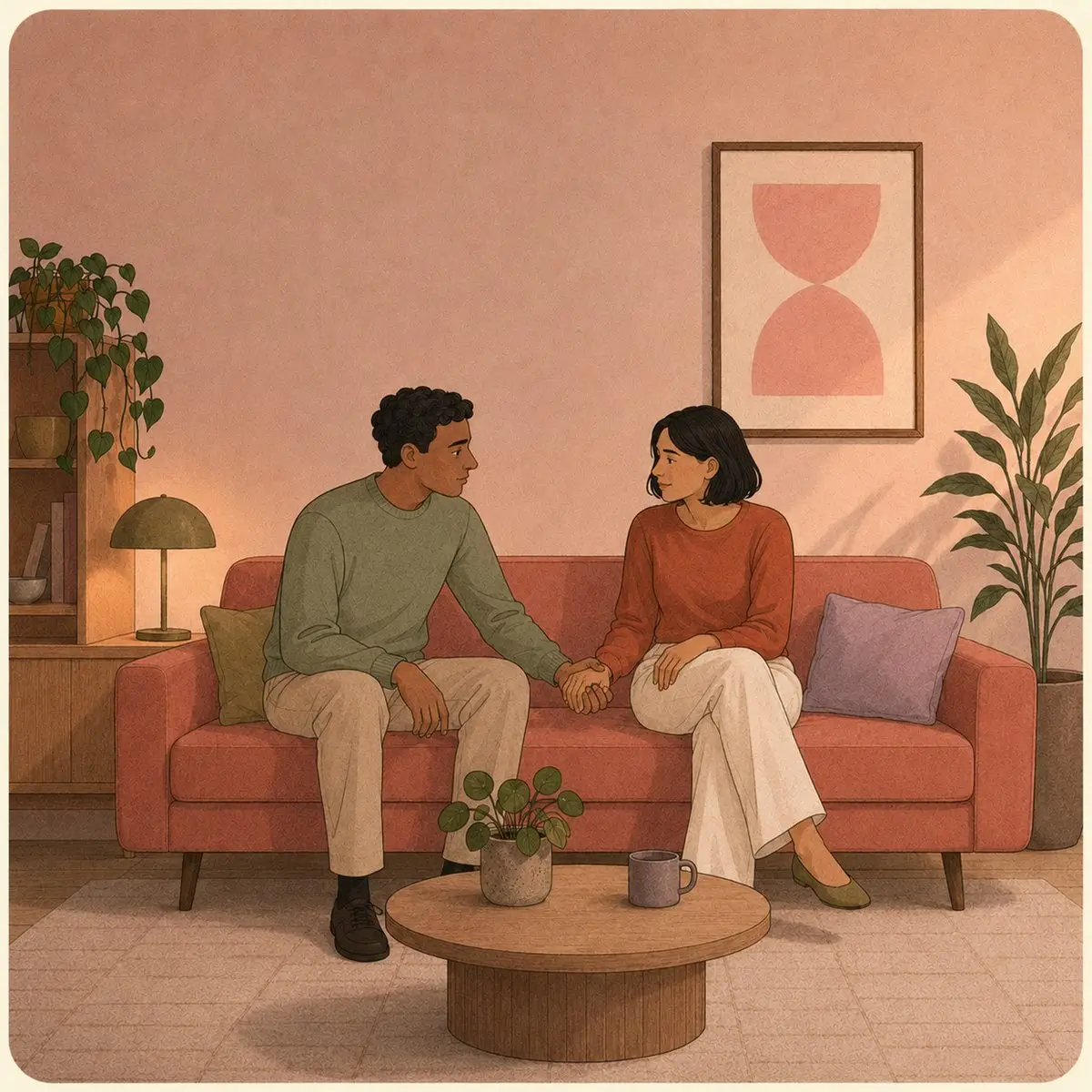
An argument you can both survive is one of the most romantic things two people can build. Silence only feels safer. It is simply the long way to the same exit.
A relationship is a language. The only real way to lose it is to stop speaking.
Where are you in the dance?
Six honest questions. Not a verdict on your relationship, and not a diagnosis. Just a mirror for whether you are the one who chases the conversation, or the one who quietly leaves the room.
This cannot see your life, and it cannot make the decision for you. If anything here resonates, it is worth saying out loud to a person, not just reading on a page.
Book a free consultation
Kita Tabachka
I am a BACP-registered relational therapist. I am Bulgarian, I have ADHD, I live in Britain and I travel constantly, which means I have spent my life translating between people who express love by arguing and people who express it by going quiet. The stories here are composites. The patterns, and the lived experience, are mine. My writing is a door into the work, never a substitute for it.
More about my practiceQuestions people actually ask me
This article is written by Kita Tabachka, MBACP, and is for general education and reflection. It describes patterns seen in clinical work, but it is not therapy, and it is not a substitute for individual advice from a qualified therapist, doctor or other professional who knows your situation.
Reading it cannot diagnose anything or replace your own judgement about what you need. If something here resonates and you would like support, you are welcome to learn more about my practice or book a free consultation. If you are in crisis or immediate danger, please contact local emergency services or an urgent mental health line in your country.
Join the conversation
Are you a talker or a vanisher? Which culture raised you, and which one did you marry? Say so. Your words may be the thing a stranger at three in the morning needed to read.