
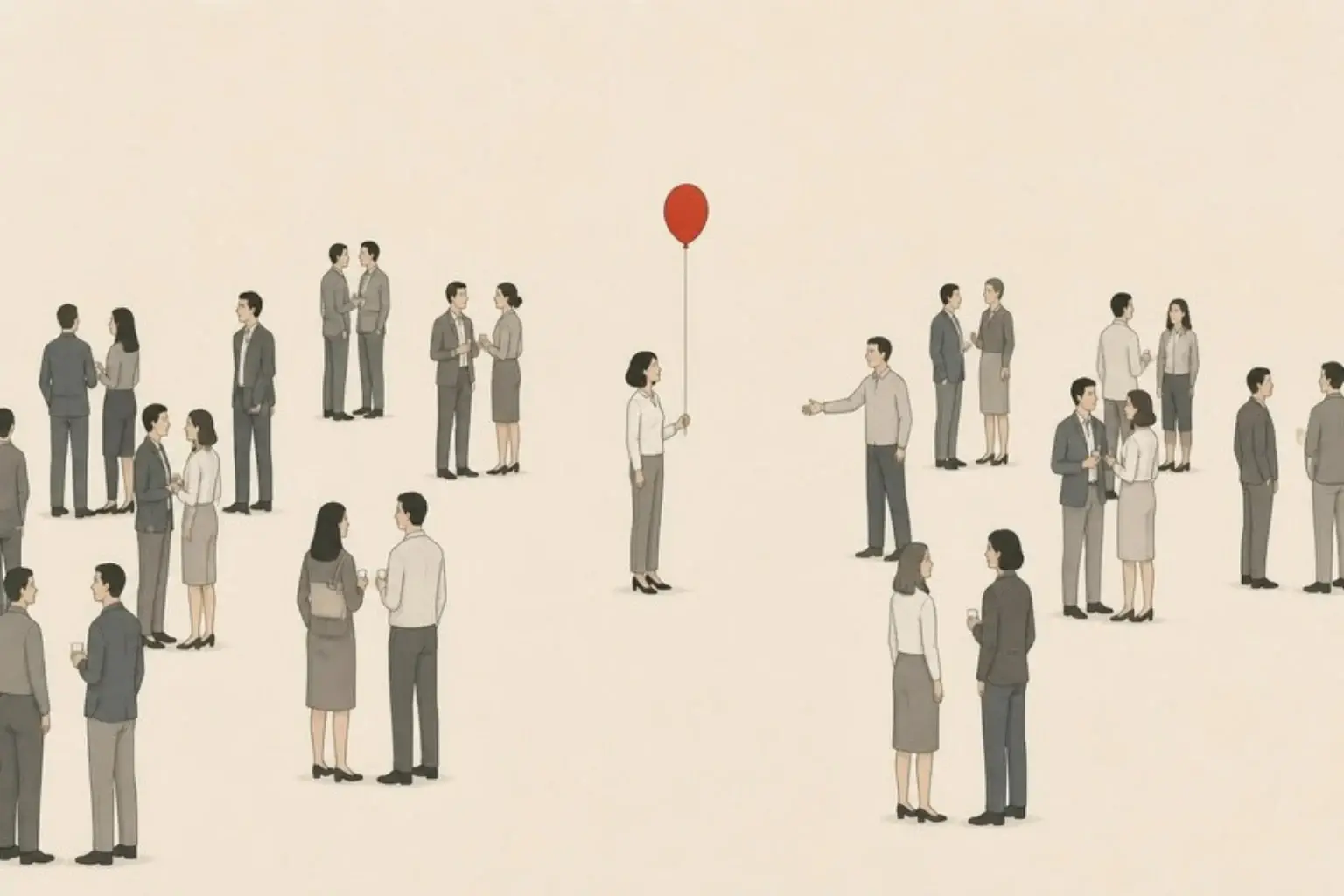
Priya hosted her own fortieth birthday. Thirty people came to the flat in Dubai. She cooked for two days, laughed in every photo, and cried in the bathroom at eleven o’clock with the music still playing. “Everyone was there,” she told me. “Nobody was with me.”
You feel lonely around people when the contact stays on the surface. Common reasons: you play a role instead of being yourself, you hide your feelings to keep the peace, the people around you do not share your values or history, or old attachment patterns make closeness feel unsafe. Loneliness eases when at least one person sees the real you. Start by letting one trusted person a little closer.
If you would like support with the disconnection described here, read about online therapy for loneliness with Kita.
01Lonely in a crowd: what is going on
Loneliness measures the gap between the connection you need and the connection you have. A full room closes none of the gap if nobody in it knows what you are carrying. Priya spent the party topping up glasses and checking everyone had eaten. The role kept her busy and kept her unseen.
Psychologist John Cacioppo, who studied loneliness for thirty years, found lonely people scan social situations for rejection more than others do. In a crowd, the mind watches for signs you do not belong, and the body stays on alert. You leave a party exhausted rather than full.
02Seven reasons you feel lonely around people
Tap a card to turn it over.
- The role. The organiser, the funny one, the strong one. Roles earn a place in a group and block closeness inside it.
- Masking. Hiding feelings, opinions or neurodivergent traits to fit in. Masking takes energy and leaves the real you unmet.
- Missing history. After a move abroad or a divorce, the people around you never knew you at twenty-five. Old friends hold parts of you new friends have never seen.
- Different values. You laugh at jokes you dislike and stay quiet about what matters to you.
- Attachment patterns. If closeness felt unsafe in childhood, you keep people at a polite distance and feel lonely at the distance you created.
- Grief. After a death, a room full of people highlights the one person missing.
- Low mood. Depression flattens connection. You see people and feel nothing reach you.
03Lonely in your relationship or family
Loneliness inside a marriage hurts in a particular way, because the person who should know you best sits across the table. If you recognise this, lonely in my marriage goes into it in depth. Families do it too. You go home for Christmas, slip back into the role of the sensible daughter or the quiet son, and leave on Boxing Day feeling unknown.
A crowd fills a room. One person who knows you fills the gap.
Kita Tabachka, relational therapist
04How to feel less lonely with people
Drop the role for ten minutes. Let someone else host, pour or plan. Notice who steps in.
Say one true thing. “Work has been hard this month.” “I miss home more than I admit.” Small honesty invites small honesty back. Priya told one friend at the party she felt invisible. The friend said, “Me too, at mine.” They meet for breakfast every second Saturday.
Choose depth over numbers. One coffee with one person beats a dinner for twelve when you feel lonely. Ask questions which go one layer down: “What was the best part of your week?”
Look at the pattern with support. If you feel lonely with everyone, everywhere, the pattern often started long before this group. Individual therapy gives you a relationship where you practise being seen, then take it outside the room. For the roots, read attachment styles in relationships.
More from the journal
Weekly written counselling with Kita
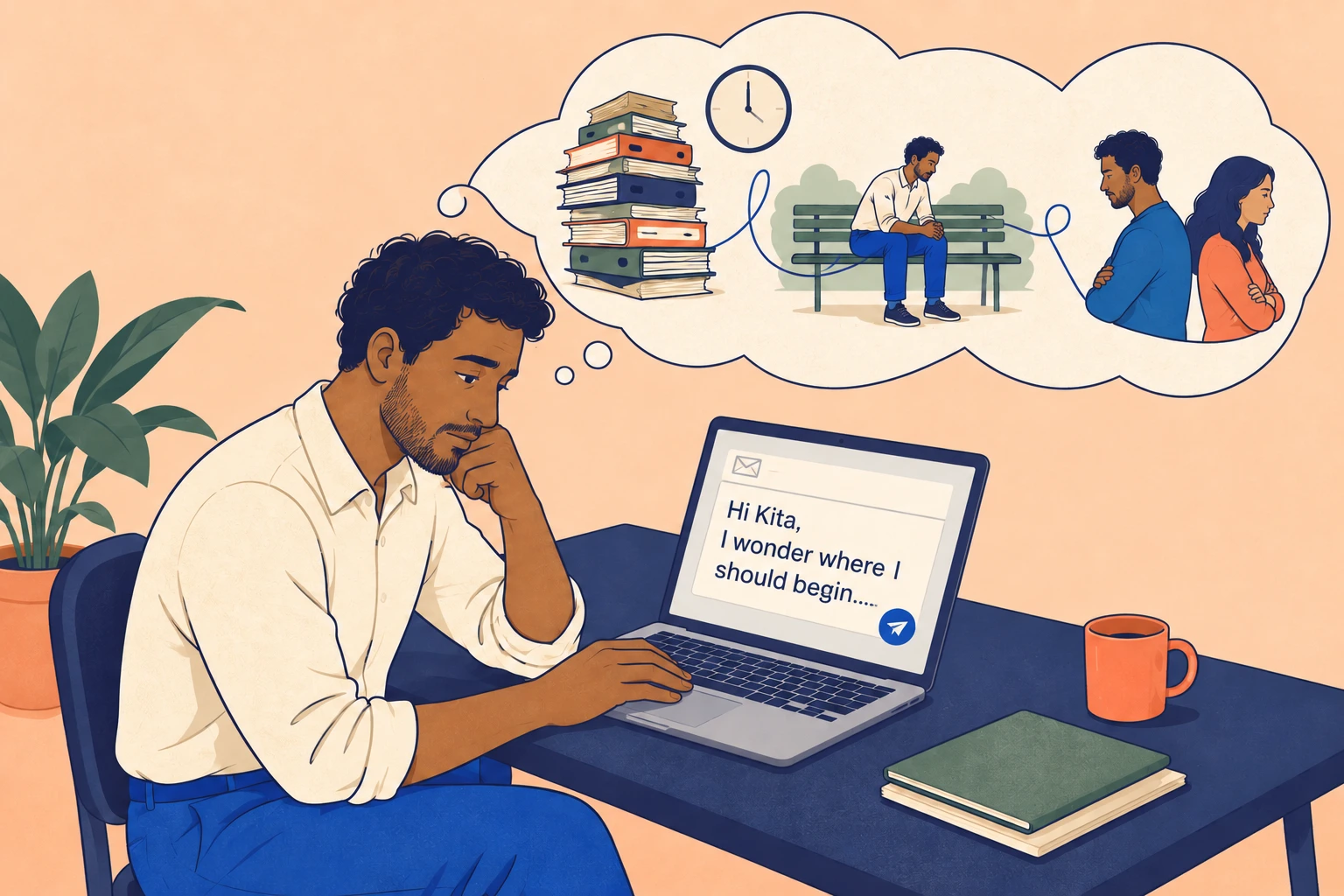
When writing feels easier than speaking.
You can enquire about weekly written counselling for your own experience of relationships and life abroad. We agree whether this format is a useful fit before you pay.
Explore written counselling£50 per week. One personal written reply through Carepatron. Suitability, your weekly reply day and terms agreed before payment.

Kita Tabachka
I am a BACP-registered relational therapist. I work with individuals and couples, many of them living far from where they began, on relationship anxiety, attachment, intimacy and the strange business of building a self in a new country. The stories here are composites. The patterns are real. My writing is a door into the work, never a substitute for it.
More about my practiceQuestions people ask
This article is written by Kita Tabachka, MBACP, and is for general education and reflection. It describes patterns seen in clinical work, but it is not therapy, and it is not a substitute for individual advice from a qualified therapist, doctor or other professional who knows your situation.
Reading it cannot diagnose anything or replace your own judgement about what you need. If something here resonates and you would like support, you are welcome to learn more about my practice or book a free consultation. If you are in crisis or immediate danger, please contact local emergency services or an urgent mental health line in your country.
Join the conversation
If you have lived this, say so. Your words may be the thing a stranger at midnight needed to read.