
Priya came home from Sunday lunch with her sister-in-law and slept for three hours. Nothing bad had happened. They ate, talked about the children, hugged at the door. By Monday she had a headache and snapped at her husband twice. She asked me whether some people steal your energy. I asked her what she did with her own face for the four hours at lunch.
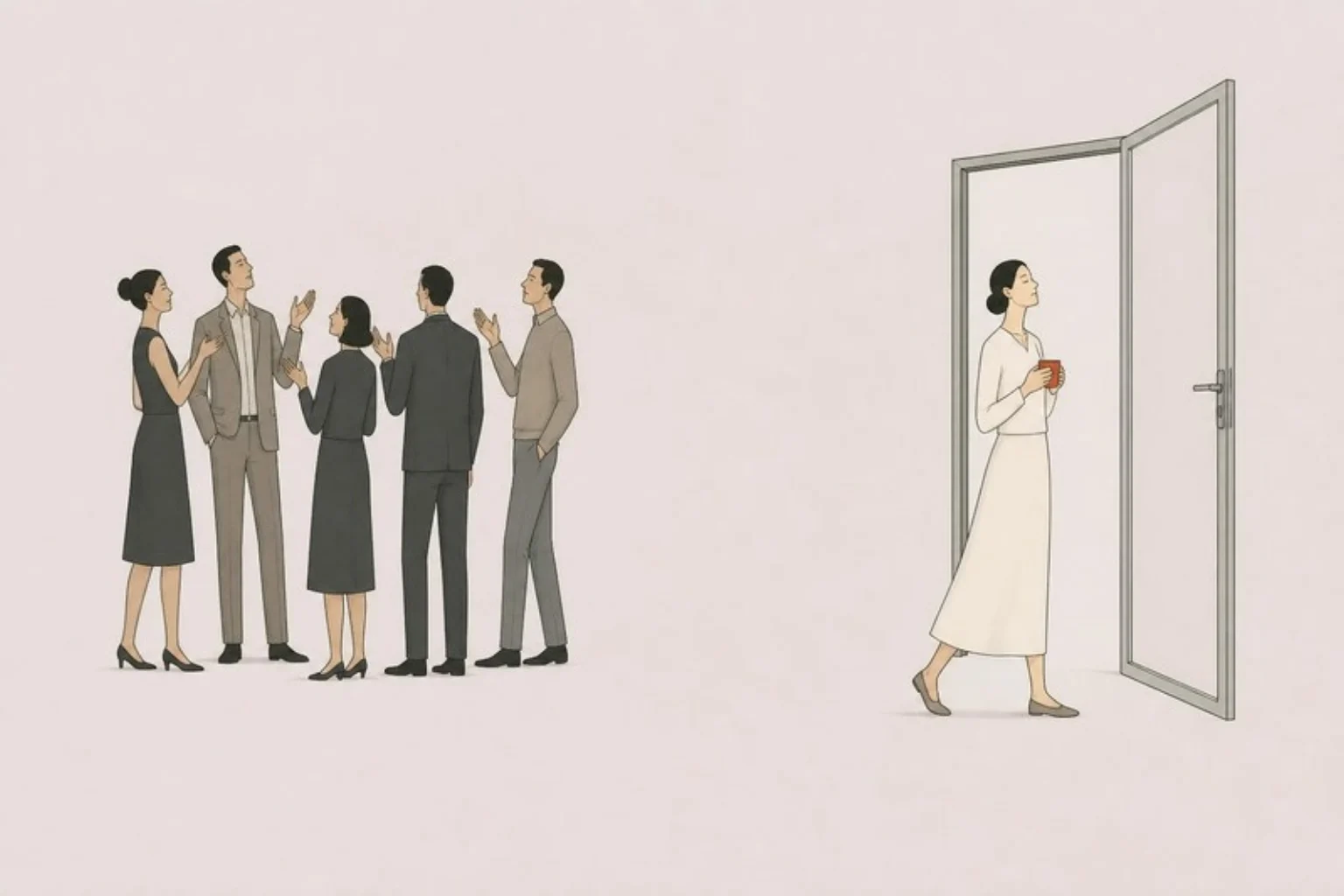
Feeling drained around certain people usually comes from the work you do in their company: hiding your reactions, managing their moods, staying on guard, or holding back what you think. Your nervous system stays on alert, and alert costs energy. People-pleasing, conflict, criticism and one-sided conversations drain most. Notice the pattern, protect your recovery time, and practise saying more of what is true.
01Where the energy goes
None of this needs mystical explanations. Psychologists call the effort of hiding feelings emotional suppression, and studies link it to higher stress and poorer memory for the conversation itself. Your tiredness is a real bill for real work.
02Why some people drain you more
- They remind your body of someone. A critical tone, a sigh, a raised eyebrow switches on an old alarm from childhood.
- The relationship runs one way. You give attention, advice and patience. Little comes back.
- You cannot be honest with them. Every visit asks you to edit yourself.
- They carry chaos. Crisis after crisis, and you are the emergency service.
Introverts tire faster in company of any kind, and highly sensitive people notice more of what happens in a room. Both explain part of the picture. Neither explains why one friend leaves you lighter and another leaves you flattened.
You are not low on energy. You are spending it on hiding.
Kita Tabachka, relational therapist
03Signs the drain has gone too far
Dread before the visit. A headache, stomach ache or heavy sleep after. Cancelling plans with everyone because one person exhausts you. Snapping at the people you feel safe with, because they are the only ones who get the real you. These are signals to change something, not to try harder.
04How to protect your energy
Track the pattern for two weeks. After each meeting, score your energy from one to ten and write one word about what you held back. Patterns appear fast.
Shorten, do not always cut. Two hours instead of four. Lunch, not the whole weekend. A walk instead of a sit-down meal.
Say one true thing per visit. “I disagree, but let’s leave it.” Small honesty lowers the cost of every meeting after.
Plan the recovery. Book quiet time after, the way you would rest after exercise. Priya now walks for twenty minutes after Sunday lunch, alone, before she goes home. Her Mondays changed. If the person draining you is your partner, couples therapy looks at the pattern between you, and relationship anxiety therapy helps when staying on guard has become your normal.
More from the journal
Weekly written counselling with Kita
When writing feels easier than speaking.
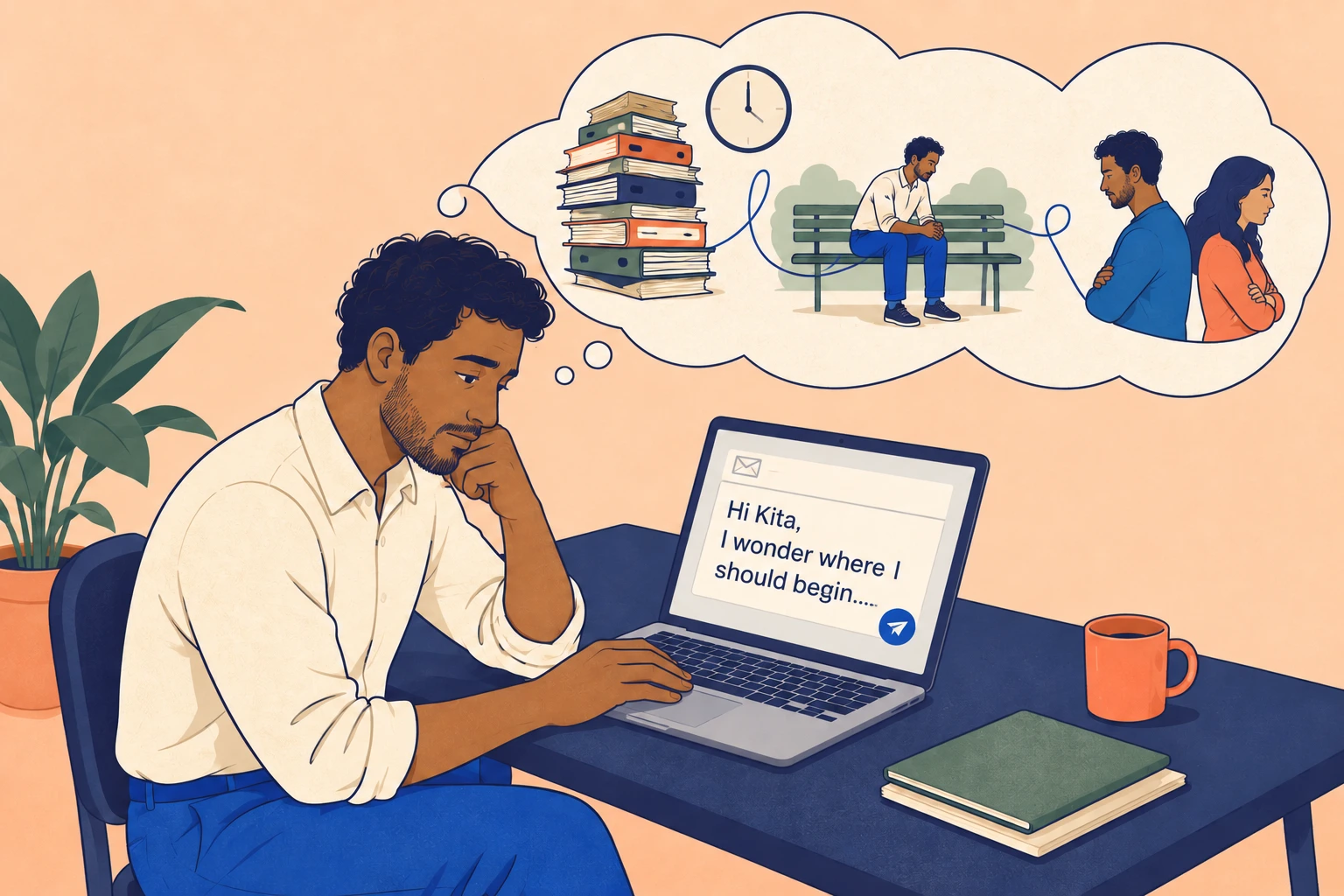
You can enquire about weekly written counselling for your own experience of relationships and life abroad. We agree whether this format is a useful fit before you pay.
Explore written counselling£50 per week. One personal written reply through Carepatron. Suitability, your weekly reply day and terms agreed before payment.

Kita Tabachka
I am a BACP-registered relational therapist. I work with individuals and couples, many of them living far from where they began, on relationship anxiety, attachment, intimacy and the strange business of building a self in a new country. The stories here are composites. The patterns are real. My writing is a door into the work, never a substitute for it.
More about my practiceQuestions people ask
This article is written by Kita Tabachka, MBACP, and is for general education and reflection. It describes patterns seen in clinical work, but it is not therapy, and it is not a substitute for individual advice from a qualified therapist, doctor or other professional who knows your situation.
Reading it cannot diagnose anything or replace your own judgement about what you need. If something here resonates and you would like support, you are welcome to learn more about my practice or book a free consultation. If you are in crisis or immediate danger, please contact local emergency services or an urgent mental health line in your country.
Join the conversation
If you have lived this, say so. Your words may be the thing a stranger at midnight needed to read.