Life after a move · Belonging
Loneliness after returning home from abroad
You know where to buy bread and which bus to catch. People are pleased you are back. Yet you feel oddly outside the life you expected to return to. Loneliness after returning home from abroad can be difficult to explain because everyone assumes that coming home is the easy part.
What reverse culture shock can mean
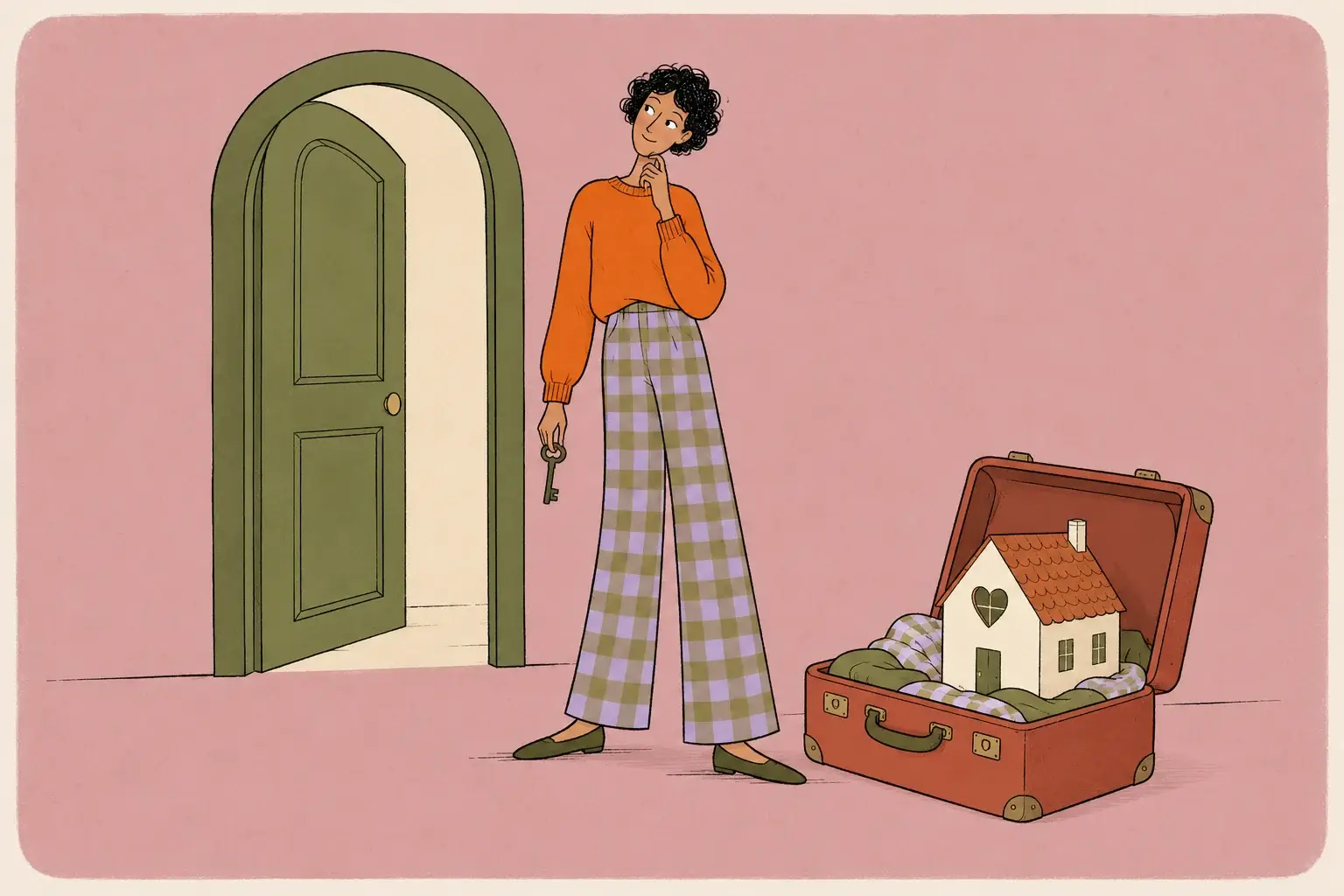
Reverse culture shock, sometimes called re-entry shock, describes difficulty adjusting to a once-familiar country after time abroad. It is a description of an experience, not a diagnosis you need to give yourself. Some people feel it; others do not.
UKCISA describes how returning students may find a gap between who they have become and the person family or friends expect. The University of Manchester also discusses the adjustment after a placement abroad. Those sources focus on students; they do not establish that every returning expat will feel the same. [1] [2]
For you, the difficulty might be smaller and more particular than “I do not belong anywhere”. Perhaps nobody here knows the friend you used to see every Sunday. Perhaps a routine that made you feel capable has disappeared. Naming that detail gives you more to work with.
When familiar people no longer feel familiar
You may have imagined picking up a friendship exactly where you left it. Instead, someone has a new baby, a demanding job or an established weekend routine. You may have changed too. Their limited availability does not tell you everything about whether the friendship still matters.
Try asking about the person’s present life before expecting the old rhythm to return. You could say: “I would like to find a way to see you regularly again. What is realistic for you at the moment?” A smaller, reliable connection may be more possible than recreating how things used to be.
There can also be a painful mismatch in curiosity. You have several years of stories; someone else has ten minutes before dinner. Consider whether a particular person wants one small story now, while another friend or a group of returnees might welcome a longer conversation.
What would help you feel more connected here?
Choose the nearest fit and explore an example plan. You can tick steps you want to try, then reset. This is a reflection exercise, not a test of how well you are adjusting.
No score or sign-up. This exercise does not submit or save your choices. The examples are general guidance, not an assessment.
A thought you may recognise
A possible plan
Why this wording?
I miss the people who knew me abroad
A thought you may recognise: Nobody here understands my life.
A possible plan: I can keep one meaningful connection abroad and make room for one local conversation this week.
You do not have to replace old friendships or ask a new acquaintance to know your whole story immediately.
- Choose one person abroad to contact.
- Suggest a realistic time for a call.
- Choose one small opportunity for local contact.
My days have lost their shape
A thought you may recognise: I should feel settled by now.
A possible plan: I can choose one ordinary routine that makes this week feel more like my own.
A routine is an experiment in what suits your current life. It is not proof that you must stay or that you have finished adjusting.
- Identify one routine you genuinely miss.
- Choose a local version that is accessible to you.
- After trying it, decide what to keep or change.
People expect the old version of me
A thought you may recognise: I have to fit straight back into my old role.
A possible plan: I can explain one preference that has changed without trying to justify every year I spent away.
A concrete preference gives a conversation a starting point. You can choose how much to share and with whom.
- Name one preference you would like respected.
- Choose someone likely to listen with care.
- Prepare a short sentence in your own words.
Separate what you miss from where you miss it
If the answer is “everything”, try choosing an ordinary moment. Was it a walk with a friend, speaking another language, having work that felt meaningful or being less defined by your family role? You may miss a person, an activity or the way you felt in that setting.
Some of what you miss can stay part of your life. Some requires grieving. Some might be possible in a different form where you are now. You do not have to decide which country is the correct answer before making room for these distinctions.
If your return followed a breakup, job loss or a decision you did not freely choose, there may be more than relocation to process. Our guide to a breakup when feelings remain may be relevant. A country change does not explain away another loss.
Make one plan that belongs to your present life
Choose something small enough that it does not become a verdict on the whole move. Invite one person for a walk. Attend a regular activity once to see whether it suits you. Set a time to speak with a friend abroad without expecting that call to meet every social need.
The NHS suggests manageable steps and activities around shared interests when loneliness is difficult. That is general guidance, not a requirement to enjoy groups or become more outgoing. [3]
Afterwards, ask a useful question: “Would I like to try that again, change something or choose a different setting?” An awkward first visit is information about one experience. It does not settle whether you can build a life here.
When returning-home loneliness needs more support
You can seek help without first deciding whether to stay, leave again or feel grateful. Expat therapy can include the experience of returning and the question of how to carry different parts of your life with you. Individual support for loneliness may help you explore what makes connection difficult now.
If low mood lasts more than two weeks, you are struggling to cope or your own efforts are not helping, the NHS recommends speaking with a GP. Seek support sooner if you need it. Persistent or severe difficulties deserve assessment in their own right rather than being automatically attributed to reverse culture shock. [3]
Coming home does not require returning to exactly who you were. You can be glad to see familiar people and still need time, conversation and practical support to discover what life here can look like now.
Questions you may have
Why do I feel lonely after moving back home?
You may be missing people, routines or parts of your identity from abroad, while relationships at home have changed. Familiar surroundings do not automatically bring emotional closeness. These are possible explanations to explore, not a diagnosis or proof that returning was the wrong decision.
How long does reverse culture shock last?
There is no timetable that can tell you how long your adjustment should take. Circumstances, losses, support and practical pressures differ. Rather than waiting for a fixed deadline, notice what is becoming easier and where you need help. Persistent low mood or difficulty functioning deserves professional attention.
Does feeling lonely mean I should move abroad again?
Loneliness may be one part of that decision, but it cannot decide it on its own. Consider what you miss, what might change locally and what moving again would realistically involve. You can explore those questions and seek support without committing to a country or a final answer.
Sources and further reading
- UKCISA: Reverse culture shock. Guidance for international students returning home. Used for context, not as evidence of prevalence among all expats.
- University of Manchester: Settling back in. Guidance for students returning from time abroad. Individual experiences and support needs vary.
- NHS: Feeling lonely. General suggestions for connection and guidance on seeking support for persistent low mood.
Sources checked 25 October 2026. Practice examples and reflection prompts are original educational material. They are not personal advice or a diagnostic assessment.