A short read · Relationships and therapy
How to apologise after an argument
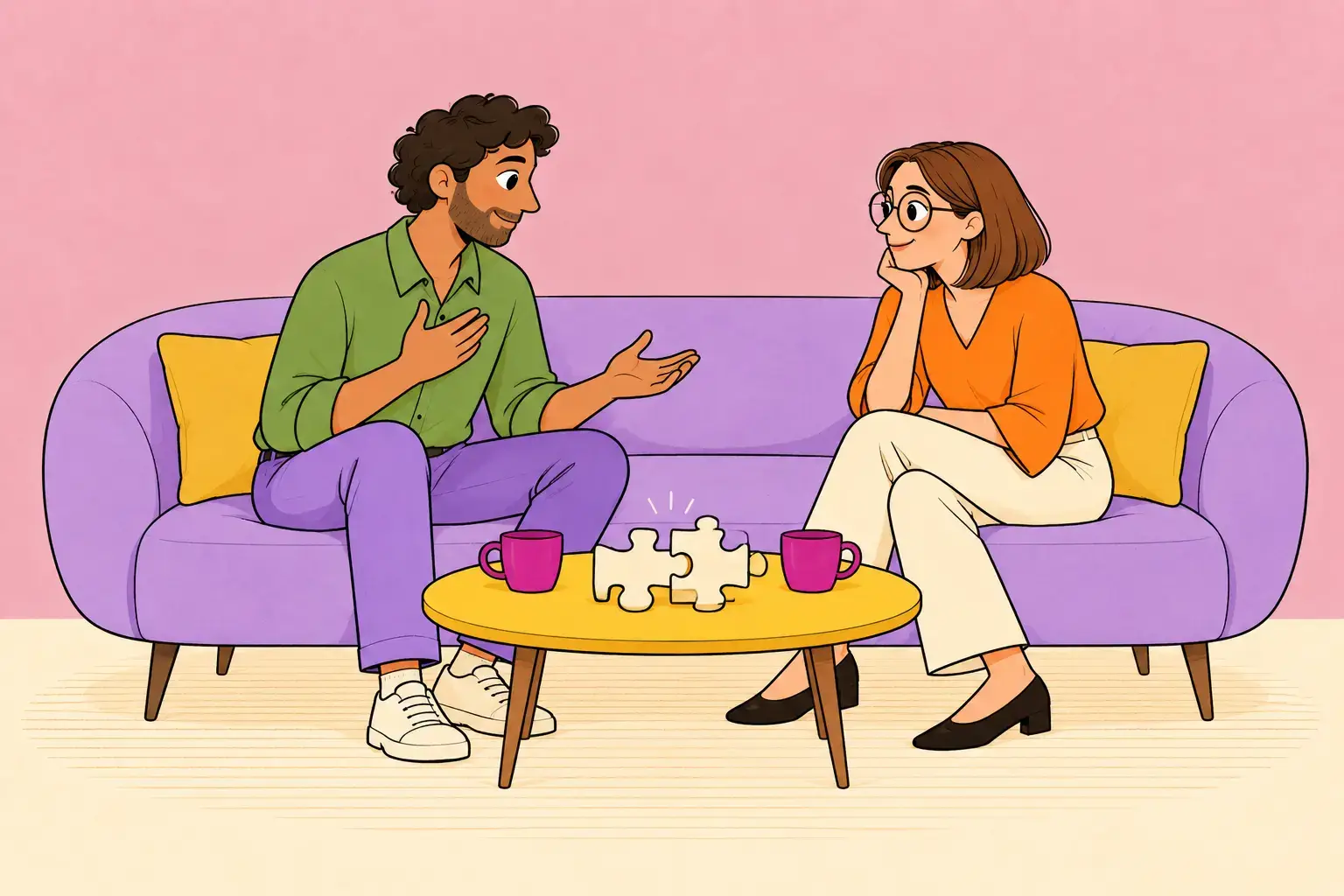
To apologise after an argument, name what you did, acknowledge how it affected the other person and describe a change you can follow through on. Give them room to respond without asking for immediate forgiveness.
“Sorry about earlier” may open the door. It can also leave the other person unsure whether you understood what hurt. Being more specific makes the conversation easier to answer.
An apology you can build on
“I interrupted you and called your concern ridiculous. That was dismissive. I’m sorry. I want to hear what you were trying to tell me. Next time I need a pause, I’ll ask for one instead of insulting you.”
This is an illustration, not a formula. Use words that describe what actually happened. You can take responsibility for your behaviour without agreeing with every interpretation of the disagreement.
Let the reply be unfinished
Your partner may still be upset. They may need time, or want to explain an impact you had not understood. Listening does not require you to defend every detail immediately. You can ask, “Have I understood the part that hurt most?”
The NHS recommends open conversation and active listening in relationships, including checking that you have understood what someone has said. An apology can begin that exchange; it cannot decide how quickly trust returns.
Choose one observable change
A broad promise such as “I’ll be better” is difficult to recognise in everyday life. A specific commitment gives you something to revisit: letting the other person finish, discussing plans before agreeing them, or returning at the time you promised after a pause.
If the same harm keeps happening, another apology may not address it. Look at the behaviour and whether change follows. Threats, coercion or violence call for individual and specialist support.
Read how to ask for space, or explore couples therapy if you both want help with recurring conflict.
Further reading: NHS: maintaining healthy relationships. The apology example is original and does not promise a particular response.
General information, not an assessment of your individual circumstances.