Separation · Sharing a home
Separated but living together: making room for boundaries
You have agreed to separate. Then you meet at the kettle, discuss the food shopping and sit on the same sofa. When you are separated but living together, ordinary routines can make it difficult to understand what has actually changed.
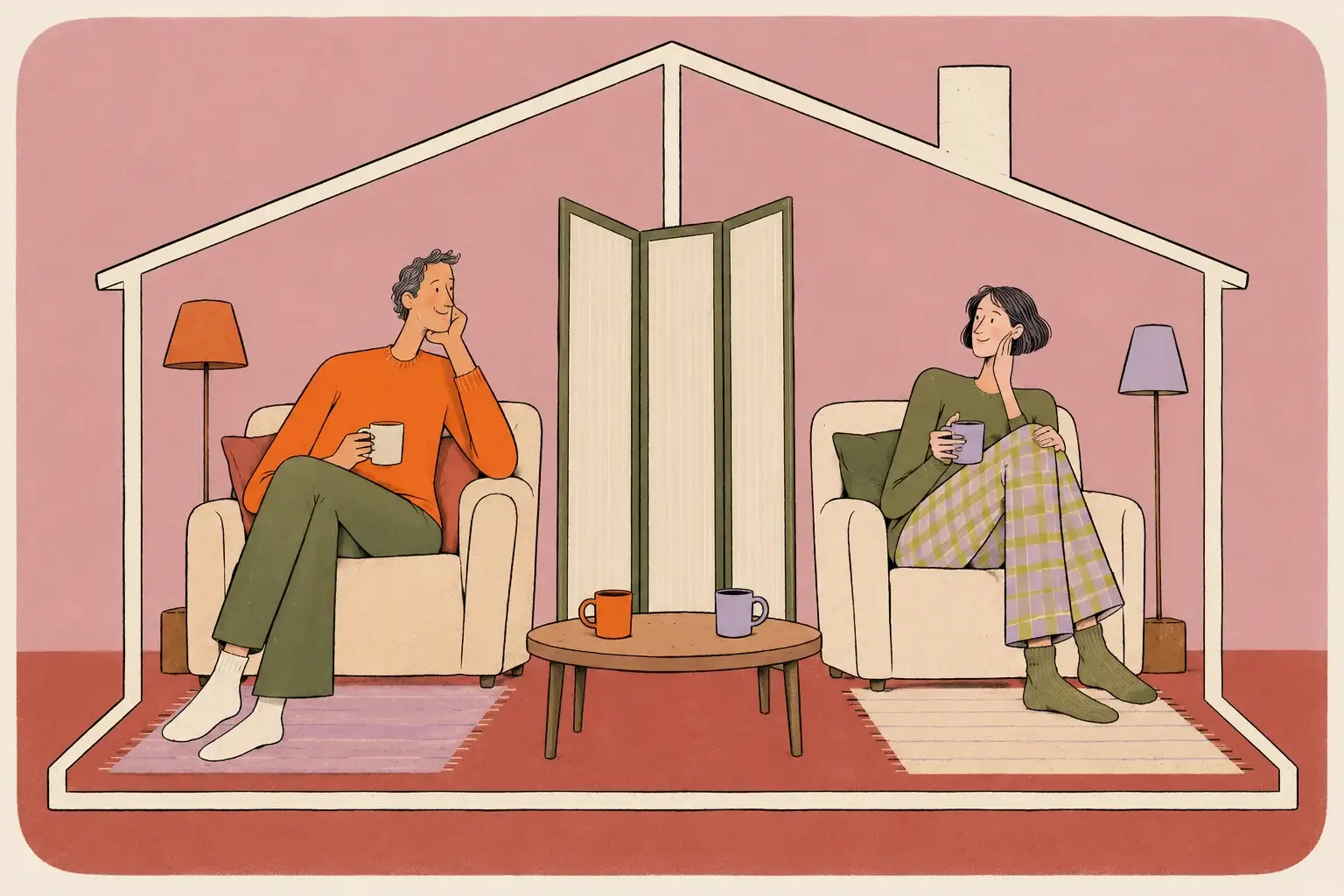
A shared address can leave the relationship unclear
A friendly conversation might feel like hope to one person and simple courtesy to the other. You may be trying to respect the separation while also noticing every sign that it could be reversed. Neither a cup of tea nor an awkward evening gives you a reliable answer.
Start with the question you can actually ask: “Are we exploring whether to stay together, or have we ended the relationship and need to arrange living apart?” You do not have to agree about the ending to describe where each of you stands. If the answer is uncertain, say so plainly rather than asking daily routines to carry the message.
Relate distinguishes a planned trial separation from simply spending less time together and recommends clarity about its purpose. That guidance applies to exploring a relationship, not to persuading someone who has decided to leave. [1]
Choose a boundary for the week you are actually living
A useful starting question is: “Which repeated moment is making this home hardest to live in?” Perhaps conversations begin when you are trying to sleep. Perhaps you cannot take a private call. Perhaps you keep doing things as a couple without knowing what either of you means by it.
Choose one moment and make the request specific. “I need space” leaves considerable room for interpretation. “Could we keep relationship discussions out of the bedroom and choose a time tomorrow?” gives the other person something concrete to consider. It is a proposal, not a guarantee that they will agree.
Interrelate’s guidance on separation under one roof identifies privacy, household responsibilities and communication arrangements as areas to clarify when dialogue is safe. Its legal discussion concerns Australia; this article does not apply those legal rules to your situation. [2]
What needs a clearer boundary?
Choose a situation to explore a possible sentence and three practical checks. These are examples to adapt, not instructions to confront someone. Use them only where a conversation is safe.
No score or sign-up. This exercise does not submit or save your choices. The examples are general guidance, not an assessment.
A thought you may recognise
A sentence to consider
Why this wording?
I cannot get private time
A thought you may recognise: We are always in each other’s space.
A sentence to consider: Could we agree a private half-hour in this room tomorrow, with no interruptions unless something urgent happens?
Name the practical space you need. An agreement about privacy is different from a demand that someone approve your feelings.
- Choose a realistic place and time.
- Check that the arrangement is freely agreed.
- Decide when to review whether it is workable.
Every evening becomes a relationship discussion
A thought you may recognise: You always start this when I am exhausted.
A sentence to consider: I cannot talk about the relationship tonight. Would tomorrow at six work for a short conversation about what happens next?
A clear alternative can separate postponing a conversation from leaving it indefinitely unresolved. Do not make a promise you cannot keep.
- Identify what actually needs discussing.
- Suggest a time you can keep.
- Agree how either person can pause respectfully.
Friendly moments feel like mixed signals
A thought you may recognise: Why are you being nice if you want to leave?
A sentence to consider: I appreciate us being kind. I also notice I read it as a sign we might reunite. Can we clarify what we each understand about the separation?
Describe your interpretation without claiming to know the other person’s intention. Their answer may be painful and still useful.
- Notice what you are hoping the moment means.
- Ask directly instead of collecting clues.
- Plan support for yourself whatever the answer is.
You can still care and need different routines
You might want comfort from the very person you are trying to separate from. That does not make your feelings foolish. It can, however, make an arrangement confusing when comfort means different things to each of you.
Before repeating a familiar evening together, consider what you are hoping it will mean. If affection or sex would leave you expecting a reunion, that deserves a conversation. Nobody owes intimacy because you share a home, and nobody has to pretend that affection means nothing.
It can help to have somewhere else to take the feelings that cannot be resolved between you tonight: a trusted friend, your own journal or individual therapy. If you still love the person you are separating from, you may also find this guide to a breakup when love remains useful.
Keep practical questions small enough to answer
Try a brief conversation with one purpose. “Can we decide how to use the living room this week?” is different from “Can we settle everything that went wrong?” You may need both conversations, but asking for both at once can leave neither answered.
Write down what you both understand, what remains undecided and when you will revisit it. A review date can be a time to gather more information rather than a deadline for somebody to stop feeling hurt. Avoid treating an unanswered proposal as an agreement.
Housing, money, immigration and arrangements for children may need qualified local advice. Before changing joint payments, leaving a property or planning a move with children, get advice relevant to your circumstances and jurisdiction. An emotional boundary plan cannot determine your rights. For the UK, GOV.UK lists routes to separation advice. [3]
Support does not have to wait until you move out
You can seek counselling while the practical situation is unfinished. It can give you room to examine grief, hope, anger and the decisions that belong to you. You do not need your former partner to attend your individual sessions.
If you are separating while living abroad, separation therapy for expats explains how support can include the emotional weight of country, identity and family decisions. Breakup counselling may also be relevant. Therapy cannot make another person agree or replace specialist legal advice.
Questions you may have
Can we separate emotionally while living in the same house?
You can begin changing expectations and routines while sharing an address. How workable that feels depends on your circumstances, willingness and safety. It does not settle questions about your legal status. Clear conversations and support outside the relationship may help you understand what you need next.
What if only one of us wants to separate?
You may be at different points emotionally. A shared home does not create an obligation to reconcile, and one person cannot make the other stop grieving. Try to distinguish the relationship decision from practical arrangements. Individual support can help you consider the choices you still have.
Can I start individual counselling before moving out?
Yes. You can seek help while you are still sharing a home. You will need a private setting for an online session and an agreement about suitability, confidentiality and your location. Your partner does not have to join an individual session.
Sources and further reading
- Relate: Trial separations. Guidance on clarifying the purpose of a trial separation; not evidence that a separation will repair a relationship.
- Interrelate: How to separate from a spouse while living together. Practical relationship guidance from an Australian family service. Australian legal information is not transferred to other countries here.
- GOV.UK: Separating or divorcing. A starting point for UK information and routes to qualified advice; rules depend on your circumstances and jurisdiction.
- NHS: Domestic violence and abuse. Signs of abuse and options for specialist support.
Sources checked 25 October 2026. Practice examples and reflection prompts are original educational material. They are not personal advice or a diagnostic assessment.