Couples abroad · A practical read
You moved to Europe for their job. Now the marriage is paying for it.
One of you chose this. One of you came along. Six months in, the person who gave up a career is angry at an arrangement, and the person with the job is the only part of the arrangement in the room. Here is what is happening and what to do about it.
The kitchen in Amsterdam
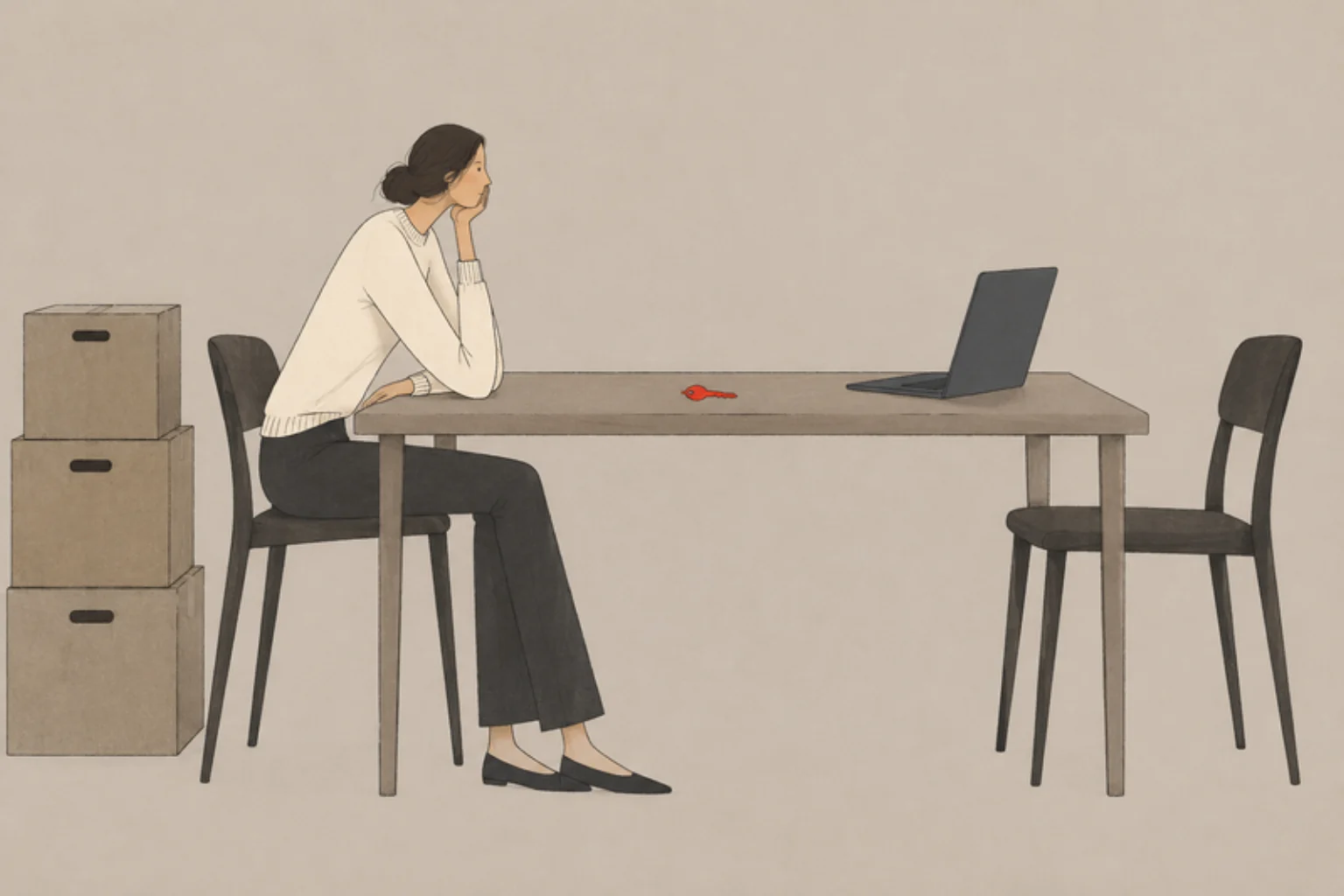
It is 6.40pm. He has texted to say the team is going for drinks and he will be back by nine. You have been in the flat since the removal boxes left in August. You have unpacked everything, found a dentist, worked out the tram, learnt the Dutch for "no bag, thank you", and had one conversation today, with the man at the cheese counter. In Denver you ran a department of eleven people. Here you are the spouse on a dependent visa, and your name is on nothing.
You are not angry at him exactly. You are angry at the arrangement, and he is the only part of the arrangement in the room.
The deal nobody wrote down
Couples who move to Europe for one partner's job often make the decision in a few weeks, between the offer and the deadline. The conversation covers money, schools, the dog and whether the apartment has a dishwasher. It rarely covers what the following partner will do on a Wednesday in February, or who is responsible if the move works for one of you and not the other.
So the deal stays unspoken, and unspoken deals get enforced through resentment. The relocating partner feels the pressure of a new job in a new country and expects credit for providing. The following partner feels the loss of income, status, friends and a routine, and expects acknowledgement for giving all of it up. Each one is waiting for the other to go first. I wrote about this cycle in trailing partner resentment, and it is a pattern I see often in couples who moved for one partner's work.
Why the visa makes it worse
In many European countries the accompanying spouse's right to live there depends on the working partner's permit. Whether you are allowed to work at all depends on the country and the visa class. The practical effect is a power imbalance neither of you chose. One of you holds the permit, the income and the professional identity. The other holds the house keys.
This is not a character flaw in either of you, but it changes the relationship. Small decisions start to feel like permissions. Arguments about whose turn it is to cook carry a weight they never carried in Denver. If the marriage were to end, one of you would have to leave the country. Nobody says this out loud, and both of you know it.
What the strain looks like by month six
The following partner stops telling the truth about how the day went, because "fine" is easier than the real answer and the real answer feels like an accusation. The working partner stays later, because work is the one place where things make sense. Sex drops off. The calls home become the main emotional outlet, and the marriage becomes a logistics channel. Then one of you says, in the middle of something unrelated, "I never wanted to come here," and the other hears it as "I never wanted this with you."
Neither of these people is the villain. The move has been loaded onto the relationship, and the relationship is doing what any structure does under too much weight.
What to do this week
Write the deal down, late as it is. Sit at the table with a piece of paper and answer four questions together: how long are we here for, what does each of us need to be getting out of this by next summer, what happens if one of us is not getting it, and who is going to say so. Put a date in the diary to read it again in three months. The point is not the answers. The point is being a couple who talks about the arrangement rather than a couple who enforces it.
Then give the following partner something with their name on it. A course, a part-time role, a volunteer post, a language class with homework. Not as therapy, as structure. The person who ran a department of eleven needs somewhere to be competent by Wednesday.
When to bring it to therapy
If the written deal turns into a fight before you reach question two, if one of you has started imagining leaving, or if the resentment has set so hard you are polite to each other and nothing else, a third person in the room helps. Couples sessions with me are online, 70 minutes, £100 per couple in the week, with limited Saturday sessions at £130 arranged by email, and both of you attend the free consultation. Neither of you has to fly anywhere, and the time difference with the UK is one hour from Amsterdam, Berlin and Paris.
If only one of you is ready to talk, start there. Individual sessions are from £70 per 50-minute weekly session, or £80 per fortnightly session (every two weeks), and online therapy for expats is where most following partners begin. If the strain is in the move itself rather than the marriage, relationship anxiety after moving abroad is worth reading first.
Questions people ask
Is it normal to resent my husband for moving us abroad?
Yes. The resentment is usually aimed at the arrangement, the lost income, status, friends and routine, and lands on the one person who is in the room. It becomes a problem when it goes unspoken and gets enforced instead, through distance, silence and a fight about the dishwasher. Say the real thing early: I gave up a great deal for this and I need it acknowledged. If saying it feels impossible, start with one individual session from £70 per 50-minute weekly session, or £80 per fortnightly session (every two weeks).
What is a trailing spouse and why is it so hard?
A trailing spouse, or following partner, is the person who relocates because of the other's job rather than their own. It is hard for three reasons which stack. The move takes away work, friends and a daily structure at the same time. The dependent visa in many European countries ties your right to stay, and sometimes your right to work, to your partner's permit. And nobody wrote down what you were each supposed to get from the arrangement, so there is no deal to go back to when it stops working. I wrote more in the guide to trailing partner resentment.
Should I move abroad for my partner's job?
Only after you have answered four questions together and written the answers down: how long are we going for, what does each of us need to be getting out of it by the end of the first year, what happens if one of us is not getting it, and who is going to say so. Add what the following partner will do on a Wednesday in February, because the empty weekday is where most of the strain begins. If you reach question two and it turns into a fight, the fight is useful information, and it is cheaper to have it before the removal van than after.
Does couples therapy work online across time zones?
Yes. Sessions are 70 minutes by secure video, and the time difference between the UK and Amsterdam, Berlin, Paris or Madrid is one hour, so a 6pm session in the UK is 7pm for you. Both partners join from wherever they are, including from two different countries if one of you travels. Weekday couples sessions are £100 per couple, with limited Saturday sessions at £130 arranged by email. The free consultation comes first and both of you attend it, so you both get to decide whether I am the right person before anything is booked.
Sources and notes
The scenes in this article are illustrative and not drawn from client work. It offers general information, not an individual assessment or emergency support.
If you cannot keep yourself safe, seek urgent help. In the UK, use the NHS urgent mental health support guide. Elsewhere, use your local emergency or crisis service.