WORK · CRITICISM AND SELF-WORTH
Why criticism at work follows you home

If you take criticism at work personally, separate what was said about the task from what you concluded about yourself. Ask for specific examples and an achievable next step. Also consider how the feedback was delivered. Learning from criticism should not require accepting humiliation.
Imagine a manager saying, “This needs more work.” You nod, ask a sensible question and carry on. Later, while your partner tells you about their day, you are still in that meeting. The sentence has become: “They have finally realised I’m not good enough.”
Which part of the comment hurt?
Was it the practical consequence, the tone, being corrected in front of other people, or the meaning you gave it? These are different problems. A clearer brief may solve one. An apology or a change in how feedback is given may be needed for another.
Try recalling the actual words before analysing the person who said them. “The figures need checking” contains a task. “You’re useless” attacks a person. Neither your distress nor someone else’s confidence tells the whole story of what happened.
Acas distinguishes appropriate private feedback from bullying behaviour, including belittling remarks and public humiliation. Its guidance also suggests keeping a record and seeking support where bullying is a concern.
You do not have to choose between defensiveness and agreement
There is room for a third response: curiosity with boundaries. You can take a concern seriously without immediately accepting every judgement attached to it.
Try: “I want to understand what needs changing. Could you show me a specific example and explain what a satisfactory version would look like?”
If the delivery was the problem, you might add: “I can discuss the work. I would like us to do that without comments about my character.” Consider the situation and your safety before challenging someone directly. A trusted colleague, manager, union representative or HR contact may be a more useful first step.
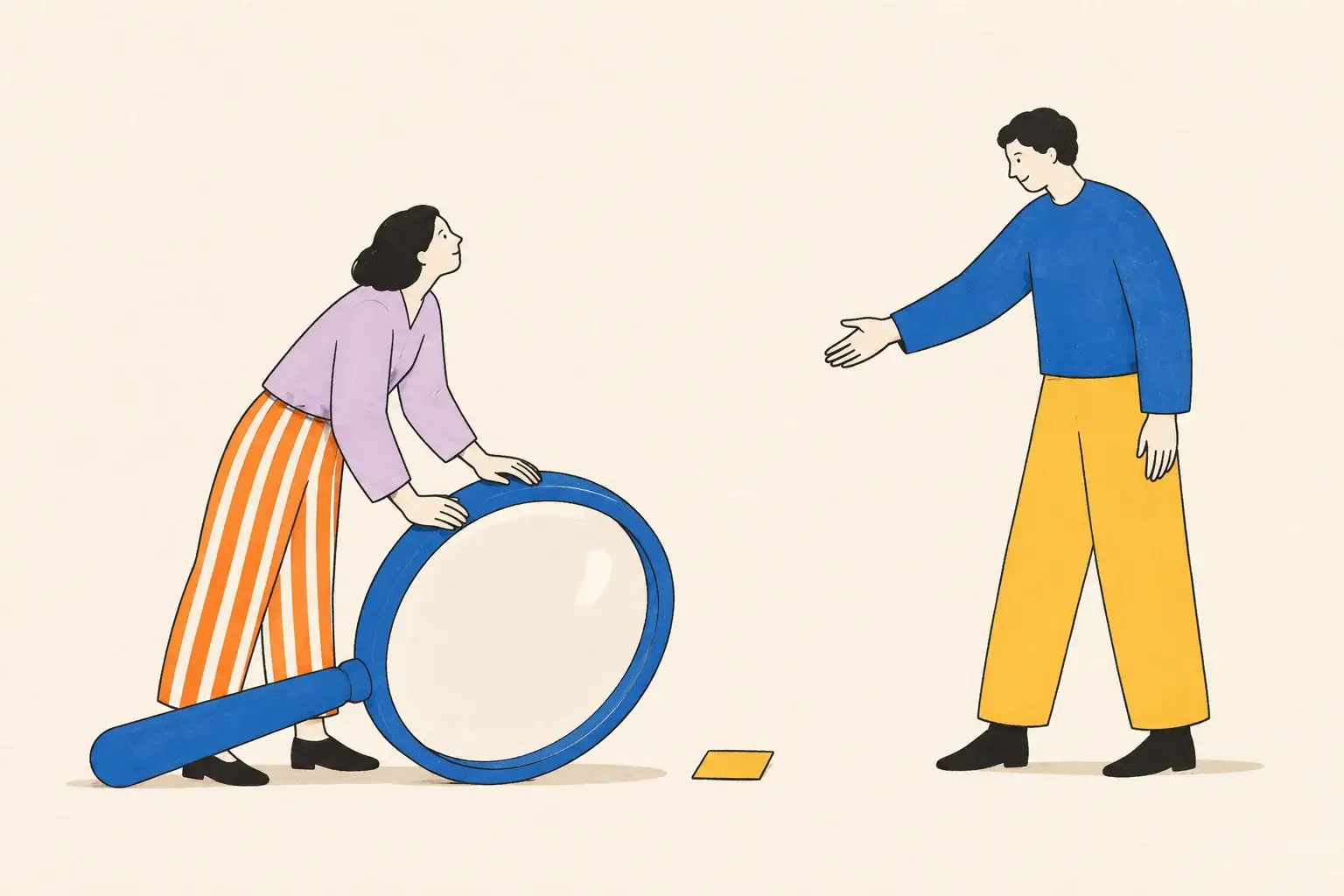
Give the comment a proportionate place
Before reopening the conversation in your head tonight, write three short lines:
- The exact feedback I remember receiving.
- The conclusion I added about myself.
- The next action I can reasonably take.
For example: “The report needs a clearer conclusion. I decided this means I should never have been promoted. Tomorrow I can ask which decision the conclusion needs to support.”
Do not use the exercise to force yourself to call unfair treatment helpful. Its purpose is to distinguish information, interpretation and action. If the facts are unclear, your next step may simply be to clarify them.
Let your partner know where you have gone
Silence at home can leave someone guessing. You might say: “I’m distracted by feedback I got today. I don’t need you to tell me they’re wrong. Could you listen while I work out which part hurt?”
Then make space for their evening too. Being upset does not mean every conversation must return to the meeting. If the wider pattern is pressure spilling into home life, read about work stress and your relationship.
For professionals in London or Oxford, online therapy in the UK can offer a place to explore the meanings attached to competence. You can read about individual therapy and ask about a free consultation.