
Marcus answered every hard conversation with a quote. When his partner said she felt lonely, he told her loneliness was an illusion. When his father died, he posted a sunset and the words “everything happens for a reason”. He meditated for an hour a day. He also had not cried in nine years, and his partner was packing a suitcase.
Spiritual bypassing means using spiritual ideas, practices or language to avoid painful feelings and unfinished emotional work. The psychologist John Welwood named it in 1984. Common signs: forcing positivity, calling anger “low vibration”, skipping grief, and using detachment to avoid closeness. Your spiritual life stays. Therapy helps it hold your real feelings instead of hiding them.
01What it looks like
Tap a card to turn it over.
Other signs: you feel guilty for being sad. You forgive before you have admitted you were hurt. You call your partner’s complaints “their energy”. You meditate through every argument and come back calm while they are still upset.
02Why it happens
Spiritual practice offers real relief. For people who grew up in loud, frightening or cold homes, a practice which promises peace feels like rescue. The trouble starts when the peace becomes a place to hide.
Bypassing protects you from feelings you never learned to survive. A child punished for anger grows into an adult who calls anger unspiritual. The rule is old. The language is new.
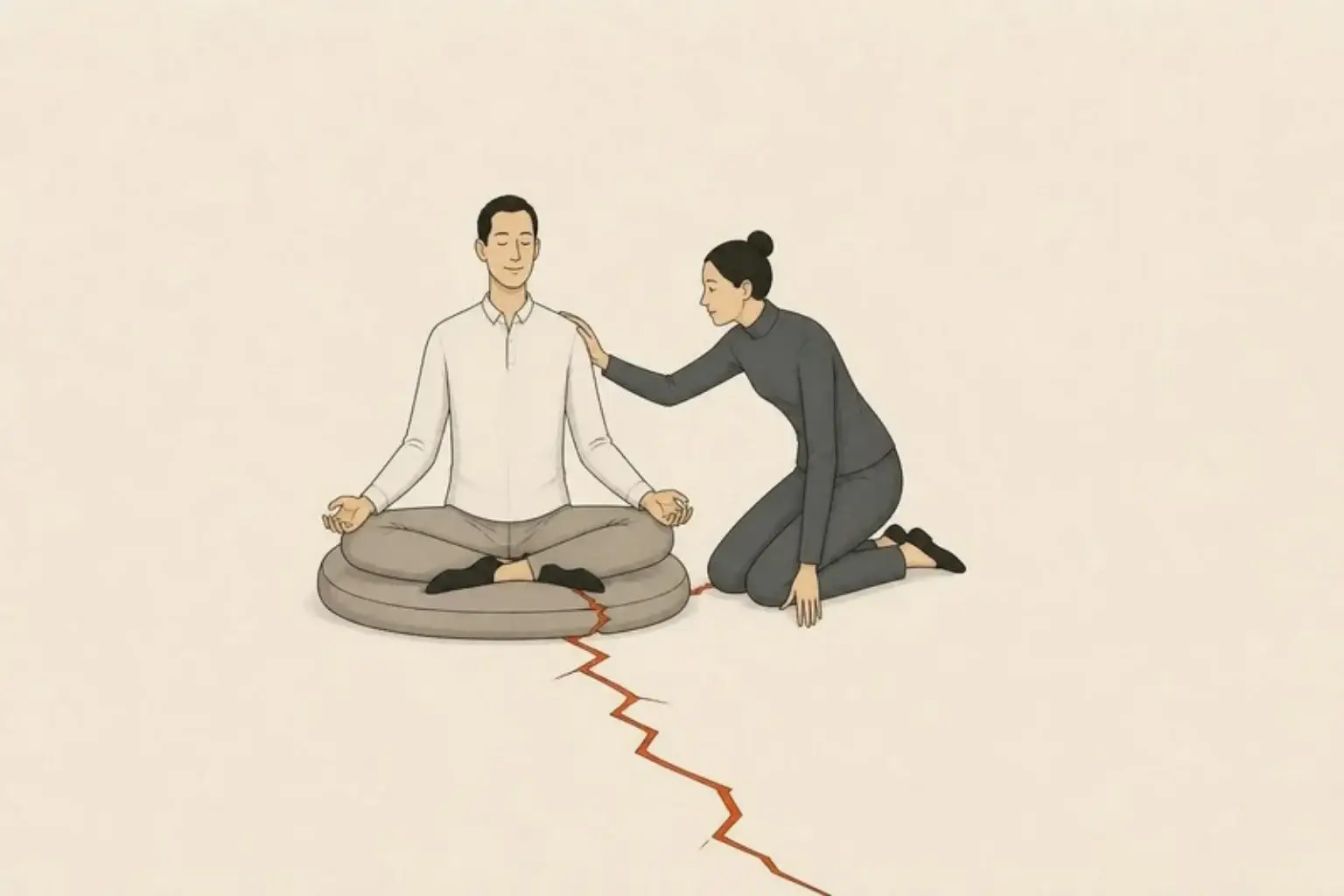
03What it does to relationships
Couples tell me the bypassing partner feels serene and the other partner feels crazy. One person carries every difficult feeling for both of them, and resentment builds where honesty should be.
Peace you reach by skipping your feelings is a waiting room, not an arrival.
Kita Tabachka, relational therapist
04How to keep your practice and stop hiding in it
Feel first, interpret later. Name the feeling in plain words before you reach for a teaching: “I am angry.” “I miss him.” Give it ten minutes before any meaning arrives.
Let anger count. Anger often marks a boundary someone crossed. Treat it as information.
Ask the people closest to you. “Do I ever use my practice to end a conversation?” Their answer will tell you more than any retreat.
Bring both into therapy. Marcus cried in our sixth session, about his father, for the first time. He still meditates. He now does it after the argument, not instead of it. Couples therapy helps when bypassing has left one partner carrying everything, and communication problems in relationships explains the pattern from the other side.
More from the journal

Weekly written counselling with Kita
When writing feels easier than speaking.
You can enquire about weekly written counselling for your own experience of relationships and life abroad. We agree whether this format is a useful fit before you pay.
Explore written counselling£50 per week. One personal written reply through Carepatron. Suitability, your weekly reply day and terms agreed before payment.

Kita Tabachka
I am a BACP-registered relational therapist. I work with individuals and couples, many of them living far from where they began, on relationship anxiety, attachment, intimacy and the strange business of building a self in a new country. The stories here are composites. The patterns are real. My writing is a door into the work, never a substitute for it.
More about my practiceQuestions people ask
This article is written by Kita Tabachka, MBACP, and is for general education and reflection. It describes patterns seen in clinical work, but it is not therapy, and it is not a substitute for individual advice from a qualified therapist, doctor or other professional who knows your situation.
Reading it cannot diagnose anything or replace your own judgement about what you need. If something here resonates and you would like support, you are welcome to learn more about my practice or book a free consultation. If you are in crisis or immediate danger, please contact local emergency services or an urgent mental health line in your country.
Join the conversation
If you have lived this, say so. Your words may be the thing a stranger at midnight needed to read.