Living in Costa Rica
Relationship problems after moving to Costa Rica
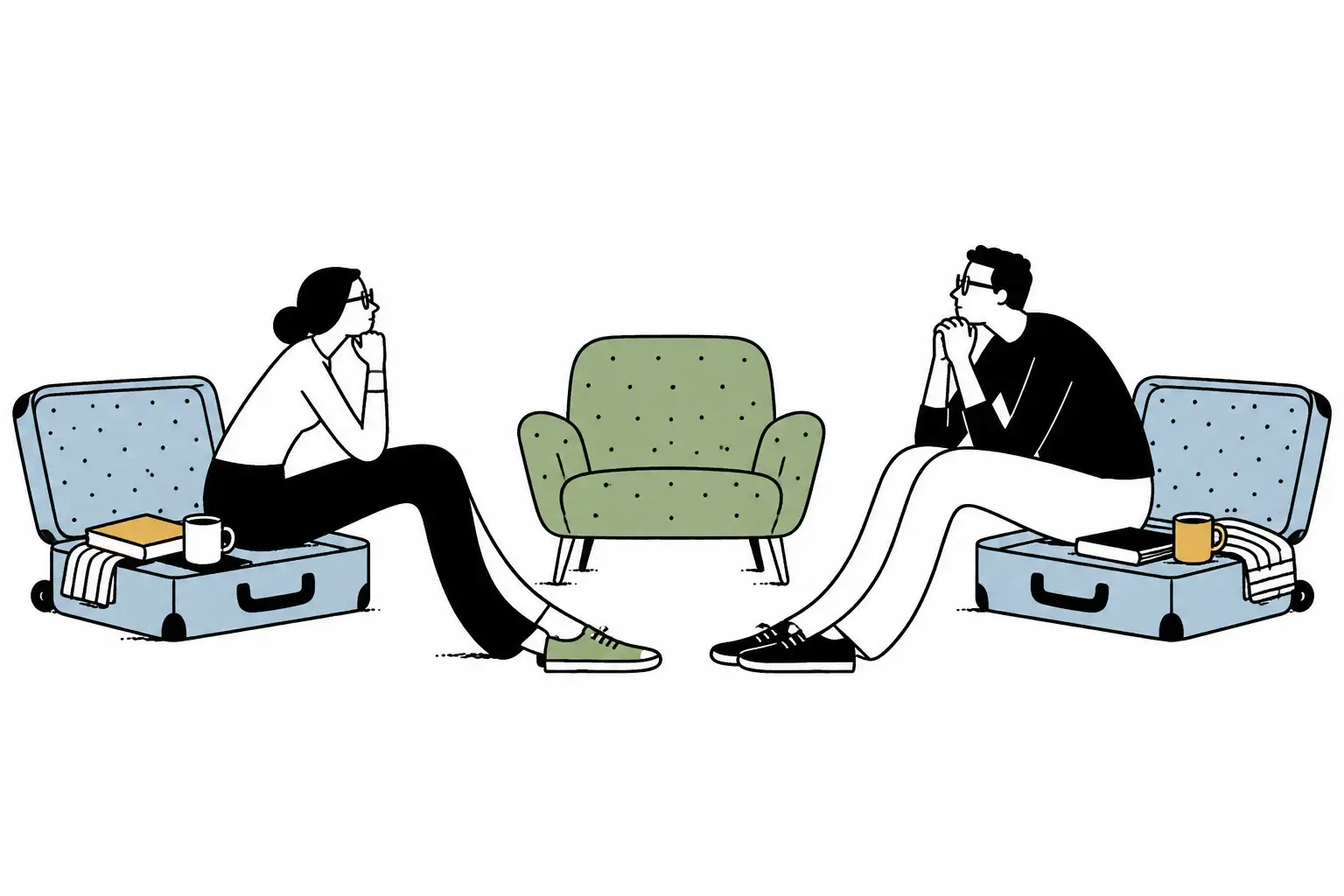
You moved to the same country. You may not be living the same experience. One partner can feel excited and settled while the other feels lonely, dependent or unsure why they came.
The argument may be about more than the move
One person has a job, colleagues and a reason to get up. The other is arranging the home, learning unfamiliar systems or trying to rebuild work and friendships. By evening, one wants quiet and the other wants contact.
Either partner can occupy either position. Gender does not tell us who gave up more or who is finding the move harder.
A study of internationally mobile accompanying partners linked stress and isolation with wellbeing. It did not study Costa Rican couples specifically, but it gives us a useful reason to ask about each person's circumstances instead of treating every disagreement as a communication failure.
Before debating whether to stay, compare your ordinary days
Choose a time when neither of you is rushing. Take turns describing a normal weekday. Who has company? Who handles practical tasks? Who can spend money independently? Who gets time that belongs to them?
The point is not to win a case about who has it worse. It is to make visible what the current arrangement asks of each person.
Three prompts to take turns with
- The part of living here that is working for me is…
- The part that is costing me more than you realise is…
- One practical change I need us to consider is…
The listening partner first reflects what they understood. Leave the defence of the move until both people have spoken.
You might discover that the immediate need is protected time for friendship, a different share of household work, access to shared money or a realistic plan for employment. Those are practical relationship questions, not signs that someone is insufficiently grateful.
When one wants to stay and the other wants to leave
Ask what each option represents. Staying may mean stability or a valued opportunity. Leaving may mean support, independence or relief. Those needs deserve attention before the conversation becomes a contest between countries.
Agree one change you can try and a date to review it. For example, share a recurring responsibility differently for a fortnight, then discuss what changed. This is a way to gather information, not a promise that the relationship or location will become right.
Residency, employment, money and arrangements involving children can affect your options. Get qualified local advice where needed. Therapy should not substitute for it.
How couples therapy can help
Couples work can help you slow down the recurring argument, understand what each person is protecting and test more workable ways of responding. It does not require either of you to arrive with a decision about the relationship.
Where there is intimidation, coercive control or fear of retaliation, do not use this exercise to force disclosure. Seek individual specialist support first.
Read about couples therapy enquiries from Costa Rica and support after moving for a partner. If one of you feels isolated, the short guide to loneliness after the move may help you put that experience into words.
Local and urgent support
This practice is not a crisis service. In an emergency in Costa Rica, call 911. For local psychological care, you can check the CPPCR professional directory and ask about English-language appointments.