COUPLES · WORK TRAVEL
Back from a work trip, but still far apart
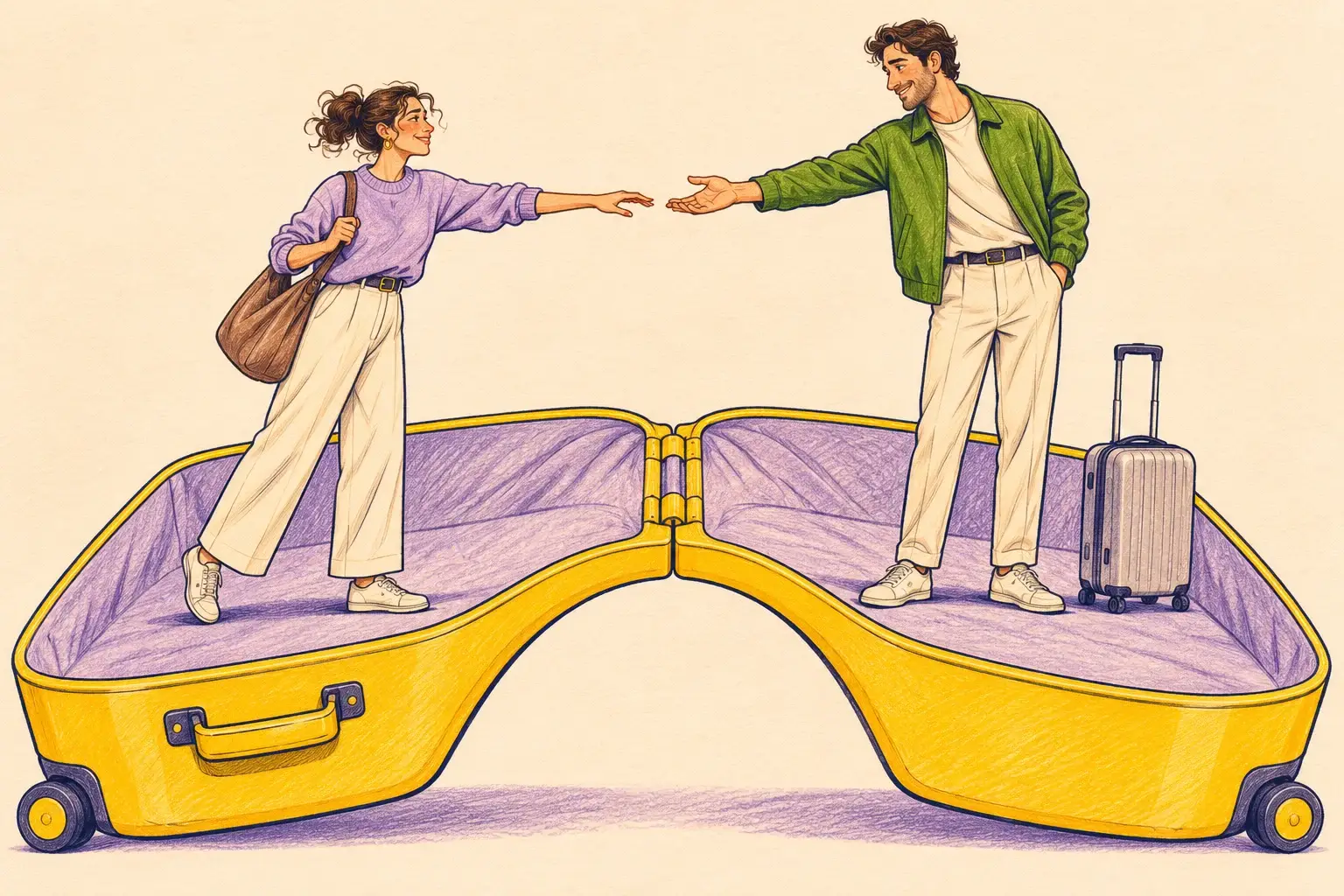
To reconnect after a work trip, talk about the return before it happens. Agree what needs doing, when each of you can rest and when you will have time together. Coming home puts you in the same place; it does not automatically put you in the same mood.
Imagine the suitcase still standing by the door. One person wants a welcome. The other wants someone else to notice that the fridge is empty. You have missed each other. Somehow, within ten minutes, you are arguing about milk.
You have been living different versions of the week
The person travelling may have spent three days being useful, persuasive and available. A hotel room can be lonely even when someone else makes the bed. The person at home may have had their own work, broken sleep and nobody to share the ordinary decisions with.
Neither experience tells you what the other week felt like. Trouble begins when each person treats their own exhaustion as the explanation that should settle everything.
A small 2012 qualitative study of 11 business travellers described the negotiation involved in moving between work and family life. It cannot tell us how every couple will respond. It does suggest a useful question: what arrangements have you actually agreed, and what have you simply come to expect?
Being missed and being needed can feel different
You may want your partner to be pleased that you are back, without immediately handing you a list. Your partner may want the pleasure of your return to include some relief.
Sometimes the hurt is more specific than loneliness. You kept important people informed throughout the trip, but forgot to say when you would get home. Or you were asked about the presentation, while nobody asked about the difficult evening you managed alone.
Try describing that moment. It gives your partner something they can understand and respond to. A general accusation about priorities often leaves both of you defending your character.

Have the arrival conversation before you arrive
Before the next trip ends, each of you answers three questions:
- What has taken most out of me this week?
- What needs covering when we are both home?
- What would help me feel close to you again?
Then make one practical agreement and one invitation. For example:
I’m looking forward to seeing you. I’m also tired, and I imagine you are too. Can we decide who handles dinner and tomorrow morning? I’d like a quiet cup of tea together afterwards, without trying to make the whole evening special.
Keep the invitation open. Affection and sex are not a welcome-home obligation. If one person needs sleep and the other needs support immediately, discuss what can realistically happen first, rather than assuming whose need takes priority.
Stay interested in the days you did not witness
A 2016 study of business travellers’ contact with home distinguished checking in from maintaining relationships and sharing experiences. Sending your flight time serves a different purpose from asking about something your partner was worried about.
After returning, ask about one part of the week you missed. Listen before comparing it with your own. You do not need a full report. You need to make room for a life that continued while you were elsewhere.
If the wider problem is work pressure entering your marriage, a kinder reunion will only address part of it. Repeated travel may require decisions about workload, money and what each person is being asked to absorb.
In couples therapy, we can explore those conversations together. You can book a free consultation to discuss whether that would be useful.