COUPLES · MONEY AND CHOICE
When your partner earns more, do they get more say?
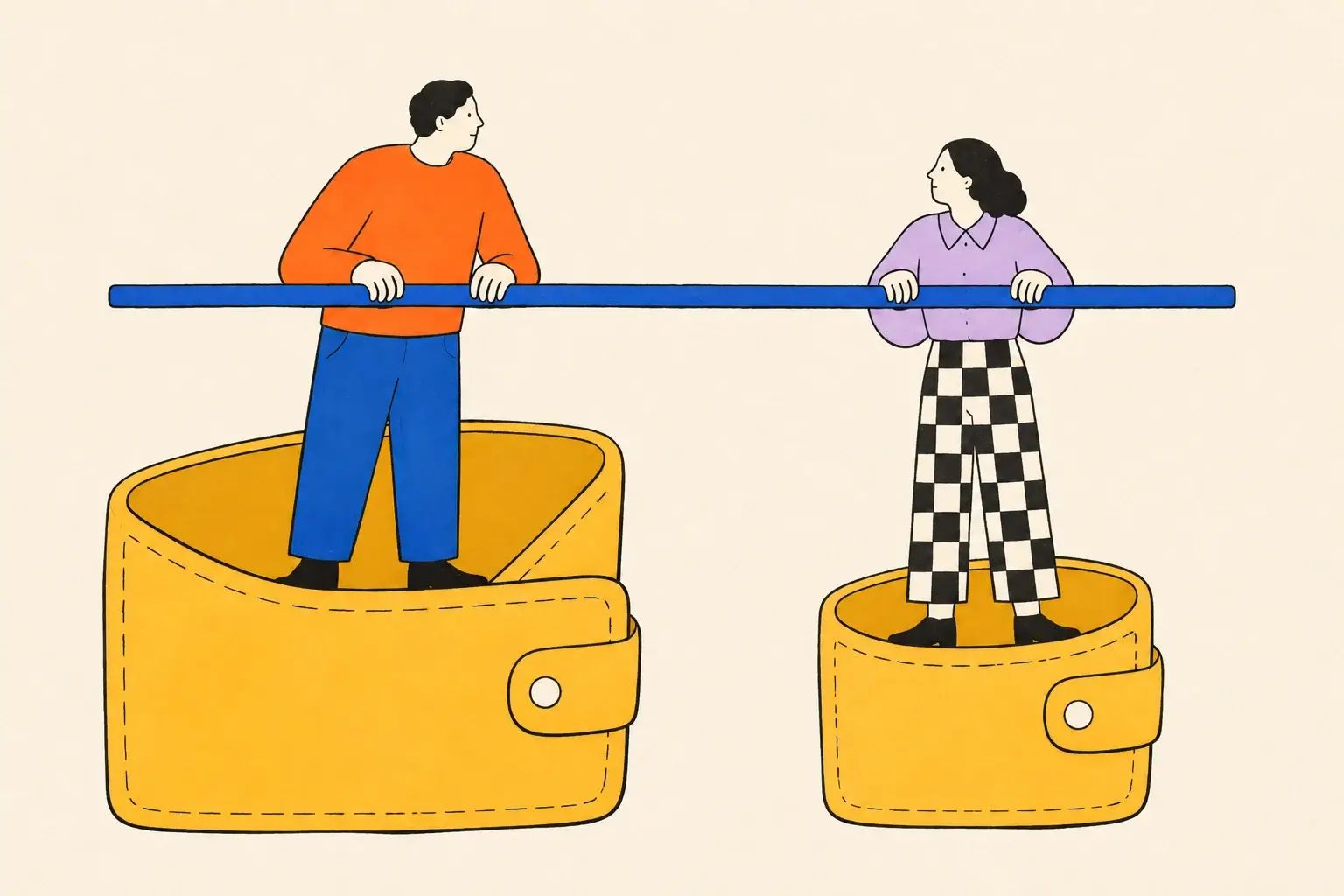
When one partner earns more, the income gap does not have to become a gap in decision-making power. Discuss access to money, shared costs, unpaid work and what each person can decide independently. An arrangement needs to feel workable to both of you, not merely add up.
Imagine choosing a weekend away. Your partner says, “Don’t worry, I’ll pay.” You appreciate the offer. Then the destination, dates and hotel are settled before you have answered. Generosity can feel complicated when your preferences seem to come with a price.
The argument may be about permission
You might be discussing the cost of a jacket while feeling something harder to name: “Do I have to justify wanting anything?” Your partner may hear criticism of their efforts and think, “I’m carrying the bills. Why am I still getting this wrong?”
Those feelings deserve attention alongside the figures. The person earning more may feel frightened by responsibility. The person earning less may feel embarrassed by dependence. Neither feeling settles how decisions should be made.
MoneyHelper’s guidance on talking about money addresses different earnings and the guilt or dependence that can arise when one person earns less or stops earning. It encourages couples to find an arrangement that feels fair to both.
Count the work that has no payslip
Before deciding who contributes more, look at how your household actually runs. Who organises care, handles appointments, moves for the other person’s role or turns down work because someone must be available?
This is not an invitation to invoice each other for affection. It is a way of noticing what a salary comparison leaves out. You can value earning money and recognise the work that makes earning it possible.

Discuss one decision, not your whole financial history
Choose a recent, manageable example. Perhaps one person agreed to an expensive dinner that the other could not comfortably afford. Set aside time when neither of you needs an immediate answer.
Try: “When plans are made at a price I can’t afford, I either feel dependent or stay quiet. I want us to agree how we choose things together. What would feel fair to you?”
Then each answer three questions: What can I comfortably contribute? Which decisions need both of us? What spending can each person make without seeking permission?
Agree one change and a date to review it. Different couples choose different arrangements. The useful test is whether both can speak honestly, understand the agreement and revisit it when circumstances change. Specific financial decisions may need independent financial advice.
More income is not more authority
It is worth asking yourself: am I offering support, or expecting compliance in return? Am I declining help because it genuinely feels conditional, or because needing anyone feels unbearable? The answers may be uncomfortable. They are still worth knowing.
Restricting access to money, monitoring every purchase or using financial dependence to threaten someone needs a different response. If you cannot disagree safely, seek confidential specialist support rather than using this joint conversation as a test.
For couples in Dubai and Abu Dhabi, career moves can make this question especially personal. My work is online from the UK, with location and suitability checked first.
Before marriage, it is worth discussing what shared money will mean in practice. Premarital counselling gives you space to explore earning, spending, independence and how you will make financial decisions together.
You can read about couples therapy or arrange a free consultation if money has become something you cannot discuss without losing each other.