Functional freeze: Jane Doe could be any of us
We can keep a life running while barely feeling part of it. For women and men who feel numb but still function, finding words for that experience can be a beginning.
What is functional freeze?
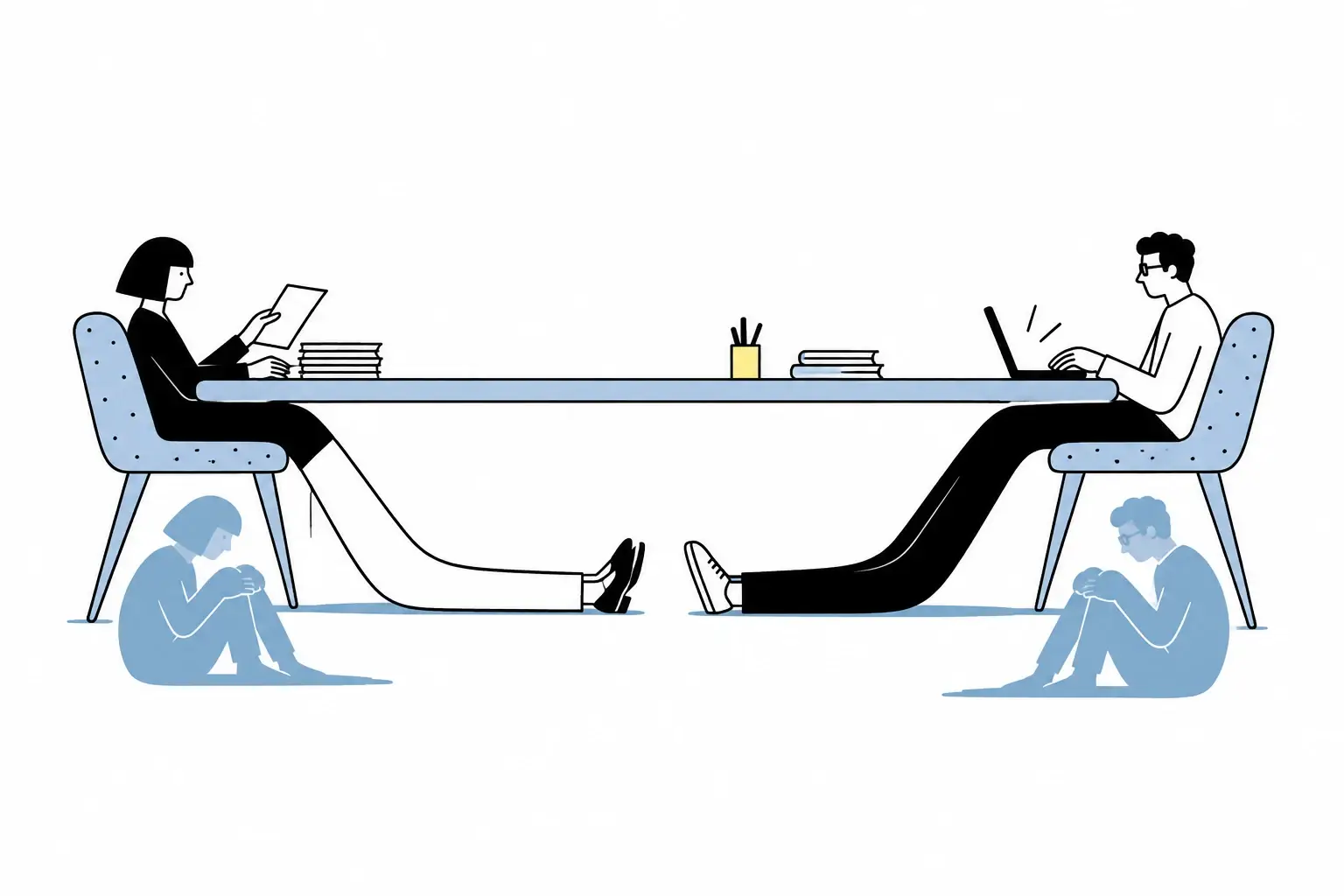
Functional freeze is an informal term for feeling emotionally numb, disconnected or stuck while continuing to manage everyday responsibilities. It can describe how some people experience prolonged stress or the aftermath of trauma. It is not a formal diagnosis, a test result or a precise description of what every person's nervous system is doing.
Jane Doe makes it to work. Answers the message. Remembers the appointment. Other people see someone who manages.
Yet ask what Jane wants, what feels enjoyable or when life last felt like their own, and the answer may take a long time.
I am using Jane Doe here as a symbolic name for the person whose inner experience goes unseen. Although John Doe is the usual male equivalent, this Jane Doe can be a woman or a man. Neither name describes a diagnosis or a particular client.
Some of us become so practised at carrying on that we stop asking what carrying on is costing us.
Feeling numb but still functioning
We often imagine distress as something visible. Tears. Missed work. A person who cannot get out of bed. But someone can complete a demanding day and barely feel connected to it.
You might recognise some of these experiences:
- You do what needs doing, but feel as though you are watching yourself do it.
- You struggle to notice enjoyment, sadness or your own preferences.
- You feel tense or watchful, even when your face and voice seem calm.
- You can deal with other people's requests but feel stuck when a decision concerns your own life.
- You reach the end of the day exhausted, with little sense of having been present.
These experiences are not a checklist that confirms functional freeze. Emotional numbness and difficulties with concentration or motivation can also occur with depression, anxiety, dissociation, sleep problems and other health concerns. A proper assessment matters when symptoms persist or affect your life.
The NHS describes both disconnection and heightened watchfulness among possible PTSD symptoms. Recognising either does not, on its own, mean you have PTSD.
How can we feel numb and on edge at the same time?
Feeling little emotionally does not necessarily mean feeling safe. Someone may struggle to access warmth or pleasure while remaining intensely alert to a partner's footsteps or tone of voice.
Threat responses can begin without a deliberate decision. Research on acute freezing describes reduced movement alongside preparation for possible action. However, that research does not establish that everyone who describes functional freeze shares one specific biological state. Research on human freezing and action preparation helps explain the distinction.
These are evolved protective responses, but a simple story about an ancient brain cannot explain every person's experience. We need room for their history, present circumstances and health.
For some people, patterns of disconnection and vigilance recur over years, even decades. That is different from saying the body remains in one continuous freeze response throughout that time.
A useful question is: when did getting through the day become more urgent than noticing how the day felt?
Emotional abuse without visible bruises
In a controlling relationship, everyday life can involve a private calculation. Is this a safe time to speak? Will seeing a friend lead to accusations? What will happen if I disagree?
Coercive control involves a pattern that restricts a person's freedom and creates fear or dependence. It can include monitoring messages, controlling money, humiliation, threats and isolation. Physical injury is not required for the harm to matter. UK guidance explains the patterns and impact of coercive control.
A silence or a look is not automatically abusive. Its meaning depends on the wider pattern and what has happened before. The same outward moment can carry very different consequences in different relationships.
When a person learns that expressing a need may bring punishment, they may begin to edit themselves before speaking. Eventually, even a simple preference can feel difficult to locate.
A systematic review of coercive control and mental health found associations with PTSD and depression. This supports taking the psychological impact seriously. It does not mean every survivor develops the same symptoms.
People sometimes search for this experience using the phrase narcissistic abuse. You do not need to establish a partner's personality diagnosis before seeking help with intimidation, humiliation or control. Describe what happens and how it affects your freedom.
Women and men can both be Jane Doe
A man may fear that nobody will believe he feels frightened at home. A woman may worry that managing work and family makes her distress seem less credible. Either may feel ashamed of staying, of leaving, or of needing help at all.
These are possibilities, not rules about gender. People of any gender can experience abuse, and people of any gender can perpetrate it. Relationships and barriers to support differ. A person's gender cannot tell us how safe they feel.
Men's Advice Line describes coercive control experienced by men. Making that experience visible does not diminish anyone else's.
What matters in the room is the person in front of us. What has happened to them? What choices do they genuinely have? What might make speaking safer?
Why leaving may not immediately bring relief
Leaving changes circumstances. It may not immediately change how a familiar message, sound or disagreement feels. Trauma reminders can bring back a sense of danger, even when the original event is over.
Sometimes the danger is not over. Harassment or control can continue after separation. We should never assume that a survivor is safe simply because they have left.
There can also be a painful gap between having more freedom and knowing what to do with it. You may have spent years arranging life around someone else's reactions. An ordinary question about what you would like can suddenly feel enormous.
You are allowed to need support during that adjustment. You do not have to produce an inspiring recovery story on somebody else's timetable.
What can help when you feel frozen inside?
Begin with present safety
If someone is frightening or controlling you, seek confidential advice from a domestic abuse service. They can help you think through practical options and safety. You do not have to confront the person or announce a decision before getting support.
Use a safer device if yours may be monitored. Clearing a browsing history does not reliably hide activity. Where coercive control is present, seek individual specialist advice before considering joint therapy.
Try a small point of contact with the present
If your surroundings are safe enough, you might notice the chair supporting you, name three ordinary objects in the room or take a few comfortable steps. Keep your eyes open if that feels easier. This is an invitation, not a test. Stop if it increases distress or disconnection.
Make one manageable choice
You do not have to know what you want from your whole life. Begin with something small: which drink you prefer, whether you want music, or which person feels easier to sit beside. Where choice has become difficult, small preferences deserve attention.
Seek support that looks beyond the label
A GP or qualified mental health professional can help assess persistent numbness, exhaustion or disconnection, including other possible causes. Therapy can explore your experience without assuming that one explanation fits everything. The NHS explains assessment and support for dissociation.
In individual therapy, we can begin with what is happening now, what feels difficult and what support you need. If past experiences are part of the picture, read about therapy for the effects of past hurt.
Perhaps the first change is having somewhere you can answer honestly when someone asks how you are. Somewhere your ability to keep going does not end the conversation.
Questions about functional freeze
Is functional freeze a medical diagnosis?
No. It is an informal description of feeling stuck or disconnected while still functioning. It does not replace assessment for depression, anxiety, PTSD, dissociative symptoms or other causes.
Can men experience functional freeze?
Yes. Men and women can experience the numbness, disconnection and difficulty acting that people describe with this term. These experiences do not follow one fixed pattern based on gender.
Does feeling frozen mean I have been abused?
No. Numbness and feeling stuck can have several explanations. If there is a pattern of fear, threats, monitoring or restricted freedom in your relationship, a domestic abuse service can help you explore what is happening.
Can this improve after years of feeling this way?
Longstanding symptoms can improve with appropriate support. What helps depends on their causes and your current circumstances. There is no reliable quick reset or standard recovery timetable for an informal label such as functional freeze.