

Imagine a Saturday afternoon. Your phone is busy. Football, a joke, a plan for somebody’s birthday. You could find someone to have a drink with. You are less sure who you would tell that your marriage feels lonely, or that you have been waking at four wondering what happened to the life you thought you would have.
Men’s loneliness can exist inside a full diary or a close relationship. Sometimes what is missing is somewhere to speak honestly. Start with one considerate person and one manageable truth. If there is nobody suitable yet, a regular group or professional support can offer a starting point.
Company and closeness are different needs
I would not ask you to dismiss the friendships you have. The football matters. So does laughing at something ridiculous when the week has been difficult. There is nothing shallow about enjoying each other.
But perhaps there is a point in the conversation when you almost say something, then decide against it. You make the joke instead. Everyone laughs, and the opportunity passes.
If you keep finding yourself making the joke, you may recognise the pattern in joking when you are trying to say you are hurt.
You may go home feeling strangely untouched by an evening you enjoyed. Your friends have spent time with you, but the part of you that needed company stayed hidden. The NHS describes how loneliness can happen around friends, family or a partner. Being surrounded does not automatically mean feeling understood.
Let one conversation become a little more honest
Choose someone who has shown care in ordinary ways. Someone who remembers to ask, notices when you go quiet or can hear a different opinion without making you pay for it. You do not need to begin in front of the whole group.
Try: I have been finding things difficult at home. I keep making light of it, but I could do with a proper conversation. Are you free for a walk this week?
A friend may offer advice too quickly because they want to help. You can give them a direction: I do not need you to fix it. Could you listen for a bit first? Awkwardness can soften. Repeated ridicule is something else. You are allowed to choose more carefully where you bring the vulnerable parts of your life.
You may go home feeling strangely untouched by an evening you enjoyed.
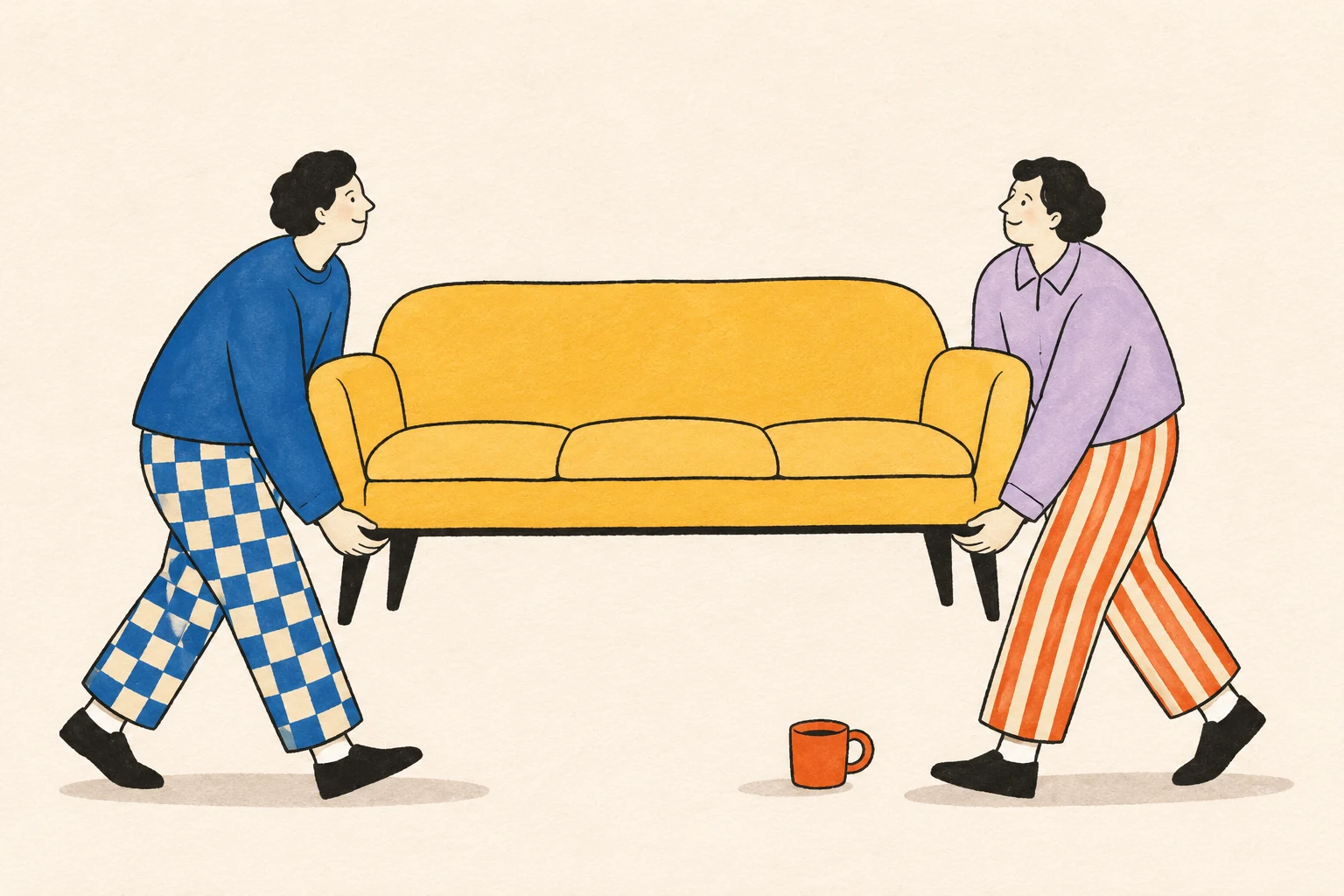
When your partner is the only person who knows you
If your partner is your only confidant, an argument can leave you feeling that every door has closed at once. You lose the person you are upset with and the person you usually turn to for comfort.
That can make a disagreement feel much bigger. You might press for reassurance when they need space, or withdraw completely because you have nowhere else to put what you feel.
Friendship can widen your support. It does not require telling someone every private detail about your partner or recruiting them to your side. You can speak about your own sadness and uncertainty. Your partner can be important without having to meet every emotional need alone.
Who makes room for me?
Think of someone who has shown consideration in a small, ordinary moment.
What could I say a little more honestly?
Choose one manageable truth. You do not need to tell your whole story at once.
Make room for a friendship to grow
If there is nobody you would contact today, I know that advice to open up can sound rather empty. Begin with familiarity. A regular class, volunteering, a walking group or an activity you actually enjoy gives you a reason to see the same people again. You do not have to make a close friend on the first visit.
If you live abroad and keep turning down invitations because your contract might end, read about making friends when you might leave.
If someone does come to mind, send a specific invitation. Tuesday after work is easier to respond to than we should catch up sometime. If you enjoy the meeting, arrange another. Closeness often needs ordinary repetition before difficult words feel possible.
Then try answering one question without tidying the answer away: Work is all right, but I have felt quite on my own recently. Pause. Give the other person a chance to meet you there.
If loneliness is persistent or daily life feels harder, speak with a GP or therapist. In therapy for loneliness, we can explore what happens when you want closeness but expect rejection, feel ashamed of needing people or no longer know how to begin. Therapy can support building connection beyond the sessions.
You can book a free initial consultation with me to talk about whether this would help. If you are also exhausted by being everyone’s dependable person, you may recognise yourself in being tired of the strong role.
Your phone may still be full of jokes on Saturday. There can be room for those, and for one conversation in which you do not have to pretend.
Questions you might be asking
Can I feel lonely even if I have friends?
What if I have nobody to talk to?
Does feeling lonely mean my relationship is wrong?
Written by Kita Tabachka, MBACP. The opening is an illustrative situation, not an account of a client. This writing offers general reflection and cannot assess your individual needs.
Further reading: NHS: Feeling lonely; NHS Every Mind Matters: Loneliness.

Kita Tabachka
I am Kita, a BACP-registered relational therapist. I work online with individuals and couples on the feelings, relationships and recurring patterns that have become difficult to manage alone.
More about my practice