
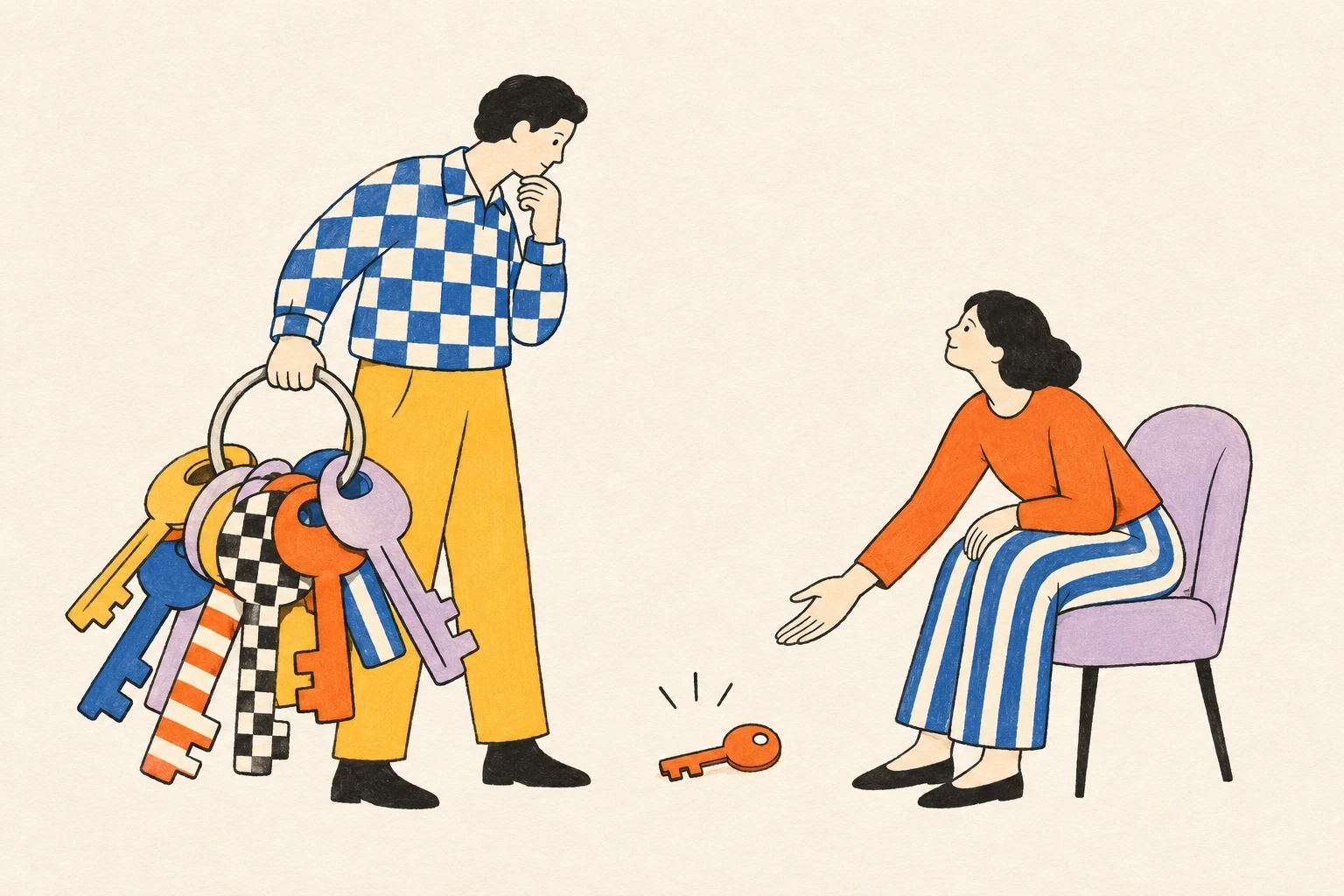
Picture an ordinary evening. You have solved the problem at work, answered the family message and remembered what needs paying. Someone asks how you are. You say tired. It is true. It is also the smallest part of the answer.
When being dependable leaves no room for your own needs, exhaustion can become resentment. The work begins by noticing what you have taken responsibility for, saying what it costs and agreeing what can be shared. You do not have to stop caring to have a limit.
When being needed starts to feel like being loved
Perhaps you were the sensible boy. The one who did not make a fuss. You noticed when the adults were worried and tried to need less. Being useful gave you a place in the family, and that place followed you into adult life.
Now people trust you. That matters to you. But somewhere along the way, being someone they can rely on may have become being someone who is never allowed to struggle.
If we were exploring this together, I would want to understand what happens inside you when you disappoint someone. Do you feel ordinary regret, or does it feel as though you have become a bad son, partner or father? There is a difference. One lets you repair a mistake. The other makes every limit feel dangerous.
The resentment you feel ashamed of
You say yes, then feel irritated that you were asked. You take over because explaining takes longer, then feel alone with the responsibility. By the evening, even a small question can sound like one more demand.
That does not mean your family has done nothing, or that your partner has no burden of their own. Sometimes you are both exhausted by work the other cannot see. Sometimes the expectations really are unfair. We need to look closely enough to tell the difference.
Your exhaustion deserves attention. So does the way you speak when you are exhausted. Snapping at someone may express the pressure, but it rarely explains it. A clearer sentence might be: I agreed to more than I can manage. I am getting resentful, and I want us to change the arrangement before I take it out on you.
You can love being there for people and still need them to notice when it costs too much.

Share responsibility, not just a task
Choose one recurring responsibility. School arrangements. Checking on a parent. Planning every weekend. Write down what you actually do, including the remembering and chasing that nobody sees.
Then ask for a specific change: Could you take responsibility for this from beginning to end this week? I need to stop holding it in my head as well as doing it.
Agree what taking responsibility includes. The other person needs a real choice, and you may need to tolerate a different way of doing things. If you keep checking and correcting every detail, the task has moved but the responsibility has not.
Notice what you do with the space afterwards. Do you rest, or immediately find another way to be useful? That guilty feeling may need some attention too. You can listen to it without treating it as an instruction.
What am I carrying?
Name one responsibility, including the remembering, planning and following up.
What do I fear would happen if I stopped?
Notice whether you expect a practical problem, someone’s disappointment, or a loss of your place in the relationship.
A place where you do not have to be the useful one
In therapy for men, we can look at both the practical load and the meaning it has acquired. What can change this week? What makes receiving care uncomfortable? Who are you when nobody needs you to solve something?
I am not waiting for a polished explanation. We can start with the evening you stayed in the car for a few minutes because you could not face being needed again. You can also read about having nothing to say in therapy if finding words feels difficult.
If stress, low mood or worry are affecting daily life, speak with a GP or qualified therapist. The NHS guide to talking about mental health offers help with beginning that conversation.
You are welcome to book a free initial consultation with me. We can talk about what is happening and whether working together would fit.
The next time someone asks how you are, you might give them a little more of the answer: I am tired, and I need us to look at how much I am carrying. Let that sentence have some room before you apologise for it.
Questions you might be asking
Why do I feel guilty when I rest?
How can I set a limit without abandoning people?
Can I come to therapy if I am still managing everything?
Written by Kita Tabachka, MBACP. The opening is an illustrative situation, not an account of a client. This writing offers general reflection and cannot assess your individual needs.
Further reading: NHS: How to talk about your mental health.

Kita Tabachka
I am Kita, a BACP-registered relational therapist. I work online with individuals and couples on the feelings, relationships and recurring patterns that have become difficult to manage alone.
More about my practice