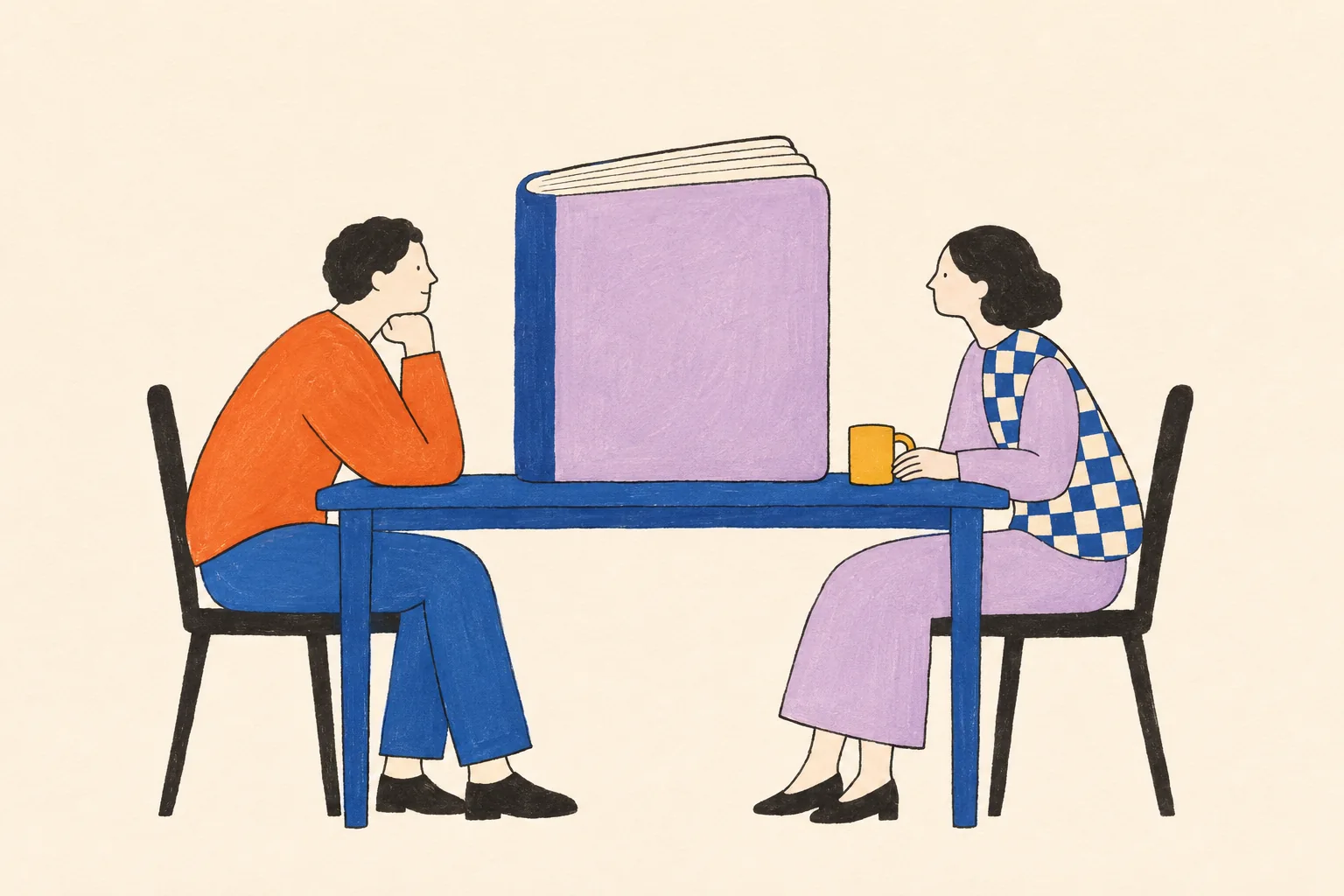
Picture a Tuesday evening. You put two mugs on the table. You’ve already had your first therapy session. You’re about to tell your partner when they ask whether the washing needs to go on. You say yes. For a moment, the washing is the easier thing to talk about.
If it feels safe to tell your partner you’ve started therapy, choose a quiet moment. Say why you want them to know, what you’d like to keep private and what would help. You can tell them you’re finding things difficult while you’re still working out why.
What are you afraid they’ll hear?
Maybe you’re afraid they’ll hear that you’re leaving. Or that you’ve been talking about them to a stranger. If you’re used to being the man who sorts things out, even admitting you needed an hour with someone might feel like telling them you’ve let them down.
Your partner may have noticed you’ve been short with them or quiet after work. They may be relieved you’ve found someone to speak to. Give them a chance to tell you what they actually heard. You might have been answering a question they hadn’t thought to ask.
Decide what you want them to know
The fact that you’ve started therapy, what you talk about in the room and what your partner needs to know about life at home are three different things. You might want to keep a memory private and still say you’ve been struggling to sleep or that you know you’ve been hard to talk to lately.
If sessions affect childcare, time together or money you’ve agreed to share, talk about those practical changes. If there’s a problem between you, your partner deserves to hear what affects them in words you can own. You can say you’ve been lonely at home without repeating what your therapist said.
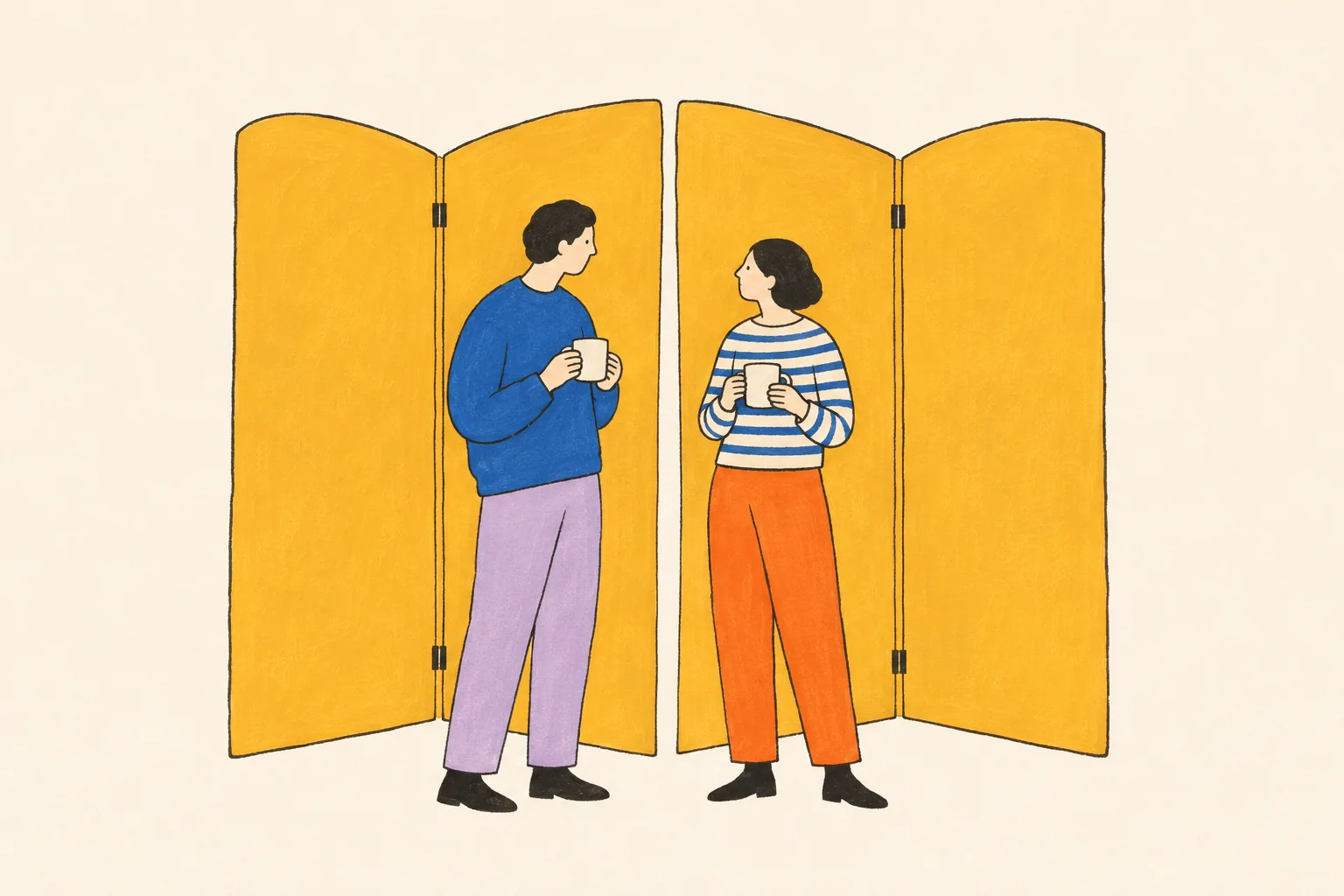
Try saying it while the tea’s still hot
Pick a moment when you have time to hear the reply. It can help to say what kind of support you’d welcome and leave room to come back to the conversation. NHS guidance on talking about mental health.
I’ve started seeing a therapist. I’ve had a hard time lately and I wanted some help making sense of it. I’d like to keep the sessions private for now. When I come home afterwards, could we have tea together? You can ask how I’m doing.
If they ask whether it’s about them, answer what you honestly can. Some of it is about how I’ve been feeling between us. I want to talk about that with you when we both have time. If you don’t know yet, say so. You can put the kettle on again tomorrow.
What do I want my partner to understand about me?
Choose one thing you’d like them to know and one kind of support you could ask for.
If you’re considering therapy and the words feel difficult, you’re welcome to book a free initial consultation. You may also recognise the worry about letting people down in For the man who is tired of being the strong one.
Questions you might be asking
Do I have to tell my partner I’m in therapy?
What if my partner wants to know what we talked about?
Written by Kita Tabachka, MBACP. The opening is an illustrative situation. The article offers general reflection.
Further reading from the BACP on what happens in counselling.

Kita Tabachka
I am Kita, a BACP-registered relational therapist. I work online with individuals and couples on the feelings, relationships and recurring patterns that have become difficult to manage alone.
More about my practice