
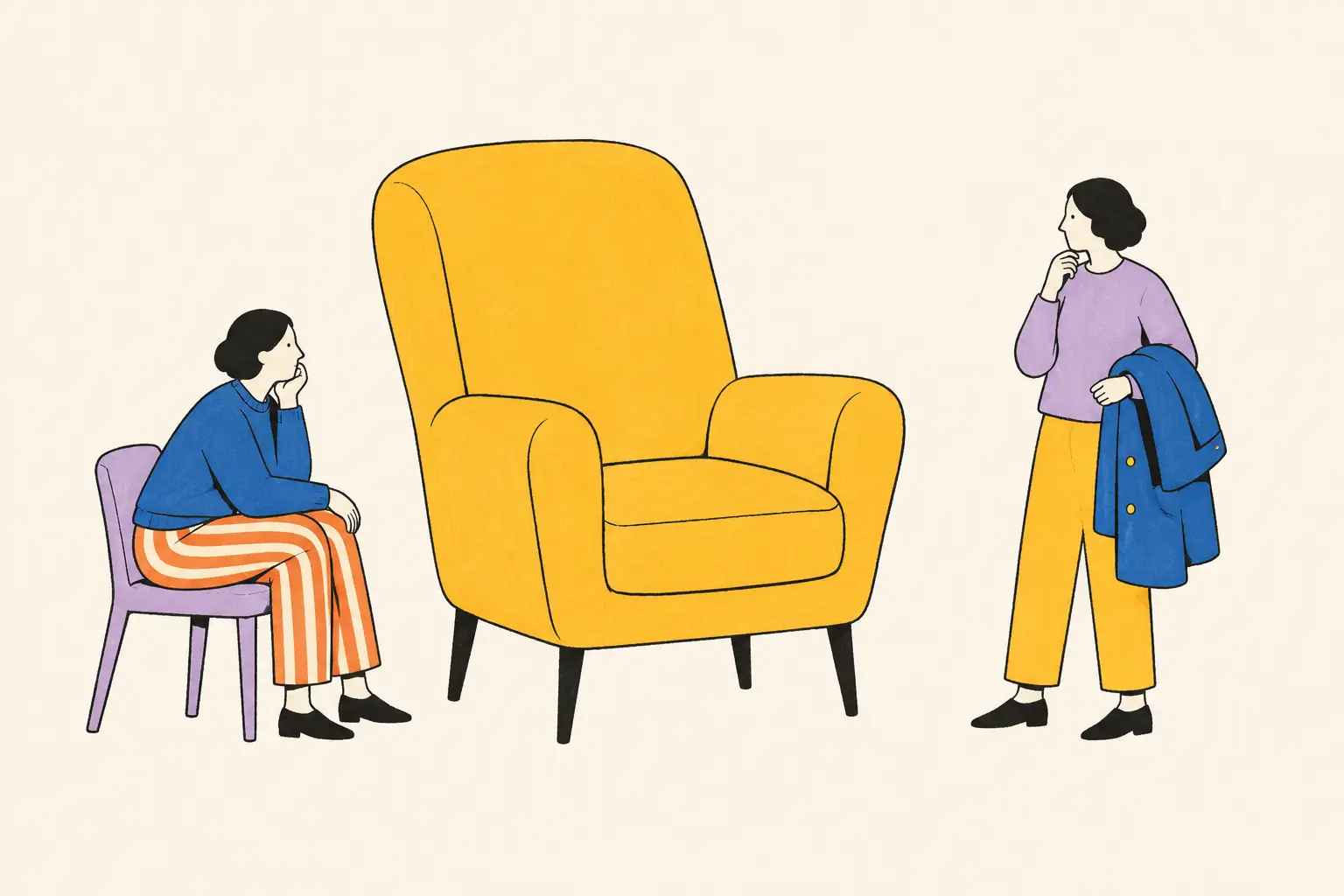
Imagine looking up a counsellor on your phone after another argument. You leave the page open until your partner comes in. They glance at it and say, “I don’t want to tell a stranger about us.” You close the tab before you can say how long you have been thinking about it.
Ask what makes couples therapy feel difficult and explain the change you are hoping for. Give your partner room to choose. If they still decline, you can seek individual support and decide what you need from the relationship with a clearer head.
Find out what your partner is declining
The word therapy can stand for several worries. They may fear being blamed, paying for something they cannot afford, or talking about private matters before they know the person listening. They may also disagree about how serious the problem is.
You can ask once, when neither of you is in the middle of an argument. “I’d like us to get help with how our disagreements end. What feels hardest about speaking to someone together?” Give them time to answer. If the concern is practical, there may be a practical change. If the answer is still no, you have learnt something you can work with.

Be clear about the change you need
Try putting the therapist’s name to one side. What would you want to see change on an ordinary Tuesday? Perhaps you want a disagreement to end without insults, or an agreement to be remembered the next morning. Name that plainly. “I hear that you don’t want counselling. I still need us to find a way to disagree without shouting. What are you willing to try?”
Listen to the answer, and to what happens next. Someone may prefer to begin with a different kind of help. You can consider that without putting your own concern away. You can also decide how long you are willing to wait for behaviour to change.
You can ask for help before you agree on what the problem is.
Kita Tabachka, relational therapist
Use individual support for the choices that are yours
BACP describes counselling as a place to explore thoughts, feelings and behaviour with a trained professional. In an individual session you can talk through what is happening, what you keep accepting and what you might ask for. You can bring one recent conversation and look at where you stopped saying what you meant.
Your partner’s participation and their behaviour remain their responsibility. If you are afraid to speak honestly at home, or expect punishment for what you say in a session, start with private support. UK domestic abuse services can help you think through what is safe before you make a joint appointment.
If you both want to know what a first conversation involves, see how couples therapy works. If you would rather begin on your own, see individual therapy.
If writing the first message keeps you waiting, try these examples of a first email to a therapist. To ask about meeting me on your own, use the written individual therapy enquiry. You can say that your partner does not want to attend and that you would like help thinking through your own next step.