
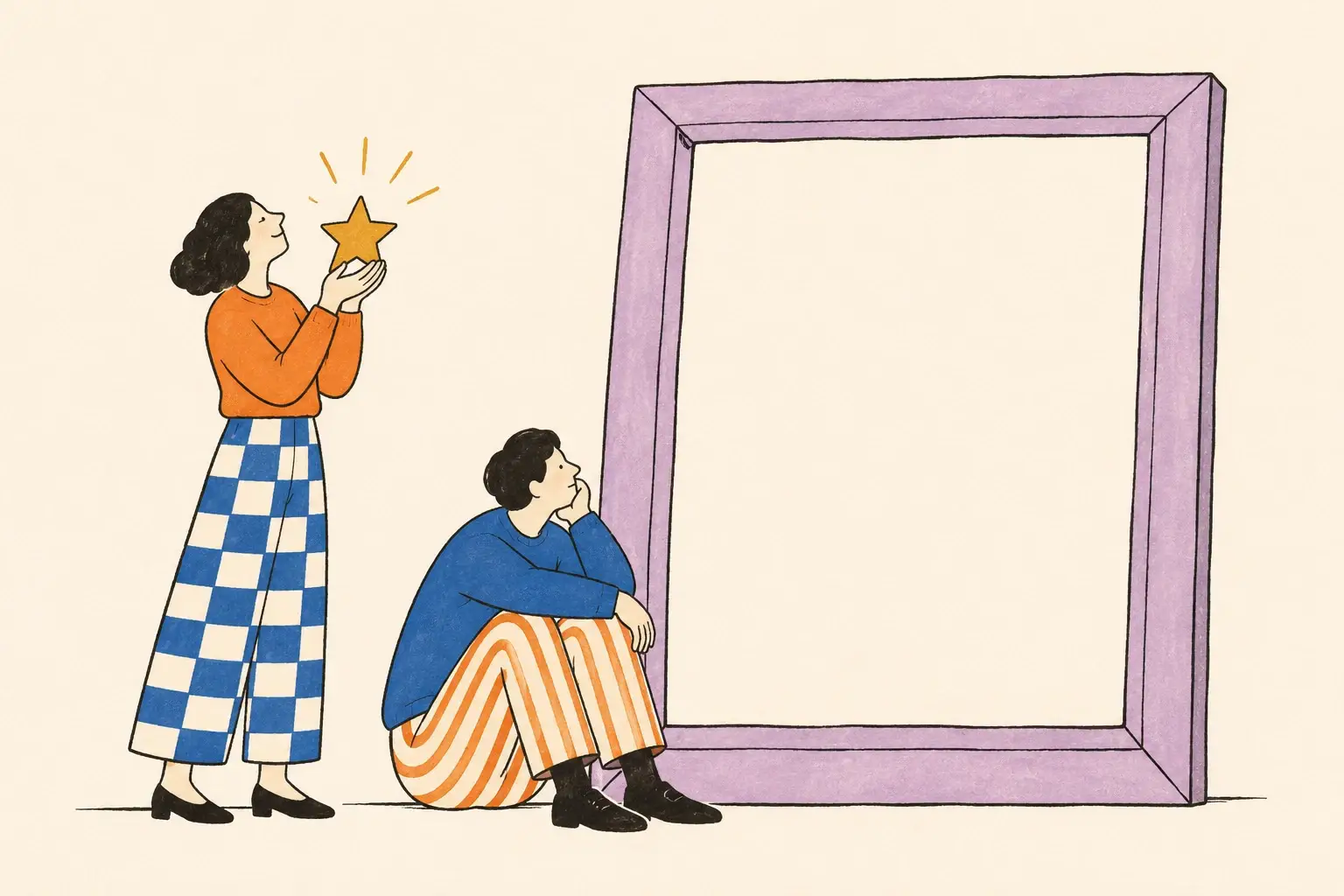
Imagine your partner calling with the news. They got the promotion. You say congratulations, ask about the salary, suggest going out on Friday. You mean all of it.
Later, while they shower, you look up someone you went to university with. Then someone else. By bedtime, you have assembled a small collection of people whose lives appear to be moving faster than yours.
Your partner asks why you are quiet. You say you are tired.
A partner’s success can bring your own disappointments into sharper focus. You may feel proud of them and painfully aware of what you have postponed, lost or struggled to achieve. Understanding that feeling helps you take responsibility for it without making your partner apologise for doing well.
01What their good news touches
Perhaps you applied for something similar and never heard back. Perhaps you reduced your hours when the children arrived. Perhaps you have spent years being sensible while an ambition you once cared about became something you barely mention.
Their news lands in that history.
Sometimes the uncomfortable thought is simple: I wanted this too.
Sometimes it reaches further: If they keep moving forward, will they still want the life we have? Will they still want me?
These are possibilities to explore, not conclusions about your relationship. Your partner may be celebrating a new role while you are privately imagining being left behind.
Ask yourself what, precisely, you envy. The recognition? The freedom? The feeling of being chosen? Each answer points towards a different conversation.
Possible meanings beneath the words, not assumptions about your partner. Tap a card to explore.
02How disappointment becomes distance
You begin finding faults with the opportunity. The hours will be ridiculous. The company has a reputation. They should be careful about getting carried away.
Some concerns may be reasonable. But if every expression of excitement meets another warning, your partner may start telling you less.
You notice the distance and feel excluded. They notice your coolness and feel unsupported. Neither of you says what first hurt.
Research by Shelly Gable and colleagues found that enthusiastic, engaged responses to a partner’s good news were associated with greater relationship wellbeing. How couples receive happiness matters alongside how they handle difficulty.
You do not have to manufacture delight. You do need to notice when disappointment in your own life starts shaping how you treat theirs.
03Make room for both conversations
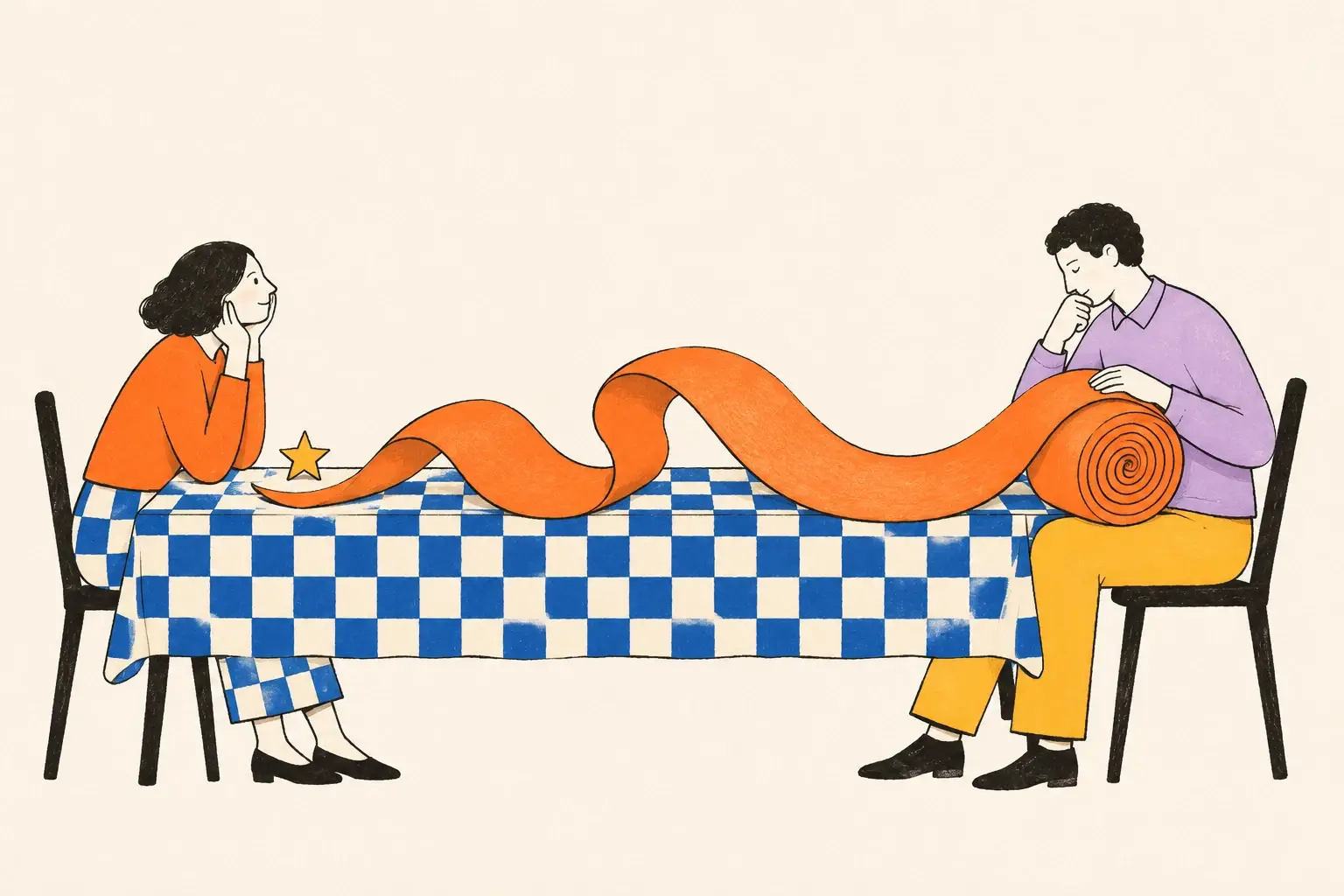
Let the achievement have its moment. Ask what happened when they found out. Listen to the part they are most pleased about.
Then, at another time, speak about what the news stirred in you.
I am pleased for you. I have also realised how disappointed I feel about where I am. I have been quieter because I feel embarrassed admitting that. I want to talk about it without taking anything away from what you have achieved.
If your opportunities have repeatedly come second, be specific.
When I reduced my hours, we agreed we would revisit it. We haven’t. I want us to make a plan for my work now, too.
That conversation needs practical answers. Who takes responsibility for childcare? What time or money can support your next step? When will you review the arrangement?
A partner can respond kindly to your disappointment. They cannot resolve it by making their own life smaller.
Perhaps the next time your partner asks why you are quiet, you can tell them a little more. You have been thinking about something you still want for yourself.
More from the journal

Weekly written counselling with Kita
When writing feels easier than speaking.
You can enquire about weekly written counselling for your own experience of relationships and life abroad. We agree whether this format is a useful fit before you pay.
Explore written counselling£50 per week. One personal written reply through Carepatron. Suitability, your weekly reply day and terms agreed before payment.

Kita Tabachka
I am a BACP-registered relational therapist. I work with individuals and couples, many of them living far from where they began, on relationship anxiety, attachment, intimacy and the strange business of building a self in a new country. The opening scene in this article is illustrative. My writing is a door into the work, never a substitute for it.
More about my practiceQuestions you may be afraid to ask
This article is written by Kita Tabachka, MBACP, and is for general education and reflection. It describes patterns seen in clinical work, but it is not therapy, and it is not a substitute for individual advice from a qualified therapist, doctor or other professional who knows your situation.
Reading it cannot diagnose anything or replace your own judgement about what you need. If something here resonates and you would like support, you are welcome to learn more about my practice or book a free consultation. If you are in crisis or immediate danger, please contact local emergency services or an urgent mental health line in your country.

Share a reflection privately
If you would like to respond to this article, you can use the contact form. Please keep your first message brief.
Contact Kita